As Digital Inclusion Week 2026 kicks off October 4-10, the Building for Digital Equity webinar series — co-hosted by the Institute for Local Self Reliance’s (ILSR) Community Broadband Networks Initiative and the National Digital Inclusion Alliance (NDIA) — returns on October 8th.
A recent Government Accountability Office report reveals what’s been obvious to broadband deployment experts for years now: the federal government’s multi-agency approach to closing the digital divide is undermined by a lack of coordination and data-management among agencies.
Researchers say they’re concerned that a massive influx of new federal grant money being redirected to Elon Musk’s Starlink satellite broadband company in Ohio will be thwarted by the simple fact that many targeted locations don’t have a clear, unobstructed view of the sky.
Chris and Doug Dawson break down new Ookla FWA data, critique the FCC’s flawed mapping challenges, examine the final BEAD funding numbers, and tackle the wild economics of artificial intelligence.
The New Hampshire Electric Cooperative (NHEC) has been awarded a $5.58 million federal broadband grant to help expand affordable fiber access to the rural and underserved parts of its service territory in The Granite State.
Paulding Putnam Electric Cooperative (PPEC) was awarded $13.2 million in federal broadband grant support to help fund a major fiber-to-the-home expansion to rural unserved segments of northeast Indiana.
Researchers tells Pennsylvania House Communications & Technology Committee that persistent attacks by the federal government on Internet affordability protections and social safety nets are directly resulting in a drop in overall broadband adoption, with large numbers of low-income Americans unable to afford modern connectivity — and the vast benefits it provides.
Since 2011, a new study finds that Chattanooga's city-owned fiber network has generated $5.3 billion in net community benefits for Hamilton County. Conducted by researchers at the University of Tennessee at Chattanooga, the study finds that the municipal fiber network has dramatically reshaped the regional economy, supporting 10,420 jobs from 2011 to 2024 – about 31 percent of all net new jobs created locally over the past decade.
A new study shows that the now expired Affordable Connectivity Program helped low-income Americans get better access to jobs, with particularly strong effects for women. The ACP program ended in May 2024 – thanks to GOP Congressional leaders blocking efforts to allocate additional money when the fund was depleted. Still, the study remains relevant as affordability advocates continue to look for ways to fund a similar program in the future.
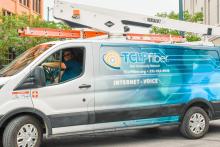
Traverse City, Michigan’s public, community-owned utility, Traverse City Light and Power (TCL&P), is putting the finishing touches on its $14 million plan to deliver affordable fiber to the community of 15,424. With build out estimates significantly lower than initial projections, the utility is finalizing an additional $1 million in loans to fund the recently started build.
Antelope Valley, California officials are hoping to leverage California’s historic recent round of broadband grant programs to deliver affordable fiber access to a significant swath of long-underserved southern California desert communities. According to Antelope Valley officials, they’ve applied for a $24.3 million California Advanced Services Fund (CASF) Broadband Infrastructure grant to help them deliver symmetrical 10 Gigabit Passive Optical Network (XGS-PON) technology to 988 total households, most of which would be seeing affordable fiber access for the first time ever.
Fort Collins, Colorado’s popular Connexion municipal broadband network has unveiled SmartHome, a new network management app that can help the ISPs customers better manage the security and bandwidth-consumption of their home networks. SmartHome lets users see every connected device, set parental controls, prioritize bandwidth for work or entertainment, and guard against online threats through integrated security services like ExperienceIQ and ProtectIQ.
A city utility manager, an economist, and a fiber technologist walk into a virtual webinar … And what followed was a deep dive into why delaying investment in smart city infrastructure is increasingly costly. Panelists emphasized how “smart cities” are built on fiber networks and what city investments in the gold-standard of Internet connectivity can do to boost economic development while improving the quality of life for local residents and businesses.
The Commerce Department has approved 18 final spending plans under its $42.45 billion Broadband Equity, Access, and Deployment program. One state, Louisiana, had access to its funding, according to the agency. NTIA approval is one of the last steps before states and territories can start signing contracts and projects can get underway. Louisiana had gone through the remaining reviews and had access to its BEAD deployment funding Tuesday, NTIA said.
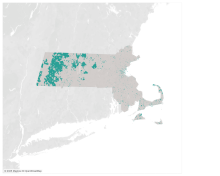
In a new report from the Institute for Local Self-Reliance, we tell the story of how 19 very small Western Massachusetts towns worked together over a decade and a half to build an alternative to the monopoly broadband marketplace and deploy their own municipal networks. It's a unique story of perseverance and the power of public partnerships. "Seeking the Commonwealth of Connection: How Small-Town Volunteers and Public Partnerships Transformed Internet Access in Western Massachusetts tells the story of how this came to be, and the impact it is had for residents, businesses, and community anchor institutions in the region.
U.S. Senators Peter Welch (D-Vt.) and Roger Marshall (R-Kan.) have introduced a bill that would reauthorize the USDA’s ReConnect Loan and Grant program and expand the program to include Communications Union Districts. According to the announcement, the reauthorization would set a baseline of 100 megabit per second (Mbps) downstream and 100 Mbps upstream for broadband grants, up from the program’s dated 25 Mbps downstream, 3 Mbps upstream current standard.
The Pueblo of Jemez Tribal community was honored with a Project Excellence Award for its efforts to build-out a fiber network to reach hundreds of Tribal households, government buildings and businesses. Since January of 2024, JNET has been constructing its fiber-to-the home (FTTH) network, building-out more than 45 miles of fiber to date. More than 40 homes have already been lit up for service with the project expected to be finished in 2026.
Decorah, Iowa has launched a public private partnership with West Union Trenching to deploy a modern fiber-to-the-home (FTTH) network that passes every household in the city. The project is the culmination of decades of planning and frustration at the lack of affordable, next-generation broadband in the city of 7,500.
The livestreamed event will bring together community-driven broadband champions who are redefining what it means to be a “smart city” — and what communities risk when they fail to invest in modern connectivity. Moderated by AAPB Executive Director Gigi Sohn and ILSR’s Sean Gonsalves, the livestreamed discussion will bring together community-driven broadband champions who are redefining what it means to be a “smart city” — and what communities risk when they fail to invest in modern connectivity.