
Comcast

Content tagged with "Comcast"

Displaying 1 - 10 of 344

Loveland’s City-Owned Fiber Network Launches Colorado’s First 20 Gig Home Internet Plan
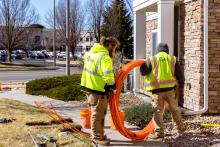
The home Internet service with the fastest speeds in Colorado isn’t coming from Comcast or Quantum Fiber. 

It’s coming from the city-owned fiber network in Loveland.

On International Internet Day (October 29), Pulse Fiber announced the launch of its new 20 gig residential Internet service — the first provider in the Centennial State to offer symmetrical 20 gigabits-per-second home connectivity.

Branded as Vector Fiber, the new ultra fast tier introduces a connection capacity that is a rarity for residential offerings — something Pulse officials say is “designed for a niche but growing segment” in the Front Range city of about 80,000.

“Vector Fiber is ideal for residents who push the limits of what a home connection can do,” said Brieana Reed‑Harmel, Loveland’s broadband division manager. “Whether they’re running a business out of their home, managing massive datasets, or developing the next breakthrough technology, 20 Gigs ensures they never hit a ceiling.”

The new service offers features typically reserved for commercial-grade connectivity. In addition to 20 Gig symmetrical speeds, it comes with a professional SFP handoff — a small pluggable fiber port for the home router that lets subscribers use all 20 Gigs without a data bottleneck. The service also provides a static IP address — a permanent Internet address that allows end-users to host websites, servers, automation hubs and to remotely access files, cameras, and home systems.

“The result is a high‑performance platform built for residents whose technical requirements exceed what standard home [I]nternet services can deliver,” officials said of the new service. “Comparatively, the majority of [I]nternet providers nationwide do not offer plans in excess of 10 Gigs.”

Who Needs 20 Gigs?
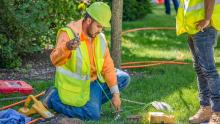
Holland, Michigan’s Long-Awaited Community Fiber Network Goes Live

After more than a decade of grassroots study, public debate, and pushback from legacy telecom incumbents, the City of Holland, Michigan is officially lighting up its open access citywide fiber network.

Operated by the municipal electric utility, the Holland Board of Public Works’ (HBPW) publicly owned, open-access network — dubbed Holland City Fiber — has transitioned from network construction to lighting up its first subscribers.

The milestone marks a major victory for local digital self-reliance in western Michigan, delivering symmetrical multi-gigabit speeds at prices commercial monopolies like Comcast have historically refused to match.

An Investment For ‘Future History Books’

Home to about 34,000 residents, Holland’s path to municipal fiber was more than a decade in the making.

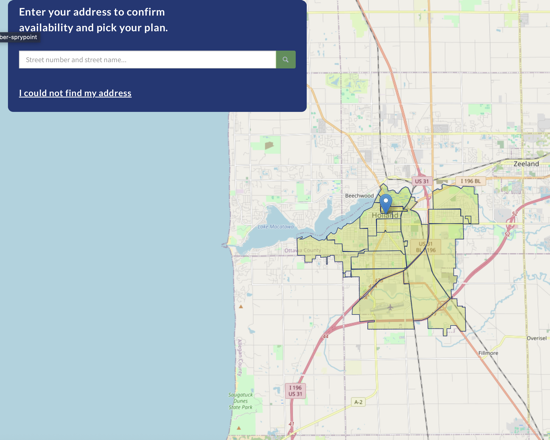
Image
Holland Fiber coverage map encompasses entire city

HBPW had maintained a small institutional and business fiber loop dating back to 1992. But like countless mid-sized cities across the Midwest, local residents and small businesses outside the immediate downtown core were left at the mercy of a cable-and-phone duopoly that chronically underinvested in network upgrades while hiking rates via hidden junk fees.

Formal exploration of a citywide build began around 2016. In 2021, the city tapped engineering consultancy CTC Technology & Energy to conduct a feasibility study and business plan. That study laid bare what locals already knew: leaving the city’s connectivity to the private market would ensure decades of stagnant speeds, erratic customer service, and escalating costs.

Falmouth Didn’t Build Its Own Network, But a Citizen Led Effort Still Brought Fiber to Town

At long last, fiber-to-the-home connectivity is coming to Cape Cod.

Gateway Fiber, a Missouri-based Internet service provider already operating in western and central Massachusetts, has announced it has begun network construction in Falmouth and says service will be available to residents and businesses later this year.

It’s a development that, after decades of frustration with high prices for cable service, will bring residential fiber connectivity to the region for the first time, initiated seven years ago by an effort to build a community-owned solution.

While the plan is for Gateway to first offer service in Falmouth, the company also has its sights set on expanding its network into other towns on the Cape — including the towns of Barnstable and Yarmouth, the most populous parts of the peninsula.

For years, Cape residents have complained about the high-priced, spotty service of the Comcast cable monopoly as their only wireline option. Enter Gateway. It represents a watershed moment for the region, as the ISP looks to tap the pent-up demand for the gold-standard of Internet access technologies (fiber) by first targeting Falmouth, home to about 33,000 residents.

Pennsylvania’s Claverack Cooperative Passes 100 Mile Fiber Milestone

Pennsylvania’s Claverack Rural Electric Cooperative (REC) says it’s making steady inroads in expanding affordable fiber access throughout rural Bradford and Wyoming Counties, where many frustrated locals have been stuck on the wrong side of the digital divide for the better part of a generation.

Not long ago, Claverack joined a growing roster of electric cooperatives that are extending into broadband access, often leveraging the experience and expertise that informed their efforts at rural electrification almost a century earlier. According to Claverack officials, they recently passed a notable milestone: the cooperative just wrapped up a project that delivered 100 miles of new fiber-optic cable to pass roughly 1,300 previously-unserved and underserved homes and businesses in rural Bradford and Wyoming counties.

“We were proud to share this milestone with the people who made it possible,” Steve Allabaugh, Claverack REC president and CEO, said of the project. “Years of planning, investment, and collaboration brought us to this moment.”

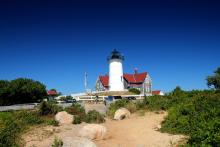
Image
Claverack REC sign at dusk with a gorgeous orange and deep purple sky

The Wysox, Pennsylvania-based cooperative currently services a 2,250‐square‐mile territory across eight counties in Northeastern Pa. (Bradford, Lackawanna, Luzerne, Lycoming, Sullivan, Susquehanna, Tioga, and Wyoming counties), maintaining more than 2,800 miles of electrical power lines and delivering electricity service to over 19,000 paying members.

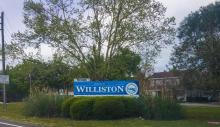
Williston, Florida’s $4.6 Million City-Owned Fiber Network To Go Live Soon

The city of Williston, Florida is joining the ranks of municipalities across the nation that are building their own fiber broadband networks with an eye on ubiquitous, affordable access. City leaders say they’re preparing to launch a city-owned $4.6 million fiber optic ISP to break the local telecom monopoly logjam and finally provide fast, affordable access to the local populace.

Earlier this year the Williston city council voted unanimously on a $4.6 million loan to help fund a Williston Fiber network that will reach all 3,433 local residents. Last December, the city held a city council meeting to finalize the arrangement, construction of which had technically started last summer.

“They’re excited,” Williston Mayor Charles Goodman tells local ABC affiliate WCJB. “People are just chomping at the bit, ready for it. I deal with phone calls every day. ‘When is it ready? When is it going to be here? They’re putting it in front of my house, can I hook it up now?’, you know these kinds of things.”

“What I tell them is we’re just building the project,” he added. “It’s still under construction. We’re hoping to have everything done by the end of the year.”

Image
Williston FL Levy County map

Goodman has publicly expressed concern about the cost of the project, but local supporters, and all of the city council members, say the network is a necessary remedy to the lack of affordable, fast, and reliable broadband access, increasingly essential for online educational, health, employment, and other opportunities.

Follow the Money: Comcast, Starlink, and the BEAD Backslide - Episode 664 of the Community Broadband Bits Podcast

In this episode of the podcast, Chris is joined by Karl Bode and Sean Gonsalves to unpack three major broadband stories shaping the moment: 

California’s new law giving tenants the right to opt out of monopolistic bulk billing deals, Comcast’s latest play to cozy up to Washington power, and how the federal “benefit of the bargain” shift is gutting BEAD and funneling billions toward Starlink. 

The trio discusses how these developments expose deeper issues of corruption, enforcement, and the growing divide between corporate priorities and community broadband needs.

This show is 28 minutes long and can be played on this page or via Apple Podcasts or the tool of your choice using this feed.

You can also check out the video version via YouTube.

Transcript below.

We want your feedback and suggestions for the show-please e-mail us or leave a comment below.

Listen to other episodes or view all episodes in our index. See other podcasts from the Institute for Local Self-Reliance.

Thanks to Arne Huseby for the music. The song is Warm Duck Shuffle and is licensed under a Creative Commons Attribution (3.0) license

Massachusetts To Spend $31.5 Million On Broadband, Modernizing MDUs

*This is the first installment of an ongoing series we are calling Connected Complex looks at how states, local communities, and Internet service providers are working to address the often complex challenges involved in bringing high-speed Internet access to multi-dwelling units.

Massachusetts state leaders have announced a new $31.5 million investment to bring reliable, high-speed Internet access to residents in affordable and public housing statewide.

A key part of the major new investment initiative focuses on something that’s particularly challenging in the northeast: updating long outdated wiring in multiple-dwelling-units (MDUs) like apartments, condos, and housing developments, many of which were built before the advent of the Internet.

The funds are being provided by the Massachusetts Broadband Office’s (MBO) Residential Retrofit Program, which aims to deploy state-of-the-art broadband infrastructure to public and affordable housing properties across Massachusetts. MBI’s funding, in turn, was largely made possible by the 2021 American Rescue Plan Act (ARPA).

In partnership with the Massachusetts Broadband Institute (MBI), Gov. Maura Healey’s office awarded the grant money to four Internet service providers: Aervivo, Archtop Fiber, Comcast, and Community Broadband Networks FLX (CBN-FLX). All told, the funding is poised to deliver broadband access to 13,700 housing units across 60 Massachusetts municipalities.

Vineland, NJ Nabs $3.7 Million Grant To Begin Municipal Fiber Network

Vineland, New Jersey officials say they’ve secured a $3.7 million grant from the state that will help expand fiber and wireless broadband access to the city of 62,000. Local officials are hopeful the grant is just the beginning steps toward dramatic expansion of affordable access.

Vineland’s new grant was made possible by the New Jersey Broadband Infrastructure Deployment Equity (NJBIDE) grant program. NJBIDE will be delivering $40 million in broadband grants via the state’s Capital Projects Fund (CPF), made largely possible by the 2021 federal passage of the American Rescue Plan Act (ARPA).

NJBIDE grants prioritize fiber optic infrastructure of 100 megabytes per second (Mbps) and mandates the provision of at least one low-cost option (not specifically defined by New Jersey) to serve low income communities – something increasingly important in the wake of the federal government’s retreat from efforts to ensure equitable and affordable broadband. (Still early in the process, the city has not yet determined the exact pricing and service tiers the network will offer once construction is complete).

Image
A map outlining proposed network in Vineland NJ

A 2024 city proposal indicates that city leaders want to spend between $35 and $40 million to create a citywide broadband network, starting with a citywide fiber ring. The city paid for a viability study from Bonfire that found that at least 42 percent of the City does not have access to viable, quality, affordable broadband service.

Bountiful, Utah Finishes Muni-Fiber Network A Year Ahead Of Schedule

Officials in Bountiful, Utah say they’ve completed the city’s $48 million open access fiber network a year ahead of schedule, bringing fast, affordable broadband access to the Salt Lake City suburb of 45,000.

“We have completed the Bountiful City fiber project and built out the entire city with an open access network,” Utopia Fiber Executive Director Roger Timmerman recently said at the Fiber Connect Conference in Nashville, Tennessee. “This was a three-year project, and we completed it nearly a full year ahead of schedule.”

In a unanimous city council vote in the summer of 2023, officials approved $48 million in bonds to fund construction of the city-owned open access fiber network. 

Like UTOPIA’s broader network, the city then leases access out to numerous independent ISPs, creating a massive influx of competitive, affordable last mile fiber access.

Image
Bountiful map

The city of Bountiful owns the network while UTOPIA designed, built and manages the network and takes a share of the revenue.

Thanks to the partnership, locals now have access to 14 different competing broadband providers, offering symmetrical and affordable 250 megabit per second (Mbps), 1 gigabit per second (Gbps), 2.5 Gbps, and 10 Gbps tiers – plus a $38 to $44 local network access charge.

UTOPIA officials say the network currently passes around 16,500 addresses, and they’ve been seeing 200 signups per month.

“We need a year to really answer that question,” Timmerman said when asked for specifics on area adoption rates. “In Bountiful we’re confident we’ll get take rates of 40% or higher. There’s a lot of demand there.”

Oakland Unveils Ambitious Plan to Build City-Owned Open Access Network

Just 40 miles north of the heart of Silicon Valley, the City of Oakland has its sights set on implementing an ambitious Broadband Master Plan.

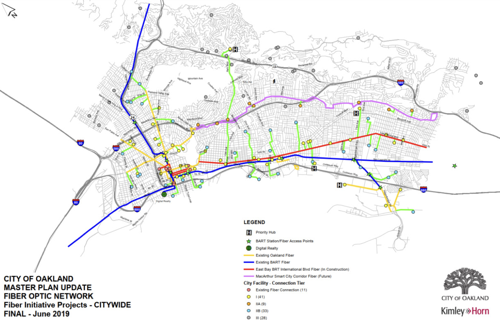
Dubbed the OaklandConnect project – unanimously approved on May 20 by the Oakland City Council – the plan calls for the construction of a city-owned open access fiber network to expand affordable broadband connectivity to over 33,000 households that city surveys indicate are languishing without home Internet service.

While Oakland is served by Comcast and AT&T mostly (with a smattering of Sonic and T-Mobile hotspots), the service in many areas is substandard, expensive, or both – in a city where surveys indicate affordability as the primary reason so many do not have home Internet service.

Image
Oakland fiber map

Once the East Bay city of 436,000 completes network construction, it would be one of the largest publicly-owned open access networks serving a major metro area in the nation – and may serve as inspiration for other large cities to follow suit with a model that’s been proven to bring affordable local Internet choice in monopoly-dominated markets.