
Comcast

Content tagged with "Comcast"

Displaying 41 - 50 of 344

Blue River Latest Colorado Town To Eye Community Broadband

Blue River, Colorado (est. pop. 882) is the latest Colorado municipality to explore building its own broadband network with an eye on affordable access. The town is part of a trend that’s only accelerated since the state eliminated industry-backed state level protections restricting community-owned broadband networks.

Just south of Breckenridge in the central part of the state, Blue River is nestled in one of the more rural parts of Summit County. Comcast (Xfinity) enjoys a broadband monopoly, resulting in spotty access, slow speeds, and high prices. Locals also routinely complain that cell phone service remains spotty in much of the mountainous area.  

In response, town leaders recently hired the consulting firm, NEO Connect, to explore the possibility of building a town-wide fiber network. According to a feasibility study presented to the Blue River Board of Trustees by Mayor Toby Babich, the construction of a fiber network serving every town resident will cost somewhere in the neighborhood of $13 million.

Image
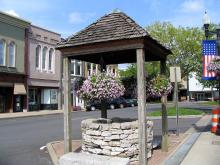
Blue River Plaza

While that “may seem out of reach,” Babich recently told the board, “we believe with the right funding and partnership we can move forward with this project.”

The estimates for network construction range somewhere between $7 million to $24 million, depending on how much underground trenching work is required.

Memphis Launches $700 Million Plan To Expand Fiber Access

Memphis Mayor Jim Strickland has introduced an ambitious new plan to incentivize private telecom providers to deliver affordable fiber to 85 percent of the Tennessee city of 633,000. The project, part of the city’s Memphis 3.0 master plan, will spend more than $700 million to expand broadband in a city where less than a quarter of residents–most of them wealthy–have access to next-generation fiber.

On September 23, city leaders introduced a new city ordinance amendment establishing new, streamlined permitting and fee requirements. Their goal: to incentivize companies willing to expand fiber optic broadband to at least 60 percent of Memphis’ residential and business premises and 60 percent of all existing low-income premises.

Not long after, city leaders unveiled more details about their "Smart Memphis Fiber" effort. After issuing an RFP last year, Memphis officials say they’ve struck a partnership with Paris-based Meridiam and Blue Suede Network to build a $700 million fiber optic network with an eye on eventually reaching 85 percent of the total Memphis population.

Image
Memphis 3.0 Plan cover sheet

“City Government will incentivize any interested company by reducing our costs through reductions in permitting fees and right-of-way fees,” Strickland said in a recent presentation before the city council. “Additionally, we will streamline our process to allow a company to get to work faster. We are also putting our own skin in the game.”

Scranton, PA Issues RFQ For Citywide Gigabit Fiber Network

The city of Scranton, Pennsylvania has issued a request for qualifications (RFQ) for vendors that may be tasked with constructing an affordable citywide fiber network. City leaders say the RFQ is the opening chapter in a bid to bring affordable broadband access to city residents long neglected by dominant regional monopolies.

According to the full RFQ, officials are looking for partner companies capable of building a citywide network capable of providing 1 Gbps (gigabit per second) download and upload speeds to all premises in the City of Scranton, as well as expanded fiber access for city municipal services and key anchor institutions.

“The City does not require municipal ownership of the fiber or a City operational role,” the RFQ states. “However, the City does request connectivity to certain City sites, a 40-year indefeasible right of use (IRU) for 12 strands of fiber for municipal noncommercial purposes throughout the network, and an access and maintenance agreement governing these strands.”

Image
Scranton Pa map

As with so many U.S. markets, broadband competition in Scranton is hard to come by. The market is largely dominated by either Comcast Xfinity or Verizon, the latter of which has been heavily criticized by unions and consumer groups for failing to uniformly upgrade its aging DSL network to fiber, and failing to repair aging lines on a timely basis.

This lack of meaningful competition results in slow broadband speeds, spotty coverage, substandard customer service, and significantly higher prices. Even then, the city hasn’t been without signs of life in the marketplace.

U.S. News & World Report Finds Nearly 2 in 5 Internet Subscribers Compromise Personal Expenses to Afford Internet

With the Affordable Connectivity Program (ACP) poised to run out of funding in early Q2 next year, and no funding source lined up to keep the program alive, a recent U.S. News & World Report survey underscores the significance of the program in the face of rising prices from the nation’s major Internet Service Providers (ISPs).

The ACP offers a monthly benefit of $30 dollars for qualifying households and $75 for qualifying households on Tribal lands (as well as in some remote areas). Over 20 million Americans to date have enrolled in the program to help pay their Internet service bills, but with the $14.2 billion ACP program on track to run dry as soon as May of next year – even amid a historic national effort to establish “Internet For All” – the affordability crisis has become more worrisome for a growing number of Americans.  

U.S. News & World Report’s survey found that Internet prices are going up and that families are compromising other expenses to pay for connectivity, affirming the urgency among digital equity advocates to identify a source of continued funding for ACP, as well as push for more structural solutions that address the root causes of why Americans pay among the highest prices for broadband service in the developed world.

Net Neutrality and the Regulatory Theater of the FCC - Episode 571 of the Community Broadband Bits Podcast

This week on the podcast, Christopher is joined by Karl Bode, a returning guest who has long covered tech and the telecommunications industry. After a short conversation about the continued absence of monopoly abuse in policy conversations about broadband access and affordability today, Karl and Christopher tackle the proposed return to net neutrality announced by Chairwoman Rosenworcel last week. 

They talk about how we got here in the first place, including the landmark decision by the Commission in 2015 to largely abdicate responsibility for Internet-related regulatory activities and the states that stepped in to fill the void. They end the show by considering for a bit what it might be like to have an expert federal agency whose activities governed by a strong regulatory framework and the teeth to enforce its mandate to extend fast, affordable, reliable Internet access for all.

This show is 38 minutes long and can be played on this page or via iTunes or the tool of your choice using this feed. You can listen to the interview on this page or visit the Community Broadband Bits page.

Transcript below.

We want your feedback and suggestions for the show-please e-mail us or leave a comment below.

Listen to other episodes here or view all episodes in our index.

Subscribe to the Building Local Power podcast, also from the Institute for Local Self-Reliance, on iTunes or Stitcher to catch more great conversations about local communities, the concentration of corporate power, and how everyday people are taking control.

Thanks to Arne Huseby for the music. The song is Warm Duck Shuffle and is licensed under a Creative Commons Attribution (3.0) license.

Lancaster PA Revives Public Private Partnership Plans With Shentel’s Glo Fiber

Lancaster, Pennsylvania has revitalized the city’s long percolating plan for a municipal broadband network, this time via a public-private partnership (PPP) with Shenandoah Telecommunications Company (Shentel). The city’s quest for more affordable, reliable broadband is a quest that’s taken the better part of a decade to finally come to fruition.

Lancaster city officials recently announced that they’d selected Shentel with an eye on ensuring uniform broadband availability to the city of 57,000.

“In 2022, the City issued an RFP for a partner to achieve stated goals, which received five responses, and led to the selection of Shentel,” the city said. “The contract will result in Shentel installing fiber at its sole cost to provide service to 100% of the city’s residents. Shentel plans to commence design and construction immediately upon execution of the final agreement.”

According to Lancaster officials, the city hired CTC Technology & Energy Engineering & Business Consulting to evaluate the city’s needs. The determination to proceed with a PPP with Shental was driven, in part, by the historic broadband grant opportunities being created thanks to the 2021 Infrastructure Investment and Jobs Act (IIJA), and the American Rescue Plan Act, the latter of which provided $39.5 million to the city.

Murfreesboro, TN Soon To Be Awash In Affordable Fiber Thanks To Local Cooperative, Google Fiber

Murfreesboro, Tennessee suddenly finds itself awash with looming broadband competitors thanks to the city’s booming growth. In less than a month, United Communications – owned by not-for-profit electric cooperative Middle Tennessee Electric (MTE) – and Google Fiber have unveiled major plans to expand affordable gigabit fiber within city limits.

MTE-owned United Communications says it has some big plans for the city of 157,000, starting with broadband upgrades for the utilities’ 77,000 existing electricity customers.  

According to a recent announcement, the cooperative-owned ISP will spend $85 million in existing cash reserves to deploy 1,400 miles of fiber in the city, bringing affordable gigabit access to existing MTE electricity customers. As with many utility deployments, the upgrades will prove beneficial for electrical grid monitoring and maintenance.

“We’ve already completed phase one in the Boro, which includes our fiber backbone and service to more than 1,000 homes and businesses. As part of phase one, we also built fiber to the square in downtown Murfreesboro,” United President and CEO William Bradford said in a statement. “It was a privilege to put our fiber infrastructure to work by connecting our neighbors in disadvantaged communities and adding resiliency to the local emergency communications network.”

Image
Middle Tennessee Electric logo

Last year, United received $53.4 million in grants from the Tennessee Emergency Broadband Fund (made possible by the The American Rescue Plan Act of 2021) to help shore up broadband access in numerous Tennessee counties, including Bedford, Franklin, Giles, Lincoln, Marshall, Maury, Moore and Williamson.

Colorado and Texas Municipal Broadband Networks Nab National Awards

From Colorado to Texas, municipal broadband providers continue to rack up industry accolades, not just for delivering fiber service–the gold standard of Internet connectivity–but for these networks’ ability to provide ubiquitous access across an entire community at affordable rates.

The National Association of Telecommunications Officers and Advisors (NATOA) recently announced that its Community Broadband Projects of the Year Awards for 2023 will go to the Connexion network in Fort Collins, Colorado and TeamPharr.net in Pharr, Texas.

Awarding Community-Wide Access and Affordability

The Fort Collins award is in recognition for the city having established “a municipal broadband utility created by and for the community to improve the life of all 80,000 residential and commercial properties of Fort Collins through better, more affordable Internet,” NATOA said in announcing the award.

Image
Ft Collins NOC

But it wasn’t just because Fort Collins’ network provides city-wide access to fiber. The award also recognizes that “Connexion offers the fastest Internet speeds available at affordable prices (emphasis added) as well as competitive phone and TV services.”

Berthoud, Colorado Eyes Community Broadband Options

Berthoud, Colorado, population 11,717, is the latest Colorado community to explore community broadband alternatives to expand public access to affordable fiber. Currently in the process of crafting a request for quote (RFQ), the city tells ILSR it hopes to make its final determination by November and have a preliminary plan in place by the end of the year.

Originally, Berthoud had planned on forming a coalition with three neighboring Colorado towns (Johnstown, Mead and Milliken) in a bid to expand access. That plan involved striking a memorandum of understanding (MOU) with Lincoln, Nebraska based Allo Communications, to deliver fiber to every address within three years.

But city leaders say the original plan wasn’t meant to be.

“The four communities did not strike a deal with Allo,” Berthoud Business Development Manager Walt Elish told ILSR. “We could not come to terms. Since then, we have looked at other options, including a town-owned network.”

Image
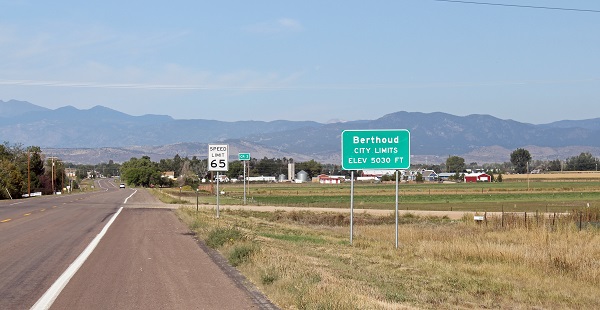
Berthoud Welcome Sign

As with many towns and counties, the high cost of a municipally owned broadband network has the city examining different options, including a potential public private partnership (PPP) with existing providers. PPPs are increasingly common but can have their downsides, including less municipal control over pricing or the potential trajectory of the finished network.

After Decades Of Talk, Palo Alto Drives Forward On Municipal Fiber Build

For over 20 years, the city of Palo Alto, the "Birthplace of Silicon Valley,” has flirted with the idea of building a city-owned municipal fiber network. Now after years of debate, numerous studies, several false starts, and many unfulfilled RFPs, city officials say they’re finally moving forward with a city-owned fiber network they hope will transform affordable broadband connectivity citywide.

Palo Alto officials tell ILSR that the project will be spearheaded by the city-utility, and deployed in coordination with a major upgrade of the city’s electrical systems. Phase One of the city’s planned fiber deployment should begin later this year, delivering fiber access to around 20 percent of the city–or 6,500 homes and businesses.

Phase One will be funded entirely from the utility’s existing cash reserves. Profits from that deployment will then be used to expand affordable, multi-gigabit fiber access to all of the city’s 63,210 residents. Though no shortage of challenges remain.

A Long Time Coming

That Palo Alto residents have been clamoring for better, more affordable alternatives to regional telecom monopolies for 25 straight years speaks for itself. The high costs, slow speeds, and abysmal customer service of regional telecom giants AT&T and Comcast have long driven the public’s unflagging interest in better, cheaper connectivity options.