
Comcast

Content tagged with "Comcast"

Displaying 11 - 20 of 344

Crews Begin Work On Ft. Bragg, California’s Long-Awaited Muni-Fiber Network

Construction crews have begun work on Fort Bragg’s long-awaited municipal fiber network, which will ultimately bring affordable fiber to the California city of 7,000.

The total cost of the project is estimated to be $17 million. Of that, $10 million will be paid for by a Last Mile Federal Funding Account (FFA) grant from the California Public Utilities Commission (CPUC), awarded in February to help fund the construction of a Middle Mile Broadband Network (MMBN) that will run directly through the heart of Ft. Bragg.

The remaining project costs will be paid for by a $7 million, 20-year loan at 4.85 percent from EverBank, recently approved by the Fort Bragg city council.

“This project is a cornerstone for the future of Fort Bragg,” City Manager Isaac Whippy said of the milestone. “Reliable, high-speed internet is no longer a luxury – it’s a necessity. With this investment, we’re closing the digital divide and making Fort Bragg a more connected, competitive, and inclusive community.”

According to a city announcement, Ft. Bragg’s citywide fiber network, 170 miles north of San Francisco, is being designed with a centralized data hub and 15 Distribution Areas (DAs). Using horizontal directional drilling, crews will install conduit and fiber underground – primarily beneath sidewalks and alleys – connecting to a fiber terminal located near the edge of the city’s right-of-way at each property.

Massachusetts Lawmakers Hold Hearing Today on Affordable Broadband Bill

Legislation that would require ISPs operating in Massachusetts to offer qualifying low-income households high-speed Internet service for $15 per month is set to have its first legislative hearing.

The hearing is slated to run from 11 am to 1 pm ET today before the Massachusetts Legislature’s Joint Committee on Telecommunications, Utilities, and Energy. Committee members will hear testimony on multiple bills, including two companion pieces of legislation known as An Act Preserving Broadband Service for Low-income Consumers – S.2318 (filed by State Sen. Pavel Payano) and H.3527 (filed by State Rep. Rita Mendes).

The proceedings can be viewed here.

Inspired by New York Law

The hearing in Massachusetts comes as similar legislation is being considered by state lawmakers in Vermont and California – all three of which are modeled on New York’s Affordable Broadband Act which, after numerous legal challenges, went into effect in the Empire State in January of this year after the US Supreme Court declined to intervene and overturn a U.S. Appellate Court ruling that upheld the law.

Like the New York law, the bill being proposed in Massachusetts requires ISPs operating in Massachusetts to offer qualifying low-income households high-speed Internet service for $15 per month.

However, the Massachusetts bill set the minimum speed at 100 Megabits per second (Mbps) download to mirror the increased FCC definition for minimum broadband speeds that had been raised from the previous benchmark of 25/3 Mbps, which was the federal standard when the New York law was written.

Baltimore Close To Issuing RFP For Major Fiber Expansion

Baltimore activists and leaders say the city is making steady progress in efforts to bridge the digital divide in the city of 565,000. The efforts have culminated in several grant-fueled initiatives to deliver fiber and wireless to city apartment complexes, a city middle-mile network, and a looming partnership with regional providers to further expand affordable access.

When we last checked in with Baltimore, the city had just doled out $2 million of its American Rescue Plan Act (ARPA) funding to bring fiber to 12 new city apartment buildings. The deployment is in partnership with Waves, a nonprofit formerly known as Project Waves.

Waves was first launched in 2018 in direct response to the Trump FCC’s repeal of net neutrality and the general failures of federal telecom policy to address digital inequity. Project Waves (profiled by ILSR in 2023) initially used Point-to-Multipoint wireless connectivity to deliver free wireless broadband service to about 300 multi-dwelling unit (MDU) residents.

Image
Project Waves sign

Now Baltimore Director of Broadband and Digital Equity Kenya Asli tells Government Technology the city is putting the finishing touches on a Request for Proposal (RFP) to strike a new public-private-partnership with an as-yet-unselected broadband provider. The deal should further expand fiber access to unserved and underserved parts of the city.

“Folks want more options, and so we are bringing in more options,” Asli said.

Comcast Poised To Acquire San Bruno, California’s Municipal Fiber Network

Comcast says it’s acquiring San Bruno, California’s CityNet, a municipally owned and operated broadband, video and voice network that currently serves over 5,400 residents and businesses.

San Bruno’s $8 million sale to Comcast was prompted by $21.5 million in debt and what the city says was surging operating costs. Unlike many municipal broadband providers, San Bruno also provided television services, which many smaller providers and communities are moving away from due to soaring programming costs and dwindling and unsustainable profit margins.

“Rates simply were not keeping pace with costs,” Bruno city manager Alex McIntyre wrote in a January report to the City Council. “CityNet has grown increasingly technologically obsolete over the past decade.”

Despite increasing service rates between 9 and 12 percent, the city says it saw operating losses of  $794,852 in 2023 and $859,995 in 2022.

Originally founded in 1972 as San Bruno Cable TV, the pioneering cable broadband operator (with some scattered fiber development) struggled with modernizing its coaxial network to fiber, something city leaders refused to fund.

“A significant City-funded capital investment would be required to bring CityNet’s technology and operations up to current industry standard, as well as rate adjustments,” McIntyre wrote. “The Council declined to authorize this capital request in April 2023.”

The Future of Passive Optical Networks | Episode 112 of the Connect This! Show

Connect This! Show

Catch the latest episode of the Connect This! Show, with co-hosts Christopher Mitchell (ILSR) and Travis Carter (USI Fiber) joined by regular guests Kim McKinley (TAK Broadband) and Doug Dawson (CCG Consulting) and special guest Shane Eleniak (Calix) to talk about:

Join us live on April 18th at 2pm ET, or listen afterwards wherever you get your podcasts.

Email us at [email protected] with feedback and ideas for the show.

Subscribe to the show using this feed or find it on the Connect This! page, and watch on LinkedIn, on YouTube Live, on Facebook live, or below.

Google’s Hometown Of Mountain View, CA Eyes Potential Muni Fiber Build

Home to one of the wealthiest and most successful companies in America, you wouldn’t expect residents of Mountain View, California to find themselves on the wrong side of the digital divide.

Yet the city of nearly 82,000 – frustrated with spotty and expensive service by AT&T and Comcast – is considering a municipal broadband network to deal with the deficiencies of the duopoly.

Last year, Mountain View officials hired the consulting firm, Entrust Solutions, to take a closer look at the city’s broadband availability metrics and device potential options for the city.

The finished report and accompanying technical memorandum note that Comcast enjoys a monopoly over vast swaths of the city, resulting in expensive, slow, and spotty access.

“Although most of the City is considered ‘well-served’ by federal and California state standards, most residents have only a single option for Internet service and are essentially subject to a cable monopoly,” the authors wrote. “When it comes to modern gigabit Internet services, only 42% of the serviceable addresses have fiber access.”

The study similarly found that despite ongoing taxpayer subsidization, AT&T has historically failed to upgrade its older DSL customers to fiber across large swaths of the city.

“AT&T provides legacy copper-based service for most of the city, but that technology is not capable of meeting the State of California’s minimum broadband speeds of 100 Mbps download and 25 Mbps upload,” the consulting firm found.

“And while AT&T also provides fiber-to-the-premises (FTTX) services in limited neighborhoods of the City, this means that much of the City is effectively a Xfinity/Comcast monopoly, leading to an uncompetitive market for City residents seeking broadband service.”

Advancements in Cable Networks - Connect This! Show Episode 108

Connect This! Show

Catch the latest episode of the Connect This! Show, with co-hosts Christopher Mitchell (ILSR) and Travis Carter (USI Fiber) joined by regular guests Kim McKinley (TAK Broadband) and Doug Dawson (CCG Consulting) and special guest Jason Livingood (Comcast) to talk how cable network operators are innovating to reduce latency, combat buffer bloat, and improve their networks around the county. Join us live on February 21 at 2pm ET, or listen afterwards wherever you get your podcasts.

Join us live on February 21 at 2pm ET, or listen afterwards wherever you get your podcasts.

Email us at [email protected] with feedback and ideas for the show.

Subscribe to the show using this feed or find it on the Connect This! page, and watch on LinkedIn, on YouTube Live, on Facebook live, or below.

Carver County, Minnesota’s CarverLink Closes In On 100% Gigabit Fiber Coverage

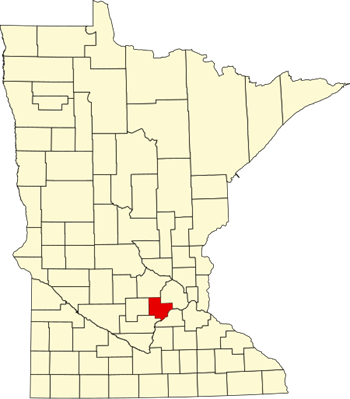
Officials in Carver County Minnesota continue to make great progress expanding affordable fiber access to the county of 111,000 residents, thanks largely to their publicly-owned open access fiber network CarverLink and their partnership with Metronet.

Since its inception in 2013, Carver County has leveraged public and private collaborations and funding with the goal of making symmetrical gigabit (1 Gbps) fiber available to all locations county wide. With the looming completion of its most recent $10.5 million expansion, CarverLink Fiber Manager Randy Lehs told ISLR they’re getting very close to their ultimate goal.

The county currently has ownership and use of nearly 1,200 miles of fiber throughout Carver County and southern Minnesota connecting more than 280 last mile public and community support locations. Many of these markets have no connectivity; many others are stuck on dated, sluggish, patchy connectivity from regional monopolies.

CarverLink doesn’t provide fiber directly to residents and businesses. Instead it long-ago established a partnership with Metronet (formerly Jaguar Communications), to provide gigabit fiber service to businesses and local residential households. Winner of PCMag's “Fastest Major ISP for 2023” award, Metronet provides multi-gigabit fiber to 300+ communities across 17 states.

Image
Carver County map

“CarverLink also oversees the availability of dark fiber within our network that is available to qualified service providers or other entities using dark fiber for new opportunities–open access, open interconnect fiber,” Lehs said.  “And through our open access fiber, services are also available from Broadband-MN and Arvig.”

Sherwood, Oregon Ferments ‘Future-Proof’ Fiber To Preserve and Expand Municipal Network

In the City of Sherwood, a mostly residential bedroom community 16 miles south of Portland, officials have been quietly cultivating a digital vineyard across Oregon’s “Gateway to Wine Country.”

As part of its on-going work to build out a citywide fiber network, Sherwood Broadband recently secured a $9 million grant from the Oregon Broadband Office Broadband Deployment Program (BDP) to continue expanding Sherwood’s municipally-owned network into neighboring rural communities just outside city limits.

The grant award is part of $132 million in federal Rescue Plan funds the state is doling out to an array of community-owned broadband initiatives for 16 projects across 17 counties.

Award winners include Beacon Broadband, a subsidiary of the Coos-Curry Electric Cooperative ($19.4 million); Jefferson County ($19.2 million); Douglas Fast Net, a wholly-owned subsidiary of the Douglas Electric Cooperative ($8.5 million); the Idaho-based member-owned cooperative Farmers Mutual Telephone Company, which offers broadband service in Malheur County, OR ($18.9 million); and a handful of independent providers like Blue Mountain Networks ($6.5 million) and Ziply Fiber ($10.2 million), recently acquired by Bell Canada.

Boulder Strikes $9 Million Broadband Deal With ALLO

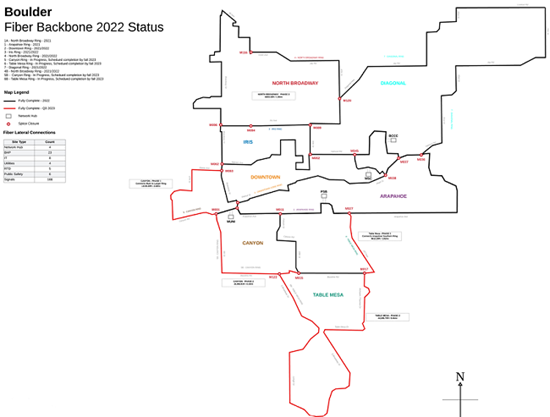
The Boulder, Colorado city council has voted unanimously (9-0) in favor of striking a $9 million deal with Nebraska based ALLO Communications that should ultimately provide fast fiber access to most of the city’s 330,000 residents.

The particulars of the agreement involve ALLO leasing part of the city’s fiber network as part of a 20 year agreement. ALLO will pay Boulder a $1.5 million upfront lease payment and provide the city $2.25 per residential and $9 per business customer per month plus 1.5 percent of revenue from any wholesale lease. The total deal is estimated to be worth $9 million to the city.

Image
Boulder Colo fiber backbone map

“This achievement stems from a 2018 decision by the City Council to construct a citywide fiber backbone,” city officials said of the deal. “This forward-thinking initiative secured the city's future ability to support various broadband business models, ensuring long-term flexibility and growth in digital infrastructure.”

As per the deal, ALLO will provide broadband service to 80 percent of the city by 2028 and 97 percent of the city by 2030.

ALLO currently provides broadband access to more than 1.2 million customers throughout Colorado, Nebraska, Arizona, and Missouri.

In deployed markets, ALLO offers locals two tiers of fiber service: symmetrical one gigabit per second (1 Gbps) for $98 a month, and symmetrical 2.3 Gbps service for $126 a month.