
Comcast

Content tagged with "Comcast"

Displaying 31 - 40 of 344

San Francisco Wins National Award For Providing Free High Speed Internet Service To Affordable Housing Residents

As the Affordable Connectivity Program (ACP) is now bankrupt and no longer helping low-income households pay for home Internet service, the City of San Francisco is being honored with the 2024 Community Broadband Project of the Year Award by the National Association of Telecommunications Officers and Advisors (NATOA) for its Fiber to Housing (FTH) program.

Built on the back of the city’s municipally-owned fiber optic network – which since 2002 has been used to connect city and public safety facilities, hospitals, libraries and street lights – California’s fourth most populous city is well on its way to extending the city-owned network to deliver free high-speed Internet service to 30,000 affordable housing units across the city.

Image
San Francisco technicians deploying fiber across roof

The program currently serves over 14,300 affordable housing units in the city, as well as 1,500 beds at homeless shelters across 115 sites, city officials say. An additional 10,000 residential units are expected to be connected in the coming fiscal year, with the aim of serving 30,000 units by July 2025.

According to the city’s website, the program has connected 52 public housing locations across the city to “fiber-optic and Ethernet cabling in every housing unit.” An additional 63 housing locations are getting free Internet through onsite Wi-Fi with download speeds ranging from 60 to 120 Mbps (Megabits per second), which exceeds the 50 Mbps service Comcast’s Internet Essentials offers.

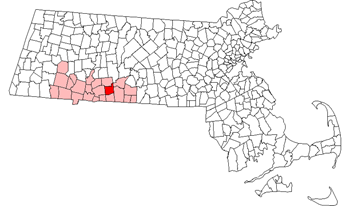
Wilbraham, Massachusetts Takes First Step Toward City-Owned Fiber Build

Wilbraham, Massachusetts officials are taking the first steps toward building a city-owned open access fiber network with an eye on boosting local competition and delivering affordable, next-gen broadband access to long-neglected local residents.

Having issued a request for proposal (RFP) earlier this year with the help of EntryPoint Networks, city officials are currently identifying which company they’ll hire to deploy fiber to the city of 14,749.

They say a formal plan to present to voters – as well as a total projected network cost estimate – is expected by October.

“We have no intention of raising taxes or utilizing tax dollars,” Wilbraham Broadband Advisory Committee Chair Tom Newton tells local news outlet The Reminder.

Newton says Wilbraham is hopeful the new network will be primarily financed through an enterprise fund, similar to how the town handles the cost of water and sewer. Depending on take rates, the city is also hopeful the network will be sustainable primarily through subscriber fees. How that all works out in practice remains to be seen.

Image
Map of Wilbraham

Officials are hopeful to keep the total price per household around $60 a month. A project FAQ states the city wants to deliver symmetrical 20 Mbps (megabit per second), 100 Mbps, 250 Mbps, 500 Mbps, and symmetrical 1 Gbps (gigabit per second) service tiers to residents.

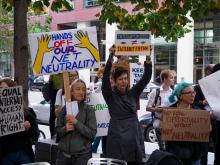
Net Neutrality Is Really A Debate Over Monopoly Power

With a 3-2 vote along partisan lines, the FCC has restored both net neutrality–and its Title II authority over Internet access providers. It’s just the latest chapter in a multi-decade quest to try and prevent national telecom monopolies from abusing their market power to undermine competitors while nickel and diming American consumers.

“Consumers have made clear to us they do not want their broadband provider cutting sweetheart deals, with fast lanes for some services and slow lanes for others,” FCC boss Jessica Rosenwocel said in a statement.

“They do not want their providers engaging in blocking, throttling, and paid prioritization. And if they have problems they expect the Nation’s expert authority on communications to be able to respond,” Rosenwocel added.

Smaller ISPs and municipalities worry that the new rules saddle them with burdensome regulations as a punishment for the sins of much larger companies. But the FCC, state leaders, and consumer groups insist the rules should be a net benefit all the same.

The final rules require that ISPs be transparent about any restrictions on consumer broadband lines. They also prohibit ISPs from extorting content and service companies looking to maintain high-quality performance on telecom networks, and prohibit telecoms from undermining online competition by creating pay-to-play “fast lanes.”

Pennsylvania Snubs Community Broadband, Small ISPs In Latest Broadband Grant Round

Telecom monopolies have hoovered up the lion’s share of $214 million recently doled out by the Pennsylvania state Broadband Infrastructure Program (BIP), with cooperatives, smaller ISPs, and community-owned networks left largely out in the cold.

It’s not a surprising move for a state long considered politically hostile to community-owned and operated broadband networks, though industry experts say this latest round of awards was particularly egregious when it comes to dodgy politics and its total lack of any real transparency.

According to an announcement by the Pennsylvania Broadband Development Authority (PBDA), this $204 million in Broadband Infrastructure Program (BIP) grant awards will help fund 53 projects in 42 counties across Pennsylvania, connecting 40,000 homes and businesses, bringing high-speed Internet to over 100,000 Pennsylvanians.

Image
PA Broadband Development Authority logo

The awards were funded with the state’s Capital Projects Fund allocation. After matching funds by winning bidders are included, the total broadband investment is expected to exceed $407 million. A complete breakdown of all grant award winners can be found here.

Verizon was the biggest grant award winner, nabbing $78.3 million. Other big grant award winners were Comcast ($61.7 million), Windstream ($12 million) Frontier ($3.5 million) and Brightspeed ($782,000). A few small private ISPs also won awards including Adams Cable ($387,969) Upward Broadband ($1,476,288) and Alleghenies Broadband ($1,809,524).

Without Political Power, There is No Path to Digital Equity - Episode 591 of the Community Broadband Bits Podcast

Episode 591 of the Community Broadband Bits Podcast features a panel from Net Inclusion that Christopher Mitchell moderated entitled, "Without Political Power, There is No Path to Digital Equity." In it, panelists raise difficult questions for the digital equity movement about whether they are on track to achieve their goals - whether the main strategies used today can result in digital equity or are destined to fall well short.

Panelists include Melanie Silva, COO of Hinton & Company in Chattanooga; Shayna Englin, Director of the Digital Equity Initiative at the California Community Foundation; Joshua Edmonds, CEO of Digital C in Cleveland; and Dan Ryan, Vice-Chair of the Enterprise Center in Chattanooga.

The discussion includes constructive criticism of the movement for digital equity, as well as more specific criticism of the decision to move the Net Inclusion conference from Chattanooga to Philadelphia. That decision was entangled with - and justified by - the concerns of some regarding safety in the wake of attempts in the Tennessee Legislature to revoke the rights of Transgender individuals, among others. The panel felt it was important not to ignore those issues as we wrangled with the larger issue of building a better society with more rights and opportunities for everyone.

We hope you find this discussion useful and respectful of the larger movement despite disagreements on some important issues.

This show is 93 minutes long and can be played on this page or using the podcast app of your choice with this feed.

Transcript below.

We want your feedback and suggestions for the show: please e-mail us or leave a comment below.

Listen to other episodes here or see other podcasts from the Institute for Local Self-Reliance here.

Thanks to Arne Huseby for the music. The song is Warm Duck Shuffle and is licensed under a Creative Commons Attribution (3.0) license.

Martinsville, Virginia To Finally Take Full Advantage Of Decades-Old Muni Fiber Network

Martinsville, Virginia has technically owned a municipal fiber network for the better part of a generation. But the city never had the time, resources, or interest in maximizing the Municipal Internet Network’s (MINet) full potential until COVID demonstrated the importance of affordable access and federal broadband grants made expansion a viable reality.

At a Martinsville city council meeting on February 13, the council offered unanimous support for a phased expansion of the city’s fiber network.

What exactly the expansion will look like, and how it will be funded, very much remain a work in progress.

The core MINet fiber network originally consisted of 48 strands and 20 miles of fiber connecting city schools, municipal buildings, local businesses, and key anchor institutions. A 2009 estimate indicates the network has saved the city between $100,000 and $150,000 annually on telecom lease agreements every year since its inception.

Image
Martinsville map

Despite having been first constructed in the 1990s, Martinsville’s MINet only has about 376 customers (98 of them being residential) in a city of nearly 14,000 residents. There’s roughly 20 users currently on a multi-month waiting list, eager to get access to affordable fiber at speeds up to a gigabit per second (Gbps).

Mike Scaffidi has been the MINet director for 26 years. He tells ILSR that while the city has contemplated network expansion for a long time, the city never had the staff or resources to prioritize the expansion or marketing of the city-owned fiber network.

Golden, Colorado Strikes Right Of Way Agreement With Google Fiber

Golden, Colorado has struck a new right-of-way agreement with Google Fiber that should expedite the competitive delivery of affordable fiber to the city of 20,000.

The deal gives Google Fiber non-exclusive access to public right-of-way to build a commercial broadband network, though it delivers no guarantee of uniform access across the entire city.

In a memo to the Golden City Council, Chief Innovation and Technology Officer Jiles McCoy said the city’s new agreement “would act as a template for any future companies wishing to build broadband services in the Golden right of way.”

The move comes after years of discussion in the city as to how to improve local broadband competition, reduce prices, and expand affordable access.

In 2016, Golden residents voted to opt out of a now defunct state law, ghost written by regional broadband monopolies, restricting the construction and operation of community owned and operated broadband networks. Last year Colorado leaders finally eliminated the law completely, opening the door to greater expansion of community-owned networks.

Image

In 2019 the city completed a feasibility study showing that the construction of a full city-owned fiber network would cost $37 million. Instead of tackling the entire project at once, advisers recommended the city proceed in phases, beginning with the construction of a $3.8 million, 10.5 mile fiber ring connecting key community anchor institutions.

Idaho Greenlights $120 Million For 18 Broadband Projects

The Idaho Broadband Advisory Board (BAB) has greenlit $120 million in broadband grants from the Idaho Capital Projects Fund (CPF) to fund 18 different broadband projects across Idaho, delivering affordable fiber access to 30,000 homes and businesses, many for the first time.

It’s the latest round of funding made possible by the American Rescue Plan Act, passed in 2021 to help soften the impact of COVID. A breakdown of the finalized awards indicate 18 different providers received funding from BAB, including a $9.8 million award to Comcast and more than $11 million to Ziply Fiber.

“These awarded projects are another important step in furthering the Idaho Broadband Advisory Board’s mission of ensuring that all Idahoans have access to affordable and reliable internet,” Idaho Broadband Advisory Board Chair, Representative John Vander Woude said in a prepared statement. “These projects will connect homes and businesses across the entire State.”

Seven of the award recipients were individual counties pursuing varying options to shore up access to largely rural unserved and underserved residents.

UTOPIA Fiber Completes $23.5 Million Network Build in Syracuse, Utah

UTOPIA Fiber has completed its fourth major broadband deployment of 2023, with the finished construction of a $23.5 million citywide fiber-to-the-home (FTTH) build in Syracuse, Utah (est. pop. 33,000).

Network construction began November 30, 2021, and its first customer was connected on September 12, 2023. UTOPIA officials say the new Syracuse network passes 12,324 residential addresses, and has already reached a nearly 16% subscriber take rate in the city.

UTOPIA, shorthand for Utah Telecommunication Open Infrastructure Agency, is a collaboration between 11 Utah cities that joined together in 2004 to build, deploy and operate a fiber network that reaches every last home and business in its territory. Since 2009, UTOPIA’s expansion has been funded entirely by subscriber revenues.

Despite some early lawsuits by regional monopolies like Qwest (now Centurylink/Lumen) designed to kill the project before it could get a foothold, UTOPIA has not only survived but thrived, and its success has been transformative for large swaths of the Beehive State.

Syracuse – like many U.S. communities – had been consistently underserved by a duopoly of Comcast and Centurylink (Lumen). That lack of competition consistently results in sluggish, expensive, spotty broadband service, and substandard customer service. Now, locals have access to a variety of far more affordable options thanks to a menu of UTOPIA partner ISPs.

Knoxville Utility Board Completes First Phase Of Major Municipal Broadband Project

Knoxville, Tennessee's Knoxville Utility Board (KUB) says it has completed the first phase of its ambitious broadband deployment, bringing affordable fiber access to more than 50,000 premises in this city of 192,000 – many for the very first time.

When we last wrote about KUB back in 2021, the city's utility had just received approval to build what will eventually be the biggest municipal broadband network in the U.S.

All told, the $702 million project, known as KUB Fiber, aims to deliver affordable fiber to 210,000 households across KUB’s 688-square-mile service area, taking between seven and ten years to complete.

KUB says that the first phase of fiber deployment involved the installation of more than 1,100 miles of fiber infrastructure. Upgraded users have the option of three tiers of service: symmetrical gigabit per second (Gbps) service for $65 a month; symmetrical 2.5 Gbps service for $150 a month; and symmetrical 10 Gbps service for $300 a month.

KUB’s service tiers do not come with usage caps or long-term contracts. Unlike many municipal operations, KUB is also offering locals the option of bundling television service.

KUB was driven to expand access after more than a decade of local frustration at the slow speeds, high prices, and spotty coverage caused by a notable lack of competition between regional telecom monopolies, AT&T and Comcast (Xfinity). Both companies have attempted to lock down customers via long-term contracts ahead of the network’s completion.

As one local resident said:

“Comcast thanked me for being a customer for 23 years, but it's not because I've had the option to go anywhere else. They have had 23 years to fix these problems and they haven't."