
American Rescue Plan

Content tagged with "American Rescue Plan"

Related Topics
Displaying 1 - 10 of 252

DigitalC Beats 2025 Targets, Now Tests If ‘Cleveland Model’ Can Be Replicated

For years, Cleveland was labeled as one of the worst-connected cities in the nation despite the presence of AT&T and Charter Spectrum. But all of that is changing, thanks to an innovative nonprofit community network provider.

Even without getting a cent from the federal government’s flagship $42.5 billion dollar BEAD program, Cleveland is no longer just home to the Rock & Roll Hall of Fame. It’s now also the home of skyrocketing connectivity rates as DigitalC transforms the city’s digital landscape.

The data-backed progress was enough to convince the Cleveland City Council to recently sign off on a $4.35 million “performance payment” — part of an overall $20 million earmark from the city's coffers — to DigitalC after the nonprofit Internet provider blew past its 2025 goals for getting residents online and teaching them digital skills, a milestone city leaders are pointing to as proof that “The Cleveland Model” for closing the digital divide actually works.

Under its performance-based contract with the city, DigitalC was on the hook to add 4,700 new household Internet subscriptions and deliver digital skills training to 10,000 residents in 2025 or miss out on the multi-million dollar infusion of city cash.

Decatur County Electric Cooperative Leads Charge as Indiana's BEAD Rollout Begins

Indiana Cooperatives are once again at the front of the pack as the state prepares to dramatically expand affordable fiber access on the back of $483 million in Broadband, Equity, Access, and Deployment (BEAD) broadband grants.

The first round of bead funding is expected to connect an estimated 123,000 Indiana households and businesses that currently have either substandard Internet access, or no access at all. All told, the state’s BEAD deployment plan is slated to expand affordable fiber access to 91 of Indiana's 92 counties.

Last June, the Decatur County Rural Electric Membership Corporation (DCREMC) was the first of the state’s 24 BEAD grant awardees to sign a contract with the Indiana Broadband Office.

The cooperative’s $7.1 million BEAD award will help extend fiber service to roughly 2,800 additional homes and businesses across the rural and sparsely populated communities across Decatur County, including Greensburg, Napoleon, Millhousen, and St. Paul. Most of the construction is expected to be finished before year’s end.

Image
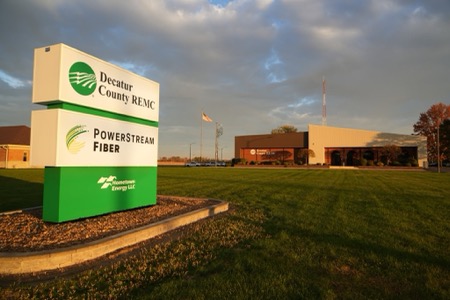
Decatur County Elec Coop building and sign

Decatur County REMC expanded into fiber Internet access in January of 2025 under the Power Stream Fiber brand. Power Stream Fiber currently offers three tiers of service: a symmetrical 500 megabit per second (Mbps) offering for $65 a month; a symmetrical 1 gigabit per second (Gbps) tier for $80 a month; and a symmetrical 2 Gbps service option for $110 a month.

RiverStreet Networks Loses Virginia Contracts After Numerous Delays

RiverStreet Networks has been removed from multiple broadband deployment projects by the Virginia Broadband Office after years of delays, leaving the state scrambling to find a replacement suitor for projects intended to bring affordable Internet access to more than 30,000 rural customers across The Old Dominion state.

The company was stripped of its state contracts after it repeatedly failed to meet deadlines and struggled to find additional funding needed to complete promised state deployments. Most of the state contracts heavily subsidized RiverStreet via the American Rescue Plan Act (ARPA).

But state officials say RiverStreet repeatedly failed to deliver promised connectivity to counties all across the state.

In Patrick, Henry, and Franklin counties, for example, RiverStreet was selected in 2022 and 2023 by the West Piedmont Planning District to bring fiber Internet access to 14,547 households. But according to local news outlet Cardinal News, the ISP had delivered just 40 total connections across all three counties.

“Well, it’s certainly been frustrating, and I have dedicated a tremendous amount of my time to this project,” Henry County Administrator Dale Wagoner told the outlet. “I’ve served as lead [on the project] since day one and the first grant application. It’s most frustrating for our residents who we’ve been promising broadband to for many years now.”

Indiana Awards $250,000 In New Internet Access Grants

The Indiana Broadband Office (IBO) has announced the results of the 17th round of the Indiana Connectivity Program, featuring $250,749 in new Internet access grants that will connect 63 new locations across 21 counties in The Hoosier State.

The grant awards have been made possible by the 2021 American Rescue Plan Act (ARPA). Indiana set aside $30 million of its ARPA grant award specifically to improve Internet access to communities long-trapped on the wrong side of the digital divide.

According to an announcement by the IBO, nine providers received funding during this latest grant round. 

While the grant amounts are relatively small, they’re a big deal to the small independent providers and member-owned cooperatives who received them.

  • Auburn Essential Services: received $4,800 for one location
  • Decatur County REMC: received $38,400 for eight locations
  • Geetingsville Telephone Co.: received $4,800 for one location
  • Johnson County REMC: received $9,600 for two locations
  • Joink Inc.: received $34,930 for 11 locations
  • Mainstream Fiber: received $19,019 for 11 locations
  • Mulberry Telecommunications: received $4,800 for one location
  • PSC Fiber: received $57,600 for 12 locations
  • Surf Internet: received $76,800 for 16 locations

As of Round 17, the state program has allocated over $14 million to provide service to more than 3,600 households, businesses, and community anchor institutions.

The Plot to Hijack America’s Broadband - Episode 15 of Unbuffered

Unbuffered Logo - Two text bubbles

In this episode of Unbuffered, Chris is joined by Sean Gonsalves and Karl Bode for a wide-ranging conversation about the latest stories shaping the telecommunications landscape.

The group begins by discussing the upcoming 250th anniversary of the United States, prompting a broader discussion about the country's history, civic identity, and how Americans can use the milestone as an opportunity to reflect on the nation's past while looking toward its future.

From there, they dive into Sean and Karl's recent article for The Verge: Elon Musk and the Plot to Hijack America’s Broadband, reflecting on the state of broadband policy, the challenges facing community broadband, and how the national conversation around Internet infrastructure continues to evolve.

Finally, Chris, Sean, and Karl unpacked the recent House Committee on Energy & Commerce Hearings regarding Arielle Roth and the National Telecommunications and Information Administration's revised BEAD guidance, discussing changes to technology neutrality, the growing role of low-Earth orbit satellite providers, and what the new rules could mean for states, communities, and long-term broadband investment. 

Along the way, they debate the tradeoffs between Fiber, fixed wireless, and satellite service, and whether the updated approach will deliver the infrastructure communities need.

Throughout the episode, Chris, Sean, and Karl connect today's policy debates with broader questions about investment, local leadership, and what it will take to ensure communities have access to reliable, affordable Internet for decades to come.

This show is 53 minutes long and can be played on this page or via Apple Podcasts or the tool of your choice using this feed

You can also check out the video version via YouTube.

Transcript below.

We want your feedback and suggestions for the show-please e-mail us or leave a comment below.

Listen to other episodes (formerly Community Broadband Bits) or view all episodes in our index. See other podcasts from the Institute for Local Self-Reliance.

Thanks to Whitedrift for the song Operator, licensed Creative Commons Attribution (3.0).

Beyond the Fiber: Vermont's Community Network Model Aims to Improve Lives One Hub at a Time

The ​​soundproofed privacy pod tucked inside the first floor of the Rural Edge affordable housing development may be one of the most consequential pieces of infrastructure built in Vermont since the state’s Communications Union Districts (CUDs) first began deploying fiber networks.

With a population of just over 500 Vermonters living in the small town of Groton — where the nearest hospital is a 30-minute drive away and not every conversation can or should be overheard at home — the fiber-connected privacy pods are small enough to fit just two people, but private enough for life-enhancing online conversations to be had.

“Groton is where the largest percent of folks are without high speed Internet access. It’s highly unserved, except for downtown,” explained Christa Shute, Executive Director of NEK Broadband, which recently combined with the CVFiber CUD to form a 72-town telecommunication utility district now providing fiber Internet service across some of the most rural parts of the most rural state in the U.S.

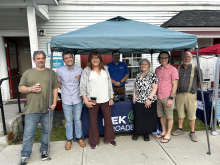
Thanks to the commitment of Groton volunteers and town leaders and their intimate knowledge of their community – backed with the resources of the Vermont Community Broadband Board (VCCB) — “we knew what addresses didn’t have service,” Shute tells ILSR, fresh off the weekend’s grand opening celebration of the Groton Connectivity Hub, which also featured a live fiber splicing demo, online safety presentations, and drop-in tech help for the public.

Okanogan County Public Utility District Lights Up Fiber In Rural WA

The Okanogan County Electric Cooperative (OCEC) and the Okanogan County Public Utility District (PUD) say they’re making steady progress on bringing affordable fiber broadband access to Okanogan County, a highly rural stretch of rugged land in Washington state on the border of Canada.

According to the organizations, the coalition is poised to bring next-generation fiber to as many as 1,366 peppered along the upper Methow Valley this year starting near Chewuch River and ending at Lost River. Many of these areas will be seeing fiber upgrades for the first time ever after years stuck on the wrong side of the digital divide.

According to a presentation at a town hall last month, officials stated that the project will include 98 miles of underground fiber deployment and 88 miles of new aerial fiber deployment. A mainline backbone fiber between Twisp and Winthrop is completed and functional, providing a redundant loop feed of fiber between the two areas, they stated.

Image
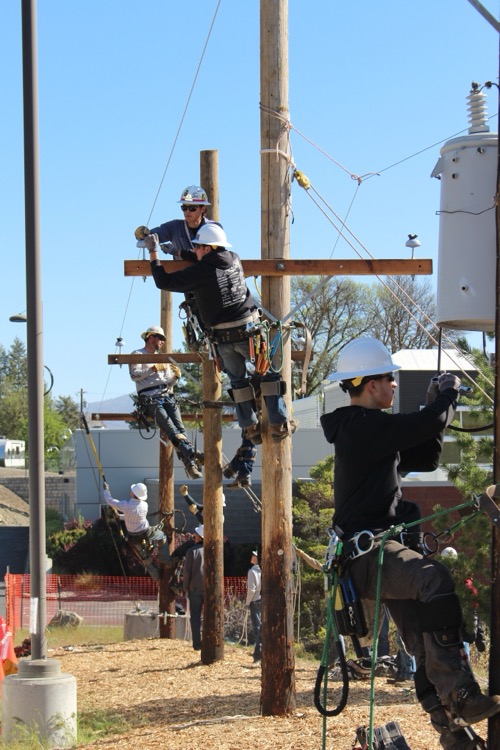
students at the Okanogan PUD bootcamp are being trained on how to properly climb a utility pole and work on the equipment

Construction on the project started back in March, and should be completed by the end of the year, OCEC’s contractor, Shawn VanGeystel of Cannon Construction, recently told the Methow Valley News.

The electrical cooperative’s fiber arm is named MethowNet. It offers three tiers of fiber service, though pricing varies slightly between the North and South Valley.

Major Flagstaff Fiber Expansion Through Wecom Public-Private Partnership

Daunted by the high costs of building its own municipal fiber network, Flagstaff Arizona instead struck a public private partnership (PPP) in late 2024. A year and a half later and that partnership is starting to drive significant new fiber deployments and some significant new investment to the city of 77,000.

Or that’s at least the conclusion of a new whitepaper by the Fiber Broadband Association, a policy coalition of municipal broadband networks and key fiber industry giants such as Adtran, GFiber, Corning, Calix, and Graybar.

The analysis, "Broadband Community Profile: A Public-Private Partnership for Fiber – Flagstaff, Arizona," explores how the PPP the city struck Arizona-based Wecom Fiber is expected to inject at least $100 million into local economy over five years while saving the city an estimated $18 million in capital expenses.

Frustrated by market failure and a lack of meaningful broadband competition among regional telecom monopolies, Flagstaff considered building its own municipal fiber network in 2023. But city officials found that even just connecting 34 city-owned buildings (estimated to be around $20 million) would be untenable given budgetary constraints.

Roanoke Cooperative Plans $2.4 Million Rural North Carolina Fiber Expansion

Roanoke Cooperative’s Fybe has been awarded $2.4 million in state funds to expand affordable access to high speed Internet to 826 locations across eight predominantly rural North Carolina counties that for years have been left lingering in a broadband desert.

Fybe, the cooperative's fiber business, will receive $2.4 million through the state’s Stop-Gap Solutions program to connect 826 locations across Bertie, Chowan, Gates, Granville, Halifax, Hertford, Martin, and Northampton counties. The fiber expansion is expected to be completed by the end of 2026.

“This investment allows us to continue expanding reliable, high-speed internet to rural communities that need it most,” Fybe President Bo Coughlin recently said of the expansion. “Access to broadband is essential for education, healthcare, business growth, and everyday life, and we’re proud to be part of the effort to ensure more North Carolinians can stay connected.”

Image
A group of young African American kids gather around a Roanoke Cooperative employee on Ag Safety Day

North Carolina’s Stop-Gap Solutions program is designed to reach hard-to-access locations and close gaps in broadband coverage. The program is administered by the North Carolina Department of Information Technology’s Division of Broadband and Digital Opportunity and is funded primarily through the federal 2021 American Rescue Plan Act (ARPA).

San Juan Islands’ Rock Island Communications Passes 7,000 Subscribers

The remote islands of San Juan County, Washington are increasingly being served with next-generation fiber and wireless thanks to Rock Island Communications (RIC), a locally-owned Internet subsidiary of the Orcas Power & Light Cooperative (OPALCO).

Part of a member-owned, cooperative utility that’s been providing electricity to the county since 1937 – RIC is celebrating a decade of what it calls “remarkable growth” for the tall task of remote island deployments to the county of 18,000.

The subsidiary says it just reached 7,000 subscribers across San Juan County, and that its annual revenue has grown dramatically during the last decade – from approximately $1.8 million in 2015 to more than $12.3 million in 2025.

“Over the past decade, Rock Island has also achieved several important financial milestones that demonstrate the success of OPALCO’s long-term vision,” OPALCO’s Krista Bouchey says of the expansion. “The company became cash-flow positive in 2020, and in 2023 and 2024 achieved positive net income, marking a major turning point after years of investing in infrastructure and growing its subscriber base.”

Image
Rock Island Communications headquarters in building that looks like house

The San Juan Islands are clustered in the most northwest tip of Washington state, off the coast of the cities of Bellingham and Anacortes, not far from the Canadian border. A little more than a third of the residents of the 20 islands are seasonal, and the lion’s share of the territory is only accessible by ferry.