
federal

Content tagged with "federal"

Related Topics
Displaying 1 - 10 of 213

Predictions for 2026: CBN Edition - Episode 673 of the Community Broadband Bits Podcast

In this episode of the podcast, Chris is joined by CBN colleagues Ry Marcattilio, Sean Gonsalves, and Christine Parker for a lively conversation about what they expect to shape broadband and technology policy in 2026. 

The team shares forecasts on everything from how many new municipal networks may come online to which states will keep building with local funding even as federal programs remain uncertain.

The discussion digs into the ongoing turbulence surrounding BEAD, including shifting rules, state-level roadblocks, and growing concerns that more communities could be left waiting yet another year for funding to arrive. 

They also debate the rise of fixed wireless access, the risks and limits of satellite connectivity, and why long-term infrastructure decisions can’t ignore real-world constraints.

Beyond broadband, the group explores the growing backlash to AI and data centers, questions about trust in government and Big Tech, and why digital skills and media literacy may become even more essential in daily life.

This show is 45 minutes long and can be played on this page or via Apple Podcasts or the tool of your choice using this feed.

You can also check out the video version via YouTube.

Transcript below.

We want your feedback and suggestions for the show-please e-mail us or leave a comment below.

Listen to other episodes or view all episodes in our index. See other podcasts from the Institute for Local Self-Reliance.

Thanks to Arne Huseby for the music. The song is Warm Duck Shuffle and is licensed under a Creative Commons Attribution (3.0) license

Broadband Reality Check: BEAD, Competition, and What Comes Next - Episode 672 of the Community Broadband Bits Podcast

In this episode of the podcast, Chris is joined again by Doug Dawson for a candid conversation about where U.S. broadband policy stands as 2026 begins—and where it’s falling short.

The discussion takes a hard look at BEAD implementation delays, how uncertainty at the federal level is reshaping ISP behavior, and why many communities still struggle to plan amid shifting rules and political pressure. 

Doug explains what he’s hearing directly from providers on the ground, including concerns about overbuilding, affordability gaps, and the long-term sustainability of different network models.

Chris and Doug also explore the limits of satellite and fixed wireless solutions, the continuing importance of fiber infrastructure, and why policy debates often miss the practical realities of deployment and operations. 

The episode offers a grounded, experience-driven perspective on what communities should realistically expect in the coming years—and what questions they should be asking now.

This show is 41 minutes long and can be played on this page or via Apple Podcasts or the tool of your choice using this feed.

You can also check out the video version via YouTube.

Transcript below.

We want your feedback and suggestions for the show-please e-mail us or leave a comment below.

Listen to other episodes or view all episodes in our index. See other podcasts from the Institute for Local Self-Reliance.

Thanks to Arne Huseby for the music. The song is Warm Duck Shuffle and is licensed under a Creative Commons Attribution (3.0) license
Sky High Promises: The Limits of Starlink - Episode 657 of the Community Broadband Bits Podcast

In this episode of the podcast, Sascha Meinrath returns to unpack the mythology surrounding Starlink and similar “miracle” broadband solutions. 

He and the CBN team (Chris, Sean, and Ry) dive into how overhyping space-based Internet distracts from building reliable, ground-up infrastructure that communities actually need. 

From confusing speed metrics to misleading policy narratives, they explore how Starlink has become a tech mirage—promising abundance while leaving many still unconnected.

This show is 49 minutes long and can be played on this page or via Apple Podcasts or the tool of your choice using this feed.

Transcript below.

We want your feedback and suggestions for the show-please e-mail us or leave a comment below.

Listen to other episodes or view all episodes in our index. See other podcasts from the Institute for Local Self-Reliance.

Thanks to Arne Huseby for the music. The song is Warm Duck Shuffle and is licensed under a Creative Commons Attribution (3.0) license
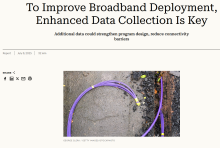
To Improve Broadband Deployment, Enhanced Data Collection Is Key

Image
Pew Research Center Mapping Report

A new report from Pew Research Center provides a review of available federal sources of broadband data and gaps and issues with those data. Within the report, Pew also examines the implications of these gaps on public policy and offers potential solutions to address them. The literature included in the summary were published from 2008 - 2024 and described shortcomings with broadband data including: limited data granularity; inconsistent geographic reporting; industry-derived availability data; lack of pricing data; inconsistent definitions; and inconsistent evaluations to monitor broadband adoption and determine program efficacy. 

Net Neutrality and the Regulatory Theater of the FCC - Episode 571 of the Community Broadband Bits Podcast

This week on the podcast, Christopher is joined by Karl Bode, a returning guest who has long covered tech and the telecommunications industry. After a short conversation about the continued absence of monopoly abuse in policy conversations about broadband access and affordability today, Karl and Christopher tackle the proposed return to net neutrality announced by Chairwoman Rosenworcel last week. 

They talk about how we got here in the first place, including the landmark decision by the Commission in 2015 to largely abdicate responsibility for Internet-related regulatory activities and the states that stepped in to fill the void. They end the show by considering for a bit what it might be like to have an expert federal agency whose activities governed by a strong regulatory framework and the teeth to enforce its mandate to extend fast, affordable, reliable Internet access for all.

This show is 38 minutes long and can be played on this page or via iTunes or the tool of your choice using this feed. You can listen to the interview on this page or visit the Community Broadband Bits page.

Transcript below.

We want your feedback and suggestions for the show-please e-mail us or leave a comment below.

Listen to other episodes here or view all episodes in our index.

Subscribe to the Building Local Power podcast, also from the Institute for Local Self-Reliance, on iTunes or Stitcher to catch more great conversations about local communities, the concentration of corporate power, and how everyday people are taking control.

Thanks to Arne Huseby for the music. The song is Warm Duck Shuffle and is licensed under a Creative Commons Attribution (3.0) license.

Hope and Change (Redux) - Episode 570 of the Community Broadband Bits Podcast

This week on the podcast we bring back a fan favorite from a year ago that feels particularly relevant, especially as the FTC prepares itself to undertake landmark antitrust cases against Google and Amazon.

Christopher is joined by Harold Feld, Senior Vice President at Public Knowledge. Feld is a staple of the field, and has been a consistent voice not only for consumers but broadband advocates of all types for more than two decades. 

The show takes on a reflective nature, as they talk about theories of change in the context of doing broadband policy today. Harold shares how he thinks of the progress that gets made in the long term by aligning the corporate incentive with the public interest. He shares coming to terms with having lots of hard days, the power of fighting battles you expect to lose, and learning, getting better, and building powerful coalitions along the way. Harold and Christopher end the show by talking about some examples of the latter, including important wins like the Rural Tribal Priority Window and the expansion of community networks of all shapes and sizes.

 This show is 48 minutes long and can be played on this page or via iTunes or the tool of your choice using this feed. You can listen to the interview on this page or visit the Community Broadband Bits page.

Transcript below.

We want your feedback and suggestions for the show-please e-mail us or leave a comment below.

Listen to other episodes here or view all episodes in our index.

Subscribe to the Building Local Power podcast, also from the Institute for Local Self-Reliance, on iTunes or Stitcher to catch more great conversations about local communities, the concentration of corporate power, and how everyday people are taking control.

Thanks to Arne Huseby for the music. The song is Warm Duck Shuffle and is licensed under a Creative Commons Attribution (3.0) license.

Hope and Change - Episode 527 of the Community Broadband Bits Podcast

Community Broadband Bits

This week on the podcast, Christopher is joined by Harold Feld, Senior Vice President at Public Knowledge. Feld is a staple of the field, and has been a consistent voice not only for consumers but broadband advocates of all types for more than two decades. 

The show takes on a reflective nature, as they talk about theories of change in the context of doing broadband policy today. Harold shares how he thinks of the progress that gets made in the long term by aligning the corporate incentive with the public interest. He shares coming to terms with having lots of hard days, the power of fighting battles you expect to lose, and learning, getting better, and building powerful coalitions along the way. Harold and Christopher end the show by talking about some examples of the latter, including important wins like the Rural Tribal Priority Window and the expansion of community networks of all shapes and sizes.

 This show is 48 minutes long and can be played on this page or via iTunes or the tool of your choice using this feed. You can listen to the interview on this page or visit the Community Broadband Bits page.

Transcript below.

We want your feedback and suggestions for the show-please e-mail us or leave a comment below.

Listen to other episodes here or view all episodes in our index.

Subscribe to the Building Local Power podcast, also from the Institute for Local Self-Reliance, on iTunes or Stitcher to catch more great conversations about local communities, the concentration of corporate power, and how everyday people are taking control.

Thanks to Arne Huseby for the music. The song is Warm Duck Shuffle and is licensed under a Creative Commons Attribution (3.0) license.

Bottlenecks in the Affordable Connectivity Program - Episode 522 of the Community Broadband Bits Podcast

This week on the podcast, Christopher is joined by Jessica Engle, Director of Community Outreach at Althea to talk about the Affordable Connectivity Program, the $14-billion fund that provides a $30 monthly service benefit ($75 on Tribal lands) to help defray the cost of Internet access to qualifying families around the country. It's a large and complicated program, and Jessica and Christopher talk about some of the bottlenecks that are causing friction both for households and for Internet Service Providers (ISPs). This includes verifying eligibility in a timely fashion, modifying administrative and accounting systems, a lack of information transparency from USAC and the FCC, and the seeming lack of mechanisms for an audit should it become necessary down the road.

Jessica has started a Discord to help navigate the ACP

How much money is going out the door each month to pay for the Affordable Connectivity Program? Where have funds been spent at the state and zip code level? When will the money run out? Check out our dashboard at ACPdashboard.com.

This show is 17 minutes long and can be played on this page or via Apple Podcasts or the tool of your choice using this feed

Transcript below. 

We want your feedback and suggestions for the show-please e-mail us or leave a comment below.

Listen to other episodes here or view all episodes in our index. See other podcasts from the Institute for Local Self-Reliance here.

Thanks to Arne Huseby for the music. The song is Warm Duck Shuffle and is licensed under a Creative Commons Attribution (3.0) license.

New Resource: Tracking the Affordable Connectivity Program

On January 1st, 2022, the Federal Communications Commission launched the Affordable Connectivity Program (ACP) with $14.2 billion in funding designed to help American households pay for the monthly cost of their Internet subscription. In May, we published a story about the fate of the program, based on a prediction model we built that was intended to visualize how long we might expect the $14.2 billion fund to last before needing new Congressional appropriations to sustain it. Back then, the data showed that the fund would run out some time in 2024.

We’re back today not only with a new and improved model (based both on more granular geographic data and fed by an additional 16 weeks of enrollment data), but a new dashboard that pulls together a host of information from the Universal Service Administrative Company on where and how the Affordable Connectivity Program money is being spent. 

A New Resource for Broadband Advocates, Local Policy Makers, and Elected Officials

Located at ACPdashboard.com, this new resource from ILSR includes information local broadband advocates, nonprofits, state legislators, and policy makers need to know about where enrollment efforts and expended funds stand today. It includes a breakdown by state for how enrollment numbers stand (as well as an estimate for the amount spent in each state so far), the current national eligible enrollment rate, information for 30 metropolitan areas, how much is being spent on service support versus devices, how many households are using the ACP for mobile versus wireline service, and the total left in the ACP fund. Our new prediction model shows that a little more than $410 million is leaving the bank account every month. 

New Resource: Tracking the Affordable Connectivity Program

On January 1st, 2022, the Federal Communications Commission launched the Affordable Connectivity Program (ACP) with $14.2 billion in funding designed to help American households pay for the monthly cost of their Internet subscription. In May, we published a story about the fate of the program, based on a prediction model we built that was intended to visualize how long we might expect the $14.2 billion fund to last before needing new Congressional appropriations to sustain it. Back then, the data showed that the fund would run out some time in 2024.

We’re back today not only with a new and improved model (based both on more granular geographic data and fed by an additional 16 weeks of enrollment data), but a new dashboard that pulls together a host of information from the Universal Service Administrative Company on where and how the Affordable Connectivity Program money is being spent. 

A New Resource for Broadband Advocates, Local Policy Makers, and Elected Officials

Located at ACPdashboard.com, this new resource from ILSR includes information local broadband advocates, nonprofits, state legislators, and policy makers need to know about where enrollment efforts and expended funds stand today. It includes a breakdown by state for how enrollment numbers stand (as well as an estimate for the amount spent in each state so far), the current national eligible enrollment rate, information for 30 metropolitan areas, how much is being spent on service support versus devices, how many households are using the ACP for mobile versus wireline service, and the total left in the ACP fund. Our new prediction model shows that a little more than $410 million is leaving the bank account every month.