
competition

Content tagged with "competition"

Related Topics
Displaying 41 - 50 of 715

California Announces Another $207 Million In Last Mile Broadband Grants

California’s $2 billion Last Mile Federal Funding Account Grant Program (FFA) has announced another $207 million in new broadband grants across Amador, Los Angeles, and Solano Counties.

The FFA program, part of a broader $6 billion California “Broadband For All” initiative, is aimed at boosting broadband competition and driving down costs statewide.

According to the state’s announcement, $61 million in new grants were awarded by the California Public Utilities Commission (CPUC) for five Last Mile FFA broadband infrastructure grant projects in Amador and Solano Counties, bringing affordable fiber Internet access to approximately 10,000 Californians.

Image
Vallejo CA welcome sign

The CPUC award details indicate that the grants will be awarded to the Golden State Connect Authority (GSCA) and the City of Vallejo to help bring fiber access to 2,278 unserved locations in Amador and Solano counties.

The City of Vallejo will leverage $3.8 million in state grants to complete four different projects laying predominantly underground fiber, with the city retaining ownership of the finished network and Smart Fiber Networks providing last mile consumer-facing service.

Building Better Middle Mile Networks

On the most recent episode of the Connect This! Show, the panel was joined by California-based Internet Exchange builder Matt Peterson of SFMIX. Matt has been in the broadband space for many years on the deployment and operations side of the wholesale and peering system, and joined the show today to talk about the need for better, more practical, more forward-thinking middle mile networks across the United States. However the federal Broadband Equity, Access, and Deployment program (BEAD) ultimately ends up, if we want to see more competition and the most efficient use of public dollars there is no doubt that we will need additional infrastructure connecting those last-mile networks that hook up businesses, residents, and community anchor institutions around the country.

These are the networks that connect our networks back to the larger Internet; they traverse county roads and state highway systems. Some are owned by and exclusive to the largest providers, like AT&T. Others, like Project THOR in Colorado, were collectively built to increase resiliency for the public good, as well as stimulate last-mile retail service in underserved and unserved parts of the country. California is in the midst of multi-billion dollar middle mile endeavor, and a handful of others states are likewise making significant investments. 

So the question is: are we building enough middle mile in the United States, and equally importantly, are we building it correctly? With all sorts of public and private interests involved, and networks that are often measured in the thousands of miles (or tens of thousands of route-miles of fiber), often with public money, it's an important thing to get right.

We wanted to underline the importance of these things by featuring this segment of the show. The panel talks about the consequences of decisions about everything from where these networks are built, how they are funded, transparency and marketing, and the importance of talking to the last-mile operators that will be interconnecting with them. 

Watch Christopher Mitchell (ILSR) and Travis Carter (USI Fiber) with regular guests Kim McKinley (UTOPIA Fiber) and Doug Dawson (CCG Consulting), joined by special guest Matt Peterson (SFMIX) talk about it all below. 

The middle-mile discussion starts at the 36:00 mark.

Arkansas Electric Cooperatives Pass 1 Million Broadband Connection Milestone

The Electric Cooperatives of Arkansas say they recently finished delivering fiber broadband capability to more than one million Arkansans as part of a $4.66 billion expansion.

More than 40,000 miles of fiber have been installed by 17 cooperative broadband providers, including 15 local broadband providers, one wholesale broadband provider, and one middle-mile fiber company.

In a prepared statement, Arkansas cooperatives indicate they have $2.2 billion in additional projects lined up connecting an additional 13,000 residents in the “Natural State.” Once completed, Arkansas cooperatives will have deployed 53,000 miles of fiber and connected 1.2 million state residents to fiber.

Informed by their efforts at rural electrification nearly a century earlier, U.S. electrical cooperatives have increasingly been pushing into fiber broadband deployment. Initially as a way to better monitor and manage complex modern electrical grids, then ultimately as a way to extend access to predominately rural customers trapped on the wrong side of the digital divide.

Image
Arkansas family happy with elec coop broadband

Nearly 80 percent of the state cooperatives’ investment in fiber infrastructure has been self-funded without grant subsidies, the coalition notes. Many of the markets they’ve targeted have long been neglected by regional cable and phone giants that believe the investment into rural counties isn’t worth the time and resources, or won’t be profitable enough, quickly enough for Wall Street.  

Post Election Broadband Redux

Now that the election has been settled, many in the broadband space are wondering what, if anything, will change with the incoming Trump administration.

Of course no one has a crystal ball, but there are a number of telecommunication policy developments we will be tracking, which include numerous fronts where there will likely be changes.

What those changes will be exactly will only become apparent sometime next year.

BEAD and DEA

The BEAD (Broadband Equity, Access, and Deployment) program and Digital Equity Act (DEA) programs are at the center of the universe in the national effort to ensure everyone has high-speed access to the Internet.

Image
NTIA logo

However, in the run-up to the election, GOP leaders were highly critical of the BEAD program, saying it was taking too long to dispense funds to build new networks, questioned the NTIA favoring the building of fiber networks, and criticized aspects of the effort they consider to be a waste of taxpayer dollars.

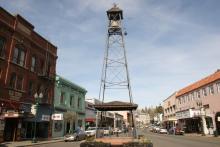
Placerville, California Strikes Gold With New Grant to Build City-Owned Open Access Fiber Network

Placerville, California will soon be a place with a municipally-owned open-access fiber network as the city of 10,000 looks to provide its residents and businesses with local choice and more affordable broadband service.

The years-long effort was launched after frustration with what the city’s 2021 Broadband Master Plan described as the “equivalent of an ISP (Comcast) Monopoly.”

“Because of this,” the plan noted, “residents and businesses in Placerville are exposed to the common limitations of monopolies” – a high-priced reality that prompted 98 percent of city survey respondents to say “yes” to a municipally-owned network.

Now, three years after that report was published – and thanks to a $20.1 million award from the California Public Utilities Commission (CPUC) Last Mile Federal Funding Account (FFA) grant program – a city that was once nicknamed “Hangtown” is now set to cut the noose of the ISP monopoly.

Nice Knowing You, BEAD, and Building Better Middle Mile Networks | Episode 101 of the Connect This! Show

Connect This! Show

Catch the latest episode of the Connect This! Show, with co-hosts Christopher Mitchell (ILSR) and Travis Carter (USI Fiber) joined by regular guests Kim McKinley (UTOPIA Fiber) and Doug Dawson (CCG Consulting) and special guest Matt Peterson (SFMIX). They talk about some of the sea changes we expect to see with the change in federal administrations with relation to BEAD before a long conversation with California-based IX builder Matt Peterson about whether we need more middle mile in this country and how we might best build it.

Join us live on November 8, at 2pm ET or listen afterwards wherever you get your podcasts.

Email us at [email protected] with feedback and ideas for the show.

Subscribe to the show using this feed or find it on the Connect This! page, and watch on LinkedIn, on YouTube Live, on Facebook live, or below.

Revisiting the Fight for Community Broadband and Public Networks - Episode 620 of the Community Broadband Bits Podcast

In this special episode of the podcast, Chris is joined by Gigi Sohn, Executive Director of the American Association for Public Broadband (AAPB). Originally aired last summer, they discuss the crucial role of state and local governments in broadband policy, efforts to grow community broadband networks across the U.S., and the ongoing challenges these networks face from incumbents and dark money groups.

Gigi also shares insights into her work with Benton, where she helps build coalitions in Missouri, Arizona, and Pennsylvania to ensure effective use of broadband funding. Additionally, the conversation highlights AAPB’s mission to double the number of municipal broadband networks in five years and the importance of defending these networks from attacks like those in Bountiful, Utah.

This show is 47 minutes long and can be played on this page or via Apple Podcasts or the tool of your choice using this feed.

Transcript below.

We want your feedback and suggestions for the show-please e-mail us or leave a comment below.

Listen to other episodes or view all episodes in our index. See other podcasts from the Institute for Local Self-Reliance.

Thanks to Arne Huseby for the music. The song is Warm Duck Shuffle and is licensed under a Creative Commons Attribution (3.0) license

Kendall County, Illinois Builds Its Own Fiber Network After Being Snubbed By Monopolies

Frustrated by years of substandard broadband service from regional telecom monopolies, Kendall County, Illinois residents have joined the growing chorus of Americans that are tackling the problem head on by building their own better, faster, more affordable fiber networks.

The Kendall County network, part of a public-private partnership (PPP or P3) with Pivot-Tech, is being funded by a tax-free revenue bond.

Kendall County officials tell ILSR that the full cost of the network, which will include private investment from Pivot-Tech, is expected to ultimately be $67 million, serving more than 13,000 locations county wide.

Image
Kendall County IL map

The first phase of the network build will consist of a combination of fixed wireless and fiber last and middle middle connectivity, supported by $15 million in state broadband grants made possible by 2021 American Rescue Plan Act (ARPA) legislation. Construction is slated to begin this fall, and officials say the county will own the finished network.  

“The network is a combination of fiber and fixed wireless, with the goal to serve as many customers by fiber as possible,” Kendall County Administrator Christina Burns told ILSR. “The fixed wireless access count planned in phase one will be approximately 1,900. The remainder will be fiber to the premises.”

County officials are still finalizing the selection of a consumer-facing ISP.

“We have identified an ISP and are working through the details,” Burns said. “We do still plan for the network to be open access, hoping to bring more ISPs on in the future.”

Like so many communities we cover, the county’s foray into community broadband was forged by decades of local frustration with limited local broadband competition, high prices, and patchy service, which was painfully highlighted during COVID lockdowns.

Maine Issues RFP For Long-Planned MOOSE Net Middle Mile Fiber Network

The Maine Connectivity Authority (MCA), Maine’s quasi-governmental public agency in charge of broadband expansion and digital equity, is seeking proposals to help design and construct a major 536-mile fiber network that should dramatically improve affordable fiber access across vast swaths of the Pine Tree State.

For several years Maine officials have proposed spending $53 million to build a major middle mile fiber network known as the Maine Online Optical Statewide Enabling Network (MOOSE Net).

The middle mile network would extend fiber into numerous underserved Maine communities, boosting broadband competition and access while hopefully lowering prices.

Last year, Maine received a $30 million grant to help fund the network’s construction, courtesy of the National Telecommunications Information Administration’s (NTIA) $980 million Enabling Middle Mile Broadband Infrastructure Program. The MCA’s proposal was one of just 32 proposals selected out of 260 applicants for federal broadband funding.

AAPB Launches New Mentorship Program For Communities Considering Municipal Broadband

As interest in municipal broadband continues to grow across the U.S., the American Association for Public Broadband (AAPB) has launched a mentorship program that will pair communities interested in building publicly-owned, locally controlled broadband networks with cities and towns that have successfully done so.

“We’re excited to match AAPB members with communities seeking to take control of their broadband futures,” AAPB Executive Director Gigi Sohn said in announcing the program.

“We want to demystify the process for those communities that want to ensure that everyone in their city or town has affordable access to everything that broadband enables, and we believe that our members that own their broadband infrastructure are the best people to do that.”

Image
Community Nets map

While an increasing number of communities are exploring municipal broadband as a solution to local connectivity challenges after decades of frustration with the spotty, expensive service of big monopoly providers consistently ranked as among the most hated companies in America, local officials still must navigate the logistical, technical, financial, and political challenges associated with building and operating municipal networks.