
competition

Content tagged with "competition"

Related Topics
Displaying 21 - 30 of 709

Willmar, Minnesota Moves Forward With $24.5 Million Open Access Fiber Network

The city of Willmar, Minnesota (est. pop. 21,000), has voted to move forward on plans for a city-owned open access fiber network. The $24.5 million investment, which saw finalized approval by the Willmar city council earlier this month with a 4-3 vote, aims to drive accountable, affordable, fiber access to long underserved parts of the city about 100 miles west of Minneapolis/St. Paul.

In its 4-3 vote in early March, the City Council opted to continue work on the Connect Wilmar Initiative, something it says is an answer to the ongoing failures by regional incumbent telecom monopolies to provide uniform, high quality, high speed, affordable Internet access.

“Local internet providers were not interested in improving Willmar's internet infrastructure,” the city says. “After soliciting proposals, the city chose to partner with Hometown Fiber, aligning with Willmar’s long-term vision to provide fast, reliable internet through an open-access fiber network.”

Image
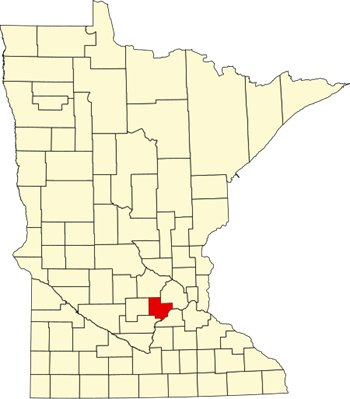
Willmar MN map highlight in state map that shows it is in the southern central part of the state

The decision to move forward on the network comes after several years of careful planning, starting with the creation of a city broadband committee in September of 2022, and a mapping of local broadband access (or lack thereof) completed in December of 2022.

Study: Affordable Connectivity Program More Than Paid For Itself

A new study by The Brattle Group found that the FCC’s Affordable Connectivity Program (ACP) generated more savings for taxpayers than it cost. Healthcare savings generated by the low-income program alone more than offset its annual burden to taxpayers, undermining claims that the program was dismantled as an act of fiscal efficiency.

The ACP, part of the 2021 infrastructure bill, provided 23 million low-income households a $30 broadband discount every month. It provided a larger $75 a month discount for low-income residents of widely underserved tribal areas.

The ACP also provided low-income Americans a $100 subsidy to help them afford a laptop, tablet or a desktop computer.

Generally viewed as a rare bipartisan success story, the ACP took direct aim at a primary problem across U.S. broadband: affordability.

Image
House Speaker Mike Johson holds his hand flat out jutting out as he speaks to a crowd

But the program was unceremoniously allowed to expire in 2024 after GOP leaders including House Speaker Mike Johnson refused to even bring funding bills to the House floor for a vote, despite widespread support from industry, consumer groups, and even then Republican Ohio Senator JD Vance.

Experts Point To The Big ‘Payback’ That Flows From Municipal Broadband Investments

At the “Municipal Broadband and Innovative Financing Models: Unlocking Economic Growth” webinar earlier today, attendees got an inside look at how successful community broadband networks have been funded – and how cities and towns can still finance networks even with the uncertainty now swirling around the federal BEAD program.

Co-hosted by ILSR’s Community Broadband Networks Initiative and the American Association for Public Broadband (AAPB), the webinar featured a wealth of municipal broadband financing knowledge from four guests with deep experience navigating the numbers.

Co-host Gigi Sohn, who was joined by ILSR’s Sean Gonsalves, began the webinar with a brief explanation on why AAPB and ILSR are joining forces for what will be a series of webinars designed to assist cities and towns in how local and state leaders can deal with solving local connectivity challenges where the big incumbent ISPs have failed to deliver ubiquitous and reliable service.

Image
Screenshot of Sean Gonsalves and Gigi Sohn during webinar

“I've been traveling around the country and I hear from a lot of communities who are very interested in a model where they control their broadband networks in their communities,” she said. “We want to kind of demystify the finance part and try to get communities more comfortable with how they can move forward.”

The first guest expert to take center screen was Ernie Staten, the City of Fairlawn, Ohio’s Public Service Department Director.

Carver County, Minnesota’s CarverLink Closes In On 100% Gigabit Fiber Coverage

Officials in Carver County Minnesota continue to make great progress expanding affordable fiber access to the county of 111,000 residents, thanks largely to their publicly-owned open access fiber network CarverLink and their partnership with Metronet.

Since its inception in 2013, Carver County has leveraged public and private collaborations and funding with the goal of making symmetrical gigabit (1 Gbps) fiber available to all locations county wide. With the looming completion of its most recent $10.5 million expansion, CarverLink Fiber Manager Randy Lehs told ISLR they’re getting very close to their ultimate goal.

The county currently has ownership and use of nearly 1,200 miles of fiber throughout Carver County and southern Minnesota connecting more than 280 last mile public and community support locations. Many of these markets have no connectivity; many others are stuck on dated, sluggish, patchy connectivity from regional monopolies.

CarverLink doesn’t provide fiber directly to residents and businesses. Instead it long-ago established a partnership with Metronet (formerly Jaguar Communications), to provide gigabit fiber service to businesses and local residential households. Winner of PCMag's “Fastest Major ISP for 2023” award, Metronet provides multi-gigabit fiber to 300+ communities across 17 states.

Image
Carver County map

“CarverLink also oversees the availability of dark fiber within our network that is available to qualified service providers or other entities using dark fiber for new opportunities–open access, open interconnect fiber,” Lehs said.  “And through our open access fiber, services are also available from Broadband-MN and Arvig.”

New ISP Halo Fiber Leveraging ARPA Grants To Help Bridge Alabama’s Digital Divide

A new provider named Halo Fiber is hoping to leverage hundreds of millions in recent Alabama middle mile broadband network grants to extend affordable fiber broadband to state residents long stuck on the wrong side of the digital divide.

The new provider says it’s not quite ready to reveal full launch details (including target markets, speeds, or pricing), but told ILSR it should enter its first four fiber markets later this year thanks in part to a flood of American Rescue Plan Act (ARPA) funding in the state.

“We will be releasing pricing and target markets early this summer in May or June,” Halo Co-founder and CEO Brian Snider told ILSR. “Speeds are still being finalized as well but they will be symmetrical from 250 up and down to multi gig options.”

Image
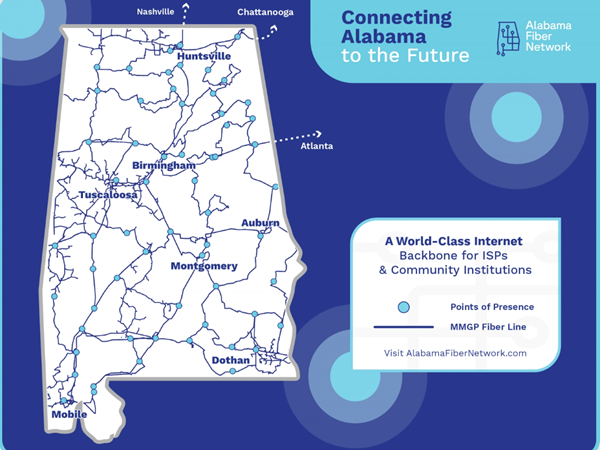
Alabama Fiber Network map

Halo says its primary focus will be to partner with public and private entities to build fast and affordable broadband networks, empower access to better education, telehealth, and economic opportunities, and ensure quality customer service in neglected markets.

“Ten years ago, myself and other members of the Halo team worked on an initiative that identified infrastructure gaps across the entire state,” Snider said in additional comments to BamaBuzz.

“We found that was a big gap in middle mile connectivity – especially in Alabama’s Black Belt where there was almost no high speed infrastructure,” he added.

Nearly a fifth of Alabama residents – or just over a million people – lack access to reliable high speed Internet.

Monopoly ISPs vs. the States | Episode 106 of the Connect This! Show

Connect This! Show

Catch the latest episode of the Connect This! Show, with co-hosts Christopher Mitchell (ILSR) and Travis Carter (USI Fiber) joined by regular guests Kim McKinley (TAK Broadband) and Doug Dawson (CCG Consulting) and special guests Sascha Meinrath (X-Lab) and Robert Boyle (Planet Networks) to talk about all the recent broadband news that's fit to print. On tap:

Join us live on January 24th at 2pm ET, or listen afterwards wherever you get your podcasts.

Join for the next show on February 7th at 2pm ET.

Email us at [email protected] with feedback and ideas for the show.

Subscribe to the show using this feed or find it on the Connect This! page, and watch on LinkedIn, on YouTube Live, on Facebook live, or below.

Wadsworth, Ohio Converting City-Owned Broadband Network From Coaxial To Fiber

Wadsworth, Ohio officials say they’re making steady progress on the expansion of a city-owned broadband network that’s extending affordable fiber connectivity to the city’s nearly 25,000 residents.

Originally a coaxial-based network, the city now says it’s in the process of delivering Wi-Fi to many city residents while they go block-by-block removing older coaxial cable and upgrading residents to more future-proof fiber optic connectivity.

All told, city officials say they currently have around 5,800 existing subscribers that will ultimately be upgraded to fiber.

Image
Wadsworth Citylink logo

Wadsworth, Ohio first launched its hybrid fiber-coaxial CityLink network back in 1997, and has been offering broadband, television, and phone access to the community ever since.

In 2020 ILSR spoke with Wadsworth IT Manager Steve Lange in Episode 438 of the Community Broadband Bits Podcast.

Affordable, Popular Alternatives To Monopoly Power

The network, unlike many similar deployments, is separate from the city’s municipal electric department. Wadsworth Assistant Service Director Mike Testa recently told the Medina County Gazette that the city has completed around 400 fiber installations so far, including a recently updated area along Weatherstone Drive where 120 homes were connected.

Sherwood, Oregon Ferments ‘Future-Proof’ Fiber To Preserve and Expand Municipal Network

In the City of Sherwood, a mostly residential bedroom community 16 miles south of Portland, officials have been quietly cultivating a digital vineyard across Oregon’s “Gateway to Wine Country.”

As part of its on-going work to build out a citywide fiber network, Sherwood Broadband recently secured a $9 million grant from the Oregon Broadband Office Broadband Deployment Program (BDP) to continue expanding Sherwood’s municipally-owned network into neighboring rural communities just outside city limits.

The grant award is part of $132 million in federal Rescue Plan funds the state is doling out to an array of community-owned broadband initiatives for 16 projects across 17 counties.

Award winners include Beacon Broadband, a subsidiary of the Coos-Curry Electric Cooperative ($19.4 million); Jefferson County ($19.2 million); Douglas Fast Net, a wholly-owned subsidiary of the Douglas Electric Cooperative ($8.5 million); the Idaho-based member-owned cooperative Farmers Mutual Telephone Company, which offers broadband service in Malheur County, OR ($18.9 million); and a handful of independent providers like Blue Mountain Networks ($6.5 million) and Ziply Fiber ($10.2 million), recently acquired by Bell Canada.

Roanoke Cooperative Thinks Big With North Carolina Fybe Fiber Expansion

North Carolina’s Roanoke Cooperative continues to make steady progress with expansion of its Fybe last mile fiber network within The Tar Heel State.

Cooperative officials tell ILSR that the cooperative and a coalition of organizations across North Carolina have major expansion plans in the works, starting with a fiber build in Halifax County, population 47,298.

Currently, Fybe provides fiber broadband service to around 6,000 subscribers in North Carolina, but thanks to an historic infusion of federal and state grants, the hope is to expand fiber access to the bulk of unserved addresses county-wide.

Fybe COO Bo Coughlin tells ILSR that the lion’s share of the cooperative's upcoming efforts to bring affordable connectivity to unserved and under-served portions of North Carolina will be under the banner of a coalition dubbed Encore, a nonprofit collaboration between MCNC, North Carolina Electric Membership Cooperatives (EMC), and Fybe.

“MCNC has been around for 40 years,” Coughlin notes. “It started as an economic Development institution funded by the state. Their goal was originally to help birth the microchip industry in RTP down in Raleigh, but today they provide transport to around a hundred universities, charter schools, and community anchor institutions across nearly 100 counties.”

Image
Fybe service territory map

Back in April, Fybe won a $9 million Growing Rural Economies with Access to Technology (GREAT) grant to help bring fiber to the largely underserved, heavily-rural residents of Martin, Bertie, Halifax, and Hertford counties.

“So currently, we pass about 5,000 total homes across Northampton and Halifax,” Coughlin said of Fybe’s current footprint.

Boulder Strikes $9 Million Broadband Deal With ALLO

The Boulder, Colorado city council has voted unanimously (9-0) in favor of striking a $9 million deal with Nebraska based ALLO Communications that should ultimately provide fast fiber access to most of the city’s 330,000 residents.

The particulars of the agreement involve ALLO leasing part of the city’s fiber network as part of a 20 year agreement. ALLO will pay Boulder a $1.5 million upfront lease payment and provide the city $2.25 per residential and $9 per business customer per month plus 1.5 percent of revenue from any wholesale lease. The total deal is estimated to be worth $9 million to the city.

Image
Boulder Colo fiber backbone map

“This achievement stems from a 2018 decision by the City Council to construct a citywide fiber backbone,” city officials said of the deal. “This forward-thinking initiative secured the city's future ability to support various broadband business models, ensuring long-term flexibility and growth in digital infrastructure.”

As per the deal, ALLO will provide broadband service to 80 percent of the city by 2028 and 97 percent of the city by 2030.

ALLO currently provides broadband access to more than 1.2 million customers throughout Colorado, Nebraska, Arizona, and Missouri.

In deployed markets, ALLO offers locals two tiers of fiber service: symmetrical one gigabit per second (1 Gbps) for $98 a month, and symmetrical 2.3 Gbps service for $126 a month.