
competition

Content tagged with "competition"

Related Topics
Displaying 1 - 10 of 715

Loveland’s City-Owned Fiber Network Launches Colorado’s First 20 Gig Home Internet Plan
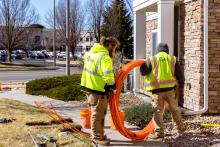
The home Internet service with the fastest speeds in Colorado isn’t coming from Comcast or Quantum Fiber. 

It’s coming from the city-owned fiber network in Loveland.

On International Internet Day (October 29), Pulse Fiber announced the launch of its new 20 gig residential Internet service — the first provider in the Centennial State to offer symmetrical 20 gigabits-per-second home connectivity.

Branded as Vector Fiber, the new ultra fast tier introduces a connection capacity that is a rarity for residential offerings — something Pulse officials say is “designed for a niche but growing segment” in the Front Range city of about 80,000.

“Vector Fiber is ideal for residents who push the limits of what a home connection can do,” said Brieana Reed‑Harmel, Loveland’s broadband division manager. “Whether they’re running a business out of their home, managing massive datasets, or developing the next breakthrough technology, 20 Gigs ensures they never hit a ceiling.”

The new service offers features typically reserved for commercial-grade connectivity. In addition to 20 Gig symmetrical speeds, it comes with a professional SFP handoff — a small pluggable fiber port for the home router that lets subscribers use all 20 Gigs without a data bottleneck. The service also provides a static IP address — a permanent Internet address that allows end-users to host websites, servers, automation hubs and to remotely access files, cameras, and home systems.

“The result is a high‑performance platform built for residents whose technical requirements exceed what standard home [I]nternet services can deliver,” officials said of the new service. “Comparatively, the majority of [I]nternet providers nationwide do not offer plans in excess of 10 Gigs.”

Who Needs 20 Gigs?
Holland, Michigan’s Long-Awaited Community Fiber Network Goes Live

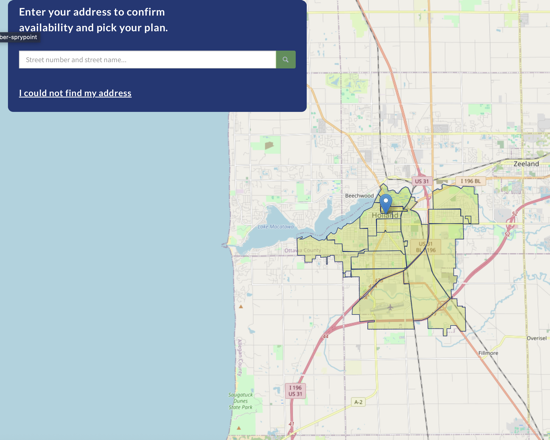
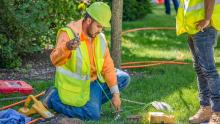
After more than a decade of grassroots study, public debate, and pushback from legacy telecom incumbents, the City of Holland, Michigan is officially lighting up its open access citywide fiber network.

Operated by the municipal electric utility, the Holland Board of Public Works’ (HBPW) publicly owned, open-access network — dubbed Holland City Fiber — has transitioned from network construction to lighting up its first subscribers.

The milestone marks a major victory for local digital self-reliance in western Michigan, delivering symmetrical multi-gigabit speeds at prices commercial monopolies like Comcast have historically refused to match.

An Investment For ‘Future History Books’

Home to about 34,000 residents, Holland’s path to municipal fiber was more than a decade in the making.

Image
Holland Fiber coverage map encompasses entire city

HBPW had maintained a small institutional and business fiber loop dating back to 1992. But like countless mid-sized cities across the Midwest, local residents and small businesses outside the immediate downtown core were left at the mercy of a cable-and-phone duopoly that chronically underinvested in network upgrades while hiking rates via hidden junk fees.

Formal exploration of a citywide build began around 2016. In 2021, the city tapped engineering consultancy CTC Technology & Energy to conduct a feasibility study and business plan. That study laid bare what locals already knew: leaving the city’s connectivity to the private market would ensure decades of stagnant speeds, erratic customer service, and escalating costs.

Willmar, Minnesota’s Open Access Fiber Network Set To Go Live This Year

Willmar, Minnesota officials say they’re making steady progress on construction of the city’s planned $24.5 million open access fiber network, with the first residential and business customers slated to come online sometime later this year.

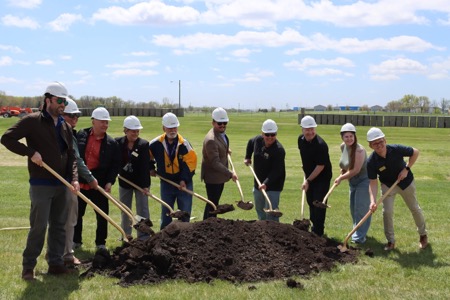
Dubbed Willmar Connect, construction of the city-owned fiber-to-the-home (FTTH) network broke ground in May 2026, marking a pivotal turn from years of feasibility studies and council debates to actual directional boring, conduit placement, and fiber splicing.

When we last checked in on Willmar back in March, the city council had just voted 4-3 to sign off on the $24.5 million open access project. After a summer of steady construction the city says it’s making meaningful progress toward a full commercial launch.

Image
A dozen city officials holding shovels above a mound of dirt at groundbreaking ceremony

“We expect to light up our first users on the network this year,” Willmar City Administrator Kyle Box tells ILSR.

Phased Construction Starting From GO (Bond)

Construction of the network is occurring in three phases.

Phase one of the project, focused on Southwest Willmar, is budgeted for between $7.6 million to $9.2 million. This phase of the project will focus on backbone construction, neighborhood conduit boring, lateral connections, and converting a former municipal wastewater facility into the network operations center (NOC).

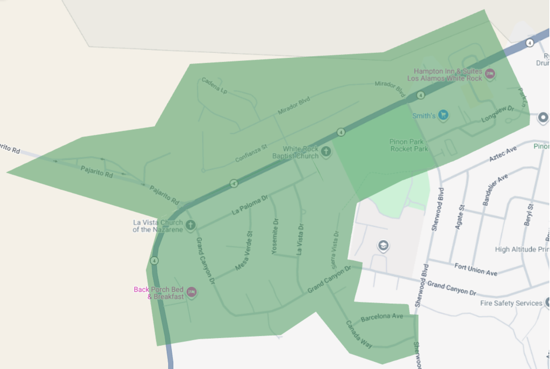
Los Alamos Prepares To Light Up Open Access Fiber Network

Los Alamos County, New Mexico is inching closer to the launch of its Atomic Fiber county-wide open access fiber network, which aims to dramatically improve affordable Internet access to the county’s 19,400 heavily-rural residents.

Network construction formally began in May, and county officials say they’re hopeful the first customers will come online by the end of the year.

“We have been delayed a bit with getting our Phase 1 construction done, so first customers will likely be December,” Los Alamos County broadband manager Jerry Smith tells ILSR.

The project was first conceived back in 2024, after locals expressed continued aggravation at the high prices, spotty coverage, and slow speeds of regional telecom monopolies. Officials settled on an open access network that will allow private ISPs to compete in layers on top of the county’s publicly-owned infrastructure.

“Although a need for Internet upgrades in Los Alamos County has long been clear, the private sector was unwilling to take the project,” county officials wrote. “In response, the Los Alamos County Council awarded contracts to Bonfire Fiber to design and build a fiber-to-the-premise (FTTP) network for $35 million at the November 19, 2024 Council Meeting.”

The $35 million network price tag is being financed via $40 million in New Mexico Gross Receipts Tax (GRT) revenue bonds. County leaders have stated that the 20-year maintenance and operations cost of the network will be around $15.9 million and paid off via subscription revenues.

Image
Los Alamos Phase 1 construction map

Once completed, every last rural county resident will have access to next-generation fiber at speeds and prices much better than what’s available in many dense urban markets.

Open Access Brings Open Competition

Major Flagstaff Fiber Expansion Through Wecom Public-Private Partnership

Daunted by the high costs of building its own municipal fiber network, Flagstaff Arizona instead struck a public private partnership (PPP) in late 2024. A year and a half later and that partnership is starting to drive significant new fiber deployments and some significant new investment to the city of 77,000.

Or that’s at least the conclusion of a new whitepaper by the Fiber Broadband Association, a policy coalition of municipal broadband networks and key fiber industry giants such as Adtran, GFiber, Corning, Calix, and Graybar.

The analysis, "Broadband Community Profile: A Public-Private Partnership for Fiber – Flagstaff, Arizona," explores how the PPP the city struck Arizona-based Wecom Fiber is expected to inject at least $100 million into local economy over five years while saving the city an estimated $18 million in capital expenses.

Frustrated by market failure and a lack of meaningful broadband competition among regional telecom monopolies, Flagstaff considered building its own municipal fiber network in 2023. But city officials found that even just connecting 34 city-owned buildings (estimated to be around $20 million) would be untenable given budgetary constraints.

Pennsylvania’s Claverack Cooperative Passes 100 Mile Fiber Milestone

Pennsylvania’s Claverack Rural Electric Cooperative (REC) says it’s making steady inroads in expanding affordable fiber access throughout rural Bradford and Wyoming Counties, where many frustrated locals have been stuck on the wrong side of the digital divide for the better part of a generation.

Not long ago, Claverack joined a growing roster of electric cooperatives that are extending into broadband access, often leveraging the experience and expertise that informed their efforts at rural electrification almost a century earlier. According to Claverack officials, they recently passed a notable milestone: the cooperative just wrapped up a project that delivered 100 miles of new fiber-optic cable to pass roughly 1,300 previously-unserved and underserved homes and businesses in rural Bradford and Wyoming counties.

“We were proud to share this milestone with the people who made it possible,” Steve Allabaugh, Claverack REC president and CEO, said of the project. “Years of planning, investment, and collaboration brought us to this moment.”

Image
Claverack REC sign at dusk with a gorgeous orange and deep purple sky

The Wysox, Pennsylvania-based cooperative currently services a 2,250‐square‐mile territory across eight counties in Northeastern Pa. (Bradford, Lackawanna, Luzerne, Lycoming, Sullivan, Susquehanna, Tioga, and Wyoming counties), maintaining more than 2,800 miles of electrical power lines and delivering electricity service to over 19,000 paying members.

Lafayette’s LFT Fiber Steadily Expands, Offers Even Faster Speeds

Lafayette, Louisiana-based LFT Fiber, formerly known as LUS Fiber, says it continues to expand its fiber footprint and introduce faster symmetrical speed tiers to many Louisiana locals long trapped on the wrong side of the digital divide.

LUS Fiber was launched in 2004 as a direct response to consumer outrage at substandard, expensive citywide broadband access. Last year LFT changed its name from LUS Fiber to LFT fiber.

Back in February LFT Fiber announced it had finished a planned network expansion project into Eunice, Louisiana, bringing fiber access to many underserved locals for the first time. 

"This is more than just infrastructure; it’s a long-term investment in our communities that drives economic development, improves health and wellness outcomes, and enhances student educational performance,” LFT Fiber Director Michael Soileau said of the expansion. “It’s about building better and stronger communities.”

LFT Fiber now passes 95,000 households and businesses in its core service area of Lafayette Parish alone, and a few years ago began expanding into some nearby rural communities thanks to an historic infusion of ARPA (American Rescue Plan Act) and other state and federal broadband grants.

The municipal provider recently had to introduce a new section of its website to explain to some Lafayette Parish customers why they may still be waiting for connection while other nearby communities get connected.

Los Alamos County Signs Partner ISPs For Open Access Fiber Network

Los Alamos County, New Mexico is inching closer to the launch of its “Atomic Fiber” county-wide open access fiber network, recently announcing they’ve received signed contracts with the partner ISPs that will be tasked with providing affordable fiber access to local residents.

An announcement by the county indicates that they’ve signed agreements with four providers:  XMission, Anthem Broadband, Intellipop, and LANet. The county says network construction is still slated to begin this spring (likely April). Some locals are expected to be connected by the fall of 2026, with network completion expected sometime in 2030.

As with most open access fiber networks, locals will eventually have the option to quickly switch between multiple competing broadband providers in pursuit of the best price, speed, customer service, and performance.

Bonfire Fiber (Bonfire Engineering & Construction LLC) is the primary partner contracted by Los Alamos County to design, build, and operate the Atomic Fiber Community Broadband Network (CBN). County officials previously told ISLR that the total network cost is expected to be around $35 million, and the finished network should pass 10,014 addresses.

A 2023 Strategic Leadership Plan adopted by the County Council identified that broadband is an “essential service,” stating that a county-owned community broadband network would be a top priority to improve economic vitality of the county. So in late 2023, the county issued a project request for proposals (RFP).

Thirty Years Later, the Telecom Act’s Legacy Remains Unfinished

When Congress passed the Telecommunications Act of 1996, it sought to foster innovation and competition in telecommunications markets, expand the definition of universal service, and modernize regulatory structures for the digital age. Three decades later, architects of the ‘96 Act say it achieved many of those goals, but numerous legal challenges following its passage reshaped how key provisions were implemented.

“Litigation shaped so much of what the Act eventually became,” said Mignon Clyburn, a former commissioner of the Federal Communications Commission, speaking Thursday among a panel of former FCC regulators, legal counsel, and policy advisors who helped shape and defend the landmark telecom law.

Gathered for an event organized by the Benton Institute for Broadband & Society marking the law’s 30th anniversary, the event reflected on both the spirit and letter of the landmark legislation which has shaped much of the modern Internet in the United States. The first major overhaul of telecommunications law in more than 60 years, the ‘96 Act required the FCC to conduct more than 80 separate rulemakings addressing everything from appropriate pricing, to interconnection rules and the unbundling of incumbent telephone networks.

Lehi, Utah Finishes Open Access Fiber Network

Lehi, Utah and its partner Strata Networks say they’ve completed construction of Lehi Fiber, the city-owned, open access fiber network that’s dramatically reshaped broadband affordability and competition in the city of 80,000.

When last we checked in with the folks in Lehi back in 2022, they had just broken ground on the new network after a feasibility study by Magellan found widespread local frustration with the lack of affordable local next-generation broadband access.

Three years later, the city says they’ve completed construction of the network, which is owned by the city but managed by Strata.

Lehi Fiber Administrative Services Manager Shaye Ruitenbeek tells ILSR that they’re pleased by the community response so far.

Image
An aerial picture of Lehi announcing fiber connectivity is now available

Residents Now Have Choice of Five ISPs

“The Lehi Fiber Network has now passed approximately 23,000 locations, and we will continue expanding as the city grows,” Ruitenbeek said. “Currently, the network supports about 6,400 subscriptions, which represents an approximate 28 percent take rate.”