


Trump Federal Communication Commission Chairman Brendan Carr has announced vague potential changes to the FCC’s E-Rate program that could harm program funding, effectiveness, and the overarching goal of bringing affordable Internet access to long-neglected schools and rural communities trapped on the wrong side of the digital divide.
The reforms come as Carr also looks to make changes to the FCC’s broadband mapping efforts, something consumer groups say could harm the government’s ability to measure which communities need improved, affordable access, or suffer from a pronounced lack of broadband competition.
In an announcement to the FCC website, Carr stated the 30-year-old bipartisan E-Rate program, which costs $3 billion annually, was in dire need of reforms. The program is primarily funded by a small surcharge affixed to phone lines. With the steady erosion of copper-based phone lines, debates have arisen about how to best sustain the program.
But instead of focusing on issues like subsidy fraud by large telecoms, Carr’s announcement oddly focuses heavily on concerns about student “screen time” and what content students are allowed to view. It’s a problematic foray for an FCC boss recently under fire for unconstitutional censorship efforts targeting comedians and journalists.

“Today, I shared with my FCC colleagues a proposal aimed at empowering parents and ensuring that our E-Rate program produces the great educational outcomes stakeholders have intended,” Carr said. “We will do so through a smart review of the FCC’s E-Rate program. While parents have the ability to supervise screen use and monitor Internet access at home, that parental control does not extend the same way into their kids’ classrooms and libraries.”
Carr’s announcements were praised by National Telecommunications and Information Administration (NTIA) boss Arielle Roth, who also framed the improvements as necessary to “protect children.”
“I welcome the FCC's Notice of Proposed Rulemaking on reforms to the E-Rate program to better protect children, including by addressing excessive screen time in schools,” Roth said.
The NTIA under Roth has, like Carr, suddenly dedicated a growing amount of time and public resources to ambiguous concerns about children's “screen time,” a subject neither agency has any regulatory authority over. The focus shift has come as the Trump administration looks to eliminate government efforts to ensure taxpayer-subsidized Internet access is both equitably deployed, and affordable for low-income families.

The FCC’s E-Rate program funds efforts to expand physical access to the Internet. But policing the personal devices students bring to school – or launching deep inquiries into the width and breadth of school filtering technology extends far afield of the FCC or NTIA’s regulatory authority.
Carr and Roth’s comments also give the misleading impression that schools don’t already implement all manner of parental control systems that filter out problematic content like pornography.
“There are school districts that have read our law as only requiring them to put Internet safety procedures in place on the devices that the school owns,” Carr recently told Fox & Friends host Ainsley Earhardt. “If you bring your own device to a network supported by this program, you don’t necessarily have any filters on where you can go. Kids are ultimately finding pornography, and that’s a problem.”
Neither Carr nor Roth provided hard evidence supporting their claims. Nor do they explain why two regulators have wandered so far outside of their primary regulatory responsibilities. The rhetoric appears designed to try and justify potential budget cuts, censorship, or unpopular ideological crusades that have little to do with affordable Internet access.
Carr has similarly used false and misleading claims of widespread “immigrant fraud” to try and justify cuts to the FCC’s Lifeline program, which provides a $9.25 monthly discount for Internet access to low-income homes. In 2024, Republican Congressional leaders pulled funding for the Affordable Connectivity Program (ACP), which provided discounted broadband access to 22 million Americans.
Carr’s comments and review also come after he and fellow Republican Ted Cruz managed to dismantle a popular E-Rate program that provided free Wi-Fi access off of school grounds. Carr and Cruz falsely claimed that the program illegally abused taxpayer funds, and had somehow resulted in Internet filters “censoring kids’ exposure to conservative viewpoints.”
Private telecom companies like AT&T opposed the Biden FCC’s free hotspot Wi-Fi offering, given that every student using free Wi-Fi is a student not paying AT&T for access. It’s unclear what Carr’s full changes to E-Rate will entail, but it’s more than likely they will involve funding cuts that have little connection to student screen time or filtering technology.
The proposed changes to E-Rate come as Republican leaders target all manner of telecom industry oversight and – in many cases illegally – roll back efforts to ensure U.S. Internet access is deployed equitably with an eye on affordability.
Carr Also Eyes Dubious ‘Reforms’ To FCC Mapping Programs
At the same time Carr is eyeing what could be problematic restructuring of E-Rate, he’s also considering significant changes to the way the FCC maps broadband access.
“Two recent actions by the FCC—a coverage restoration process that was launched on May 7, and a draft rulemaking that would significantly streamline how the agency collects Internet access data—raise important questions about whether the National Broadband Map will get more accurate or less, and what the implications are for the Broadband Equity Access and Deployment Program (BEAD) Program, the largest broadband deployment program in American history,” notes Kevin Taglang at the Benton Institute for Broadband & Society.
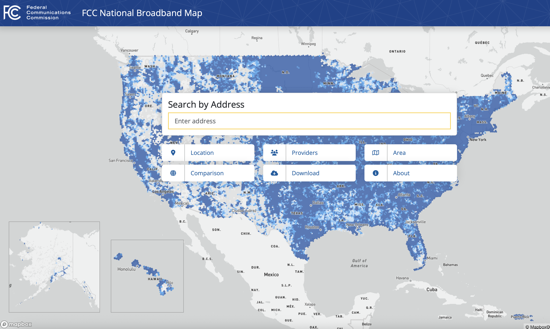
The FCC has been criticized for years for adopting weak broadband speed definitions – and insufficient broadband mapping methodology – that helped national telecom monopolies overstate speeds and broadband coverage, obfuscate market failure, and downplay a lack of competition, slow speeds, and high prices.
The FCC’s past methodology was so poor, that it declared an entire census block as “served” with broadband if just one home in that census block had access to broadband.
That changed slightly in 2020 with the Broadband Deployment Accuracy and Technological Availability Act (Broadband DATA Act), which demanded that the FCC significantly shore up its broadband mapping efforts. Those results, while better, have still been criticized as insufficient. Critics have also pointed out that the resulting data is not fully owned by the public.
The Carr FCC’s proposed reforms risk rolling back even those modest improvements, making it easier for large private regional telecom monopolies to overstate coverage and downplay deployment and competitive shortcomings.
Among the changes, the Trump FCC would soften the data challenge process embedded in the Broadband DATA Act, making it easier for broadband providers who previously overstated broadband speeds and availability, to restore previously removed locations or misrepresented coverage areas to the FCC’s National Broadband Map.
"The proposed item aims to streamline processes and reduce unnecessary regulatory burdens and costs while also improving the accuracy of the data collected," FCC Chairman Brendan Carr said.
"Continuing to streamline and improve the data collection and map will enable federal agencies, state, local, and Tribal governments, and other interested stakeholders to carefully and timely target resources where support is needed most."
But outside groups say Carr, who historically sides with the biggest telecom monopolies on nearly every major policy issue of note, may have other motivations. National providers like AT&T have historically opposed meaningful broadband mapping reforms, and according to Benton, the Trump FCC changes risk eroding progress on broadband mapping data integrity just as billions of dollars in infrastructure bill BEAD funding prepare to head to the states.
“The challenge and verification system exists precisely because providers were overstating coverage,” Taglang wrote. “Successful challenges are not aberrations—they are evidence that the system is working. A restoration process is in direct tension with that purpose unless it sets a genuinely high evidentiary bar. The infrastructure data requirement is designed to provide that bar, but the draft rulemaking could lower it.”
Header image of students in classroom using Internet-connected computers for a science project courtesy of NARA and DVIDS Public Domain Archives, PDM 1.0, Public Domain Mark 1.0 Universal
Inline image of FCC Chair Brendan Carr courtesy of Broadband Breakfast
Inline image of Arielle Roth courtesy of Broadband Breakfast
Inline map of FCC National Broadband Map, screenshot of FCC website
Inline image of FCC building courtesy of of Rob Pegoraro on Flickr, Creative Commons, Attribution-NonCommercial-ShareAlike 2.0 Generic