
California and the California Public Utilities Commission (CPUC) continue to heavily invest in state efforts to expand affordable Internet access, and bolster digital equity, inclusion, and education programs to ensure freshly-connected communities are able to make the most of it.
According to a new announcement by the CPUC, the agency has freshly approved $14.7 million in California Advanced Services Fund (CASF) Broadband Infrastructure Grant Account funding for four fiber-optic broadband projects in rural Northern California.
The agency says it approved another $3.4 million in CASF Rural and Urban Regional Broadband Consortia grants supporting broadband planning and coordination efforts across 16 counties, and nearly $200,000 in Digital Divide Grant Program funding to expand access to technology, devices, and digital literacy training in underserved communities.
The state’s latest $18.2 million in digital literacy and access grants are one small part of California’s landmark $6 billion Broadband for All Initiative, which prioritized closing the digital divide in all of California’s 58 counties, and recently culminated in the launch of the state’s new $3.2 billion Middle-Mile Broadband Initiative (MMBI).
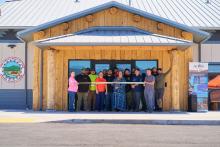
The CPUC states that its $14.7 million in CASF broadband infrastructure grants will be doled out to Plumas-Sierra Telecommunications – a wholly owned subsidiary of Plumas-Sierra Rural Electric Cooperative (PSREC) for four projects around the Golden State. Plumas-Sierra Telecommunications will own the finished networks across all four projects:
- The Grizzly-Road Chilcoot Project will utilize $4,339,234 in state grants to help connect 205 unserved locations in and around Beckwourth, Chilcoot, Portola, and Vinton in Plumas County.
- The Herlong Flats-East Milford Project will utilize $3,890,942 to connect 72 locations in and around Herlong and Milford in Lassen County.
- The Mohawk Meadows Project will utilize $3,378,259 to connect 83 unserved locations in communities like Blairsden, Greenhorn, Johnsville, Keddie, Mabie, and Whitehawk in Plumas County.
- The Sierraville Project will utilize $3,072,297 to connect 100 unserved locations in and around Sierraville in Sierra County.
Additionally, the CPUC is greenlighting $3.4 million in CASF Rural and Urban Regional Broadband Consortia grants to support six regional organizations also looking to shore up affordable access to Californians long-trapped on the wrong side of the digital divide.

The CPUC awarded $600,000 to the Broadband Consortium of the Pacific Coast for Internet access projects serving San Luis Obispo, Santa Barbara, and Ventura counties. $600,000 was also awarded to the East Bay Broadband Consortium for Internet access expansion projects serving Alameda, Contra Costa, and Solano counties.
The CPUC also awarded $400,000 to the E = mc² Silicon Valley Consortium for broadband expansion across San Francisco, San Mateo, and Santa Clara counties; $600,000 for the Inyo-Mono Broadband Consortium for Internet access expansion in Inyo and Mono counties; and $600,000 to the Los Angeles Digital Equity Action League (LA DEAL) Consortium for broadband expansion efforts in Los Angeles County.
Enabling Digital Inclusion
At the same time it ensured funding for the physical expansion of affordable Internet access in neglected counties, the CPUC doled out $200,000 in Digital Divide Grant Program funding to three key organizations:
- $99,659 was awarded to Human-I-T to provide digital literacy support and Chromebook devices to 257 students attending the Delano and Lost Hills campuses of Wonderful College Prep Academy in Kern County.
- $50,000 was awarded to the United We Lead Foundation for the Digital Empowerment for Parents and Caregivers project in Fresno County, which aims to provide digital literacy training, technical support, and laptop devices to 50 low-income parents and caregivers.
- $50,000 was awarded to the Education and Leadership Foundation to provide computer literacy and cybersecurity training across the Central Valley, including access to laptops, wireless internet hotspots, and digital skills instruction.
California’s initiatives come as the federal U.S. government and Trump administration have abandoned all affordability and equitable deployment initiatives, and attempted to derail a long list of programs aimed at bringing discounted Internet access to communities where private sector market failure has resulted in spotty access, high prices, and slow speeds.
The CPUC said it has also introduced a streamlined ministerial review process for qualifying future Digital Divide Grant Program applications, which the agency says is intended to “reduce administrative delays and allow approved projects to begin serving communities more quickly while maintaining program oversight and accountability.”
“Closing the digital divide requires a comprehensive approach that includes building broadband infrastructure, supporting local planning and partnerships, and ensuring people have the devices and skills needed to fully participate in today’s digital world,” said CPUC President John Reynolds, who added that the efforts “reflect California’s continued commitment to expanding broadband access and digital opportunity for communities throughout the state.”
Header image of California Public Utilities Commission building courtesy of Wikimedia Commons, Attribution-ShareAlike 3.0 Unported
Inline image of Plumas Sierra Telecommunications sign up flyer courtesy of Plumas Sierra Telecommunications Facebook page