
BEAD

Content tagged with "BEAD"

Displaying 51 - 60 of 257

BEAD: No NOFO Fo Sho - Episode 650 of the Community Broadband Bits Podcast

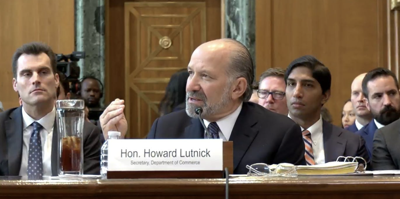
In this episode of the podcast, Chris welcomes back Gigi Sohn, Benton Senior Fellow and Public Advocate, for a fast-paced reaction to recent testimony by Commerce Secretary Howard Lutnick.

They dig into the political motivations behind the BEAD program’s freeze, the misleading justifications around climate and affordability requirements, and the sweeping changes that could derail state broadband plans. 

Gigi brings sharp insight to a frustrating moment in broadband policy, explaining why the clock is ticking and who’s paying the price for the delay.

This show is 37 minutes long and can be played on this page or via Apple Podcasts or the tool of your choice using this feed.

Transcript below.

We want your feedback and suggestions for the show-please e-mail us or leave a comment below.

Listen to other episodes or view all episodes in our index. See other podcasts from the Institute for Local Self-Reliance.

Thanks to Arne Huseby for the music. The song is Warm Duck Shuffle and is licensed under a Creative Commons Attribution (3.0) license

Trump Administration Imposed BEAD Changes Introduce Significant New Delays

Trump administration changes to the $42.5 billion Broadband Equity, Access, and Deployment (BEAD) grant program are poised to introduce years of potential new delays to the already slow-moving program, potentially undermining the program’s goal of bringing universal broadband access to mostly rural communities.

Worse, the looming changes would eliminate efforts to ensure taxpayer-funded broadband is affordable for low-income Americans, while driving billions in new subsidies to the world’s richest man and Trump mega donor Elon Musk.

Testifying this week before a Senate Appropriations Committee, Commerce Secretary Howard Lutnick confirmed that the National Telecommunications and Information Administration (NTIA) will "soon" issue a new Notice of Funding Opportunity (NOFO) that states will have 90 days to respond to.

The revisions will ensure that billionaire Elon Musk – and his capacity-constrained satellite broadband network Starlink – will receive significantly more taxpayer money. Such Low-Earth orbit satellite networks were slated to get some funds, but federal changes may result in them dominating grant funding, overruling the mix of technology states had originally preferred.

Other changes being implemented include elimination of provisions ensuring affordable access for low-income Americans.

BEAD Falls Apart | Episode 115 of the Connect This! Show

Connect This! Show

Catch the latest episode of the Connect This! Show, with co-hosts Christopher Mitchell (ILSR) and Travis Carter (USI Fiber) joined by regular guests Kim McKinley (TAK Broadband) and Doug Dawson (CCG Consulting), and special guest Josh Etheridge to talk about all the recent broadband news that's fit to print. Bountiful, Utah and Oakland, California announce newsworthy milestones to improve connectivity for households, but the big news is looming structural changes to the Broadband Equity Access and Deployment (BEAD) program. And wouldn't you know it, but NTIA releases them just ten minutes into the live show. 

Join us live on June 7th at 2pm ET, or listen afterwards wherever you get your podcasts.

Email us at [email protected] with feedback and ideas for the show.

Subscribe to the show using this feed or find it on the Connect This! page, and watch on LinkedIn, on YouTube Live, on Facebook live, or below.
BEAD in Limbo: How Federal Delay Is Shaking Up Louisiana's Broadband Future - Episode 649 of the Community Broadband Bits Podcast

In this episode of the podcast, Chris talks with Josh Etheridge, Chief Strategic Officer of EPC—a broadband construction company based in Louisiana—about the real-world consequences of the federal government’s pause on BEAD funding. 

Josh breaks down how the delay has disrupted local businesses, sidelined workers, and stalled broadband expansion in some of the country’s most disconnected communities. 

From equipment sitting idle to families laid off, he lays out how uncertainty at the top is rippling down through the industry—and what’s at stake if BEAD doesn’t move forward soon.

This show is 36 minutes long and can be played on this page or via Apple Podcasts or the tool of your choice using this feed.

Transcript below.

We want your feedback and suggestions for the show-please e-mail us or leave a comment below.

Listen to other episodes or view all episodes in our index. See other podcasts from the Institute for Local Self-Reliance.

Thanks to Arne Huseby for the music. The song is Warm Duck Shuffle and is licensed under a Creative Commons Attribution (3.0) license

The Hidden Cost: The Ripple Effects of Canceling the Digital Equity Act - Episode 647 of the Community Broadband Bits Podcast

In this episode of the podcast, Chris speaks with Jade Piros de Carvalho about the cascading impact of the federal government’s decision to cancel the Digital Equity Act.

They discuss how this sudden move threatens not just digital inclusion programs, but the very foundation of state broadband offices—and by extension, the success of the $42.5 billion BEAD infrastructure program.

With broadband office funding models built on a delicate web of interconnected federal grants, Jade explains why pulling one thread puts everything at risk.

This show is 24 minutes long and can be played on this page or via Apple Podcasts or the tool of your choice using this feed.

Transcript below.

We want your feedback and suggestions for the show-please e-mail us or leave a comment below.

Listen to other episodes or view all episodes in our index. See other podcasts from the Institute for Local Self-Reliance.

Thanks to Arne Huseby for the music. The song is Warm Duck Shuffle and is licensed under a Creative Commons Attribution (3.0) license

Digital Inclusion Leaders Brace for Impact

Digital inclusion organizations are reeling after the Trump administration announced the Digital Equity Act grant programs, embedded in the bipartisan infrastructure law, was being cancelled months after federal grants had already been reviewed and awarded.

On Friday evening, President Trump announced via a Truth Social post that he was cancelling the Digital Equity Act, claiming it to be “unconstitutional” and “racist,” and, therefore, “ending this immediately.” Yesterday, state broadband offices began receiving letters from NTIA, the federal agency administering the program, to formally announce funding was being terminated.

As news began to trickle out, many of those working on these issues across the nation had more questions than answers as they scrambled to process a mix of confusion and frustration, especially mindful of the fact that the Digital Equity Act barely touches on the subject of race. Although Black, Brown, and Indigenous communities have been disproportionately left on the wrong side of the digital divide, only one of the of eight “covered populations” identified by Congress in the law even mentions race.

Charter and Cox Merge, Hotspots Under Threat, and the End of the Digital Equity Act | Episode 114 of the Connect This! Show

Connect This! Show

Catch the latest episode of the Connect This! Show, with co-hosts Christopher Mitchell (ILSR) and Travis Carter (USI Fiber) joined by regular guests Kim McKinley (TAK Broadband) and Doug Dawson (CCG Consulting) and special guest Angela Siefer (National Digital Inclusion Alliance) to talk about all the recent broadband news that's fit to print. Topics include:

Join us live on May 16th at 2pm ET, or listen afterwards wherever you get your podcasts.

Email us at [email protected] with feedback and ideas for the show.

Subscribe to the show using this feed or find it on the Connect This! page, and watch on LinkedIn, on YouTube Live, on Facebook live, or below.
AAPB and ILSR Prepare For Inaugural ‘Future of Public Broadband’ Conference

Some of the nation’s leading thinkers and doers in the community broadband sector will connect and collaborate in the nation’s capital for the inaugural Community First: The Future of Public Broadband Conference and Hill Day next week.

Slated for May 14 and 15, the two-day conference is being hosted by the American Association for Public Broadband (AAPB) and New America Open Technology Institute (OTI), in partnership with ILSR's Community Broadband Networks Initiative, the Benton Institute for Broadband & Society, and the Community Broadband Action Network.

The in-person gathering will bring together public broadband champions, community leaders, policymakers, and industry experts to focus on strategy and advocacy in the face of potentially dramatic changes to the $42.5 billion BEAD program – the single-largest federal investment to ensure every household in the nation has access to high speed Internet connectivity.

Registration and tickets are still available here.

Image
Gigi Sohn AAPB

With the rise of community-owned broadband networks and cooperatives now flourishing across the nation, organizers are hoping to create “an essential space to share best practices, discuss financing, shape public policy, and support the development and expansion of public broadband networks.”

Broadband at a Crossroads: Evan Feinman on Getting BEAD Right - Episode 645 of the Community Broadband Bits Podcast

In this episode of the podcast, Chris sits down again with Evan Feinman to reflect on the challenges and lessons learned from launching the country’s largest broadband infrastructure initiative.

Evan shares an insider perspective on what it took to design the BEAD program, why local decision-making and equity are essential, and how political shifts could jeopardize its success. 

From permitting to the risks of relying on satellite technology, this conversation unpacks the real stakes of connecting every American to high-quality Internet.

This show is 52 minutes long and can be played on this page or via Apple Podcasts or the tool of your choice using this feed.

Transcript below.

We want your feedback and suggestions for the show-please e-mail us or leave a comment below.

Listen to other episodes or view all episodes in our index. See other podcasts from the Institute for Local Self-Reliance.

Thanks to Arne Huseby for the music. The song is Warm Duck Shuffle and is licensed under a Creative Commons Attribution (3.0) license

Baltimore Close To Issuing RFP For Major Fiber Expansion

Baltimore activists and leaders say the city is making steady progress in efforts to bridge the digital divide in the city of 565,000. The efforts have culminated in several grant-fueled initiatives to deliver fiber and wireless to city apartment complexes, a city middle-mile network, and a looming partnership with regional providers to further expand affordable access.

When we last checked in with Baltimore, the city had just doled out $2 million of its American Rescue Plan Act (ARPA) funding to bring fiber to 12 new city apartment buildings. The deployment is in partnership with Waves, a nonprofit formerly known as Project Waves.

Waves was first launched in 2018 in direct response to the Trump FCC’s repeal of net neutrality and the general failures of federal telecom policy to address digital inequity. Project Waves (profiled by ILSR in 2023) initially used Point-to-Multipoint wireless connectivity to deliver free wireless broadband service to about 300 multi-dwelling unit (MDU) residents.

Image
Project Waves sign

Now Baltimore Director of Broadband and Digital Equity Kenya Asli tells Government Technology the city is putting the finishing touches on a Request for Proposal (RFP) to strike a new public-private-partnership with an as-yet-unselected broadband provider. The deal should further expand fiber access to unserved and underserved parts of the city.

“Folks want more options, and so we are bringing in more options,” Asli said.