
take rate

Content tagged with "take rate"

Displaying 11 - 20 of 57

Tennessee Cooperative Connects Thousands of Residents Outside of Chattanooga

Since the passing of the Tennessee Broadband Accessibility Act (TBAA) in 2017, the state has poured more than $100 million into connecting its most rural communities, and more than 20 electric cooperatives throughout the state have spent the last four years making their way into the broadband business. 

Back in 2016 and 2017, Sequachee Valley Electric Cooperative (SVEC), along with many other electric cooperatives, advocated for the right to build fiber-to-the-home (FTTH) networks out to their memberships in the most rural parts of the state. When TBAA passed through the state legislature, removing major barriers for cooperatives to build out their own networks, SVEC got to work.

Today, 23 electric cooperatives in Tennessee have launched their own broadband projects, including SVEConnect, a broadband subsidiary of SVEC offering FTTH that has connected more than 4,400 members across Marion County. 

From Electrification to Connectivity

SVEC was formed in 1939 to address the broad gaps in access to electricity throughout the rural areas surrounding Chattanooga, Tennessee in Bledsoe, Grundy, Marion and Sequatchie counties. When the cooperative was first established, the nonprofit’s leaders would frequent community events at churches and neighborhood gatherings, keeping their fingers on the pulse of community needs. The cooperative began offering an essential service: electricity.

Join Us Live on Thursday at 5pm ET for Connect This! Episode 14 - The Finance Edition

Join us on Thursday, May 27 at 5pm ET/4pm CT with a special Financing Edition of the Connect This! show, with co-hosts Christopher and Travis Carter (USI Fiber) joined by Doug Dawson (President, CCG Consulting) and Kim McKinley (CMO, UTOPIA Fiber). The group will dive into the numbers and talk about the economics that make networks succeed. They'll talk about the different models to broadband buildouts, types of financing available to municipalities and small private ISPs, grant programs, the factors that drive healthy take rates, and economies of scale.

The show will begin on Thursday, May 27 at 5pm ET/4pm CT.

Subscribe to the show using this feed, or visit ConnectThisShow.com

Email us [email protected] with feedback and ideas for the show.

Watch here, or below.

Fiber Network is ‘Life-Changing’ Music for Folks in Washington, MA

As the oldest son of the legendary folk singer Woody Guthrie, Arlo Guthrie — the Town of Washington, Massachusetts’ most famous resident — built a name for himself as a singer-songwriter by letting folks know, “You can get anything you want at Alice's Restaurant.”

But if you ask the town’s Broadband Manager Kent Lew, there was one thing that was not on the menu in Washington before last year: high-speed Internet connectivity.

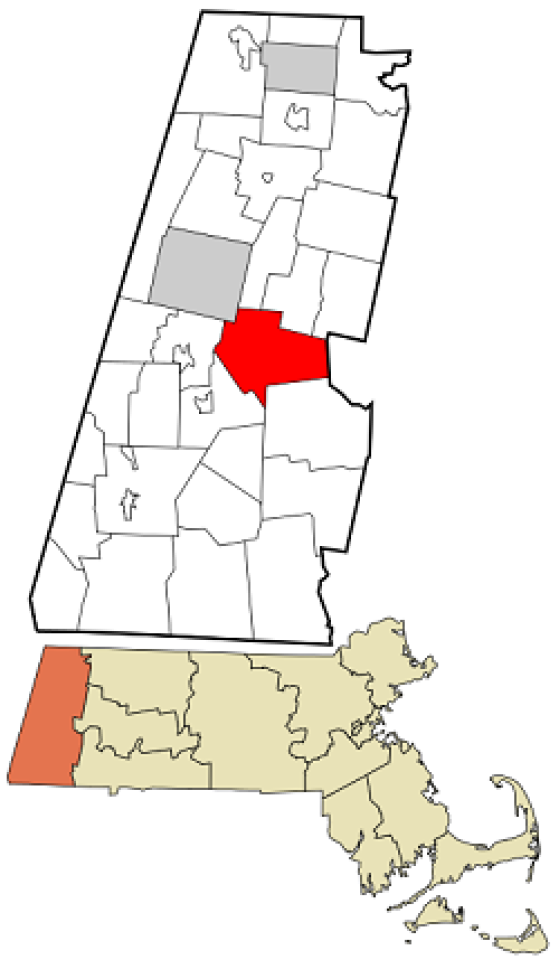
That’s no longer the case as the small town of Washington (pop. 549) has been on the vanguard of rural communities in the hill towns of the Berkshires that have built out (or are in the process of building out) Fiber-to-the-Home (FTTH) networks to bring gigabit speeds and affordable connectivity for residents for decades into the future.

The Pandemic: Curse & Blessing

Image

“On the eve the Governor announced the (pandemic) shut down in March of 2020, our first Fiber Service Area was ready,” Lew recalled in a recent interview with us. “It was tremendous that we were able to do this just as people really needed it.”

As one of dozens of Western Massachusetts towns working in partnership with municipal utility provider Westfield Gas + Electric (which operates Whip City Fiber) to build broadband infrastructure, it was in 2015 that Town Meeting voters authorized a $770,000 bond issuance to finance half the construction costs of the $1.47 million network. The other half came from state grant funding.

Foray into Fiber Frontier for A Rural Virginia Cooperative

When he was a colonel in the Virginia Militia, George Washington is said to have visited “Craig’s Camp,” a mountainous frontier outpost in southwest Virginia near the border of what would later become West Virginia. After the Seven Years' War, farmers and tradesmen were drawn to the area, establishing a settlement known then as “Newfincastle.” Over the years, the “fin” was dropped and the town became New Castle, the seat of Craig County.

Today – with the Jefferson National Forest comprising half of the county, its scenic byways, access to the Appalachian Trail, old churches, and family cemeteries – Craig County and the surrounding region remains steeped in early American history. And now, thanks to the Craig-Botetourt Rural Electric Cooperative (CBEC), this corner of rural Virginia has established a forward-looking outpost of Internet connectivity, and a new fiber frontier that planners hope to expand across the seven counties that make up CBEC’s 650 square-mile service area.

The Bee Online Advantage

Image

It was in 2018 when CBEC began to seriously consider building a broadband network to serve its 6,800 members because, as the co-op’s website puts it: “Our members are experiencing what originally created the electric cooperative in 1936 – a lack of service. They lacked electricity [85] years ago; now they lack high-speed Internet [access].”

That lack of high-speed Internet connectivity is becoming a thing of the past, at least for co-op members in Botetourt County who now have access to an emerging Fiber-to-the-Home (FTTH) service through a CBEC subsidiary known as the Bee Online Advantage.

Coosa Valley Electric Cooperative Brings Fiber to Rural Alabama

Talladega, AL has long been known as the epicenter of NASCAR, a sport synonymous with speed. In 1987, Bill Elliot set the fastest recorded time of 212.089 mph on that very track. 

Cars aren’t expected to start racing down the Talladega Superspeedway track until late April, but the Coosa Valley Electric Cooperative (CVEC) chose the location to announce the fittingly super fast speeds it expects to begin serving up with its new broadband subsidiary, Coosa Valley Technologies, last Wednesday. 

Unfortunately, many residents in Talladega County and surrounding counties have long gone without fast connectivity, with average speeds as low as 5 Mbps (Megabits per second)

CVEC often holds events at the Superspeedway, but for this event they wanted to make sure that since people were gathering, social distancing was possible. Also they wanted to communicate a message.

“It also served as a good backdrop for what we were trying to communicate, which was, we’re going to be provided the fastest broadband service in our area,” Jon Cullimore, CVEC Manager of Marketing and Member Services, told us in an interview as the cooperative prepares to embark on a fiber build intended to bring fast, affordable Internet access to everyone in its electric footprint over the next four years.

Driven by Membership

It all started in 2019 with feasibility studies conducted by two different firms. Both found a profound lack of broadband service throughout CVEC’s service territory, which is situated east of Birmingham.

When the studies were completed, CVEC quickly put together a comprehensive information packet for members to get educated before their annual meeting last September. The members were asked to vote on whether or not CVEC should form a new broadband subsidiary and embark on a new phase of life.

“We got the word out, and we had a record attendance at our annual meeting. We’ve never had that many members show up before,” Cullimore said. “I think we only had 12 ‘no’ votes out of all the [more than] one thousand people that showed up.”  

Franklin, Kentucky Expands Fiber Pilot Partnership with Recent RDOF Wins

Franklin, Kentucky’s (pop. 8,400) electric utility is gearing up for an expansion of its partnership with Warren Rural Electric Cooperative Corporation (WRECC) with the help of $2.3 million from the recent FCC Rural Digital Opportunity Fund (RDOF). The new partnership will allow Franklin EPB to add new service to roughly 250 locations adjacent to a current project in the area.

The expansion project will add subscribers in the northeast region of Simpson County and nearby parts of the city of Franklin in the south-central part of the state, where the two entities are operating a two-area fiber pilot.

Join Us February 8th at 3:30pm CST for Connect This! Episode 6: Marketing

Marketing plays a pivotal role in the success of community broadband at every stage of the game: from helping build political will during the initial stages of a project, to driving strong early take rates, to maintaining momentum down the road. Thoughtful and cohesive marketing, outreach, and community education efforts go hand in hand, and help broadband initiatives and networks weather the inevitable challenges that go with major infrastructure projects. 

On Episode 6 of Connect This!, Christopher and Travis Carter (CEO, US Internet) will be joined by Kim McKinley (Deputy Director and Chief Marketing Officer, UTOPIA Fiber) and Kyle Hollifield (VP of Business Development, Magellan Advisors), both veterans with years of experience. The group will talk about all that marketing entails, including what we can learn from those that do it right and what gets left on the table when it's not part of the discussion. 

Join us Monday, February 8th, at 3:30pm CST on YouTube Live with this link, or watch below.

Staying Ahead of the Curve in Conway, Arkansas

Conway is right in the middle – in the middle of Arkansas with its utility company, Conway Corp, in the middle of beefing up its broadband network.

In this city of 66,000 – home to the information technology company Acxiom Corporation and three colleges – residents and businesses have long relied on Conway Corp for more than just electricity since the utility first launched its cable and Internet service in 1997.

Conway Corp, which has been Conway’s electric utility for the past 90 years, has a unique relationship with the city’s government. “We are different in the way we are set up as compared to many other municipal networks. We are set up as a non-profit. We lease the network and operate it on behalf of the city,” explained Conway Corp Chief Marketing Officer Crystal Kemp.

At the heart of the utility’s network management has been the on-going work to stay ahead of the curve.

Prepared for the Pandemic

“When we launched Internet services in 1997, upstream capacity wasn’t a concern and systems were built with the average homes (and) businesses per geographic area, or node, at 500. Today those numbers are less than 95 per node. That’s been achieved through physical changes in the network and changes in our engineering practices,” Conway Corp’s Chief Technology Officer Jason Hansen told us last week. 

Upgrades to the Hybrid-Fiber-Coax (HFC) network began to take shape in 2019 with the deployment of DOCSIS 3.1, allowing Conway Corp to double its downstream capacity. They also began upgrading equipment that paved the way for expanded use of the RF (Radio Frequency) spectrum to boost the network’s bandwidth. As of December 2020, about 50 percent of the upstream upgrade work had been completed with the remainder expected to be finished by the summer of 2021.

Lawn Signs and Flyers are the Engines Driving Community Broadband

Building a successful community broadband network, we’ve often pointed out, relies on successful organizing and marketing campaigns as much as it does on putting fiber in the ground. Those networks that do it well succeed, and those that fail to take it into consideration can languish or stall out. 

Successful marketing and organizing can build political will for a project, turn enthusiastic adopters into neighborhood champions who help increase take rates, help counter disinformation campaigns and predatory pricing by incumbent Internet Service Providers (ISPs), and show the ways that community owned networks have gone above and beyond over the years to invest not just in the most profitable neighborhoods around but ensure that those along every street and across every block have affordable, reliable, fast Internet access. 

The New Hampshire Electric Cooperative recently saw firsthand how a smart, engaged, energetic subset of its membership can make Internet access a priority. Fairlawn, Ohio’s municipal network has also been highlighting the value it’s bringing to users in the midst of the ongoing pandemic.

And with votes regarding municipal broadband networks coming up in Kaysville, Utah, Denver, Berthoud, and Engelwood, Colorado, Chicago, Illinois, and Lucas, Texas, taking this into consideration is as important as it’s every been.

See some clever and colorful below examples below, and read our past coverage to see how different community networks have taken on the task of branding, marketing, and organizing for success.

Some images courtesy of Internet Freedom for McHenry County

The Future Looks Bright for Access-Anacortes Fiber

Less than seven months has passed since the city of Anacortes, Washington (pop. 17,000) connected the very first subscriber in a pilot project for its municipal network. In the interim, thousands of households have signed up, construction continues at full-steam, and local officials are looking forward to years of providing fast, affordable, reliable service to those living on Fidalgo Island.  

Five Years in the Making

We’ve been following Anacortes since 2015, when the city first began discussing the issue, watching as as local leaders and stakeholders assessed community needs, the state of broadband in the area, and options available to them, and much has changed. Read through our previous coverage if you’re interested in how things unfolded, but by the early part of 2019 the city had decided to pass on the other options and build, maintain, and operate the network themselves