
mapping

Content tagged with "mapping"

Related Topics

Old /tags-176

Displaying 41 - 50 of 155

Save the Date: ILSR’s Building for Digital Equity Returns

Save the date! ILSR’s Community Broadband Networks team is back for a second season of our Building for Digital Equity series.

You can register now here.

The free online live stream will be held on Feb. 16 from 2-3 pm CST/3-4 pm ET.

We will unpack how local communities are working with their states to challenge the FCC’s broadband maps, bringing together local stakeholders, policy advocates, and GIS and Data Visualization Specialists in one place. We will also cover local organizing for better broadband and the latest on the Affordable Connectivity Program (ACP).

The event, which this year is being sponsored by UTOPIA Fiber, will cover:

Image
UTOPIA Fiber logo

Mapping Tools

  • What is the latest on FCC map drama? 
  • What should local governments be doing around mapping? 
  • What should states be doing on mapping? 

Organizing Local Digital Equity Coalitions 

  • Role of Bootcamps 
  • Local strategies and lessons learned 

Affordable Connectivity Program (ACP) 

  • What is the latest information 
  • What works/doesn't work for signing people up?

The livestream will be available on Youtube, Twitter, Facebook, LinkedIn, and Twitch, with live viewer questions answered by the panels. Stay tuned for those links here.

Mapping Deadlines, LA County, and Stuck in the Middle | Episode 62 of the Connect This! Show

Connect This

Join us live on Friday, January 19th, at 2:00pm ET for the latest episode of the Connect This! Show. Co-hosts Christopher Mitchell (ILSR) and Travis Carter (USI Fiber) will be joined by regular guests Kim McKinley (UTOPIA Fiber) and Doug Dawson (CCG Consulting) and special guests Shayna Englin (California Community Foundation) and Geoff Wiggin to talk about the January 13th location challenge deadline, what's going on in LA County and with the California Public Utilities Commission, and what it's like to buy a house in Ohio and find yourself stuck in the middle of the area's Internet service providers.

Email us at [email protected] with feedback and ideas for the show.

Subscribe to the show using this feed or find it on the Connect This! page, and watch on LinkedIn, on YouTube Live, on Facebook live, or below.

Remote video URL

All States Now Have ‘Internet for All’ Planning Funds; Eyes Now on FCC Maps

As the bipartisan Infrastructure Investment and Jobs Act (IIJA) is set to unleash an unprecedented amount of federal funds to expand high-speed Internet access as part of the Biden-Harris administration’s “Internet for All” initiative, all 50 states and U.S. territories have now received their initial planning funds.

Just before Christmas, the U.S. Commerce Department’s National Telecommunications and Information Administration (NTIA), which is administering the broadband funds in the infrastructure bill, announced Massachusetts as the final state to receive its portion of the planning funds ($6 million) in a joint press conference with outgoing Massachusetts Gov. Charlie Baker.

U.S. Commerce Secretary Gina Raimondo said the end-of-the-year allocation of planning funds for Massachusetts marked a significant milestone in the federal government’s support of state broadband offices rolling out competitive grant programs to build new broadband infrastructure and an array of other initiatives to close the nation’s digital divide.

All 50 states, Washington, D.C., and Puerto Rico have now received these planning funds. In a matter of months, we’ll begin to see plans from around the country, detailing how each state will connect all their residents to high-speed, affordable Internet service.

With the broadband-related portion of the IIJA made up of two major funding sources – $42.5 billion in the Broadband, Equity, Access and Deployment (BEAD) program and $2.5 billion in Digital Equity Act (DEA) programs – each state will receive $100 million in BEAD funding, plus an additional amount based on a formula that includes how many unserved and underserved households are in each state.

Daily Yonder: Do You Really Have the Broadband the FCC Thinks You Have?

As we head into the holiday break, we present you with a bit of commentary made possible by a practical gift created by our GIS and Data Visualization Specialist Christine Parker.

Image
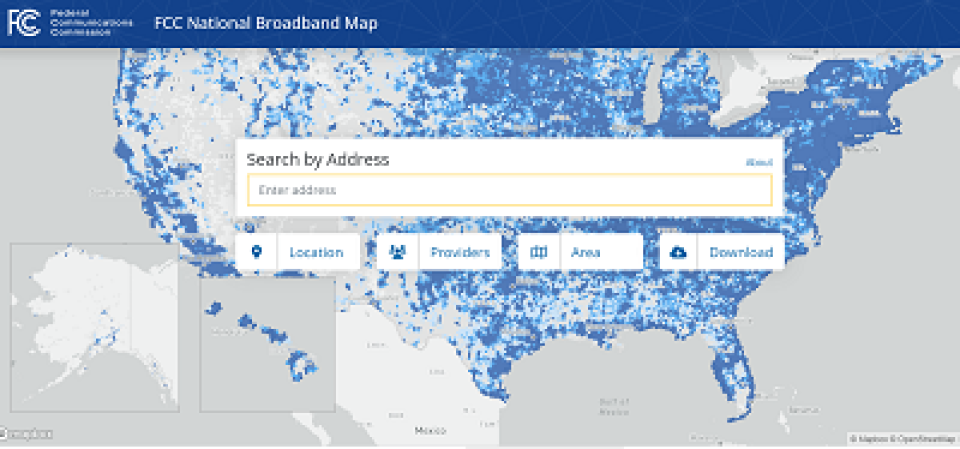
FCC new map

You can read about it in The Daily Yonder, who published our piece on the challenge process for the Federal Communication Commission (FCC) new Broadband Availability Map.

It details why it’s important to make the map as accurate as possible and points readers to Christine’s short videos and PDF walk-through guide on how to file a challenge.

You can find it here.

Happy Holidays!

New Resource: How to Submit Challenges to the FCC Broadband Map

In November, the Federal Communication Commission (FCC) unveiled its new Broadband Availability Map.

Along with a new map style, the FCC also introduced a challenge process that allows everyone – from governments to citizens – the ability to highlight false claims of availability and ensure that every home and business location is accounted for in the map.

With good reason, many are confused about the information shown in the map, the challenge process, and why we should care about helping the FCC make corrections.

Image
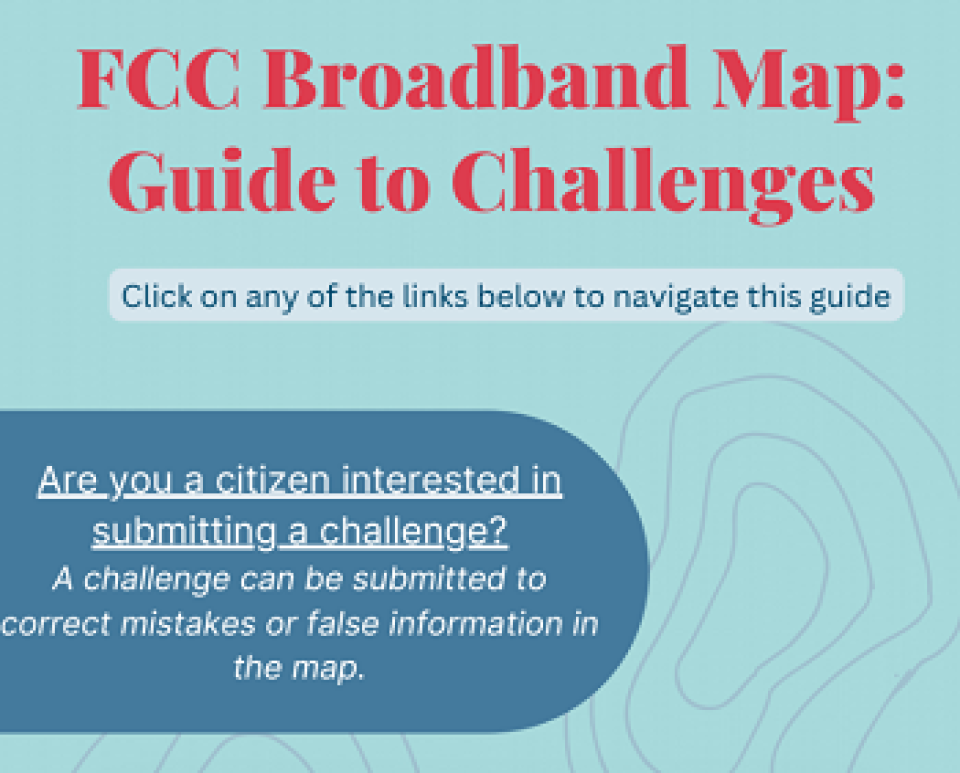
FCC Challenge Guide

While we too are frustrated about the cost and subsequent quality of this map, we believe it is important to contribute to improving this map to enable an equitable allocation of the $42 billion in Broadband Equity, Access, and Deployment (BEAD) Program funds to states next year.

Step-By-Step Guide

In an effort to provide a better understanding of the map itself, and the challenge process, we created a short series of instructional videos and a click-through guide. Through the videos we provide:

Christopher Mitchell's Ask Me Anything - Episode 533 of the Community Broadband Bits Podcast

This week on the podcast, Christopher Mitchell join's Drew Clark on Broadband.Money's Ask Me Anything series, and in true fashion, he never ducks the hard questions. With audience questions, Drew and Christopher cover wide ground, including why the national broadband marketplace needs publicly owned infrastructure options, the benefits of open access models, how cities can prepare for BEAD and other federal funding, and other steps communities can take to make sure that when they do work with third-party ISPs that they maintain some measure of control (like performance-based contracts).

This show is 53 minutes long and can be played on this page or via Apple Podcasts or the tool of your choice using this feed

Transcript below. 

We want your feedback and suggestions for the show-please e-mail us or leave a comment below.

Listen to other episodes here or view all episodes in our index. See other podcasts from the Institute for Local Self-Reliance here.

Thanks to Arne Huseby for the music. The song is Warm Duck Shuffle and is licensed under a Creative Commons Attribution (3.0) license.

Data-Driven Policy Solutions - Episode 531 of the Community Broadband Bits Podcast

Community Broadband Bits

This week on the podcast, Christopher is joined by Senior Reporter, Editor and Communications Team Lead Sean Gonsalves and GIS and Data Visualization Specialist Christine Parker to talk about how bad data can blind us and good data can drive positive policy solutions. First, they talk about a new guide developed by ILSR to help citizen-advocates, nonprofits, and state and local elected officials navigate navigate the FCC's frustrating new Broadband Data Collection initiative. Intended to create new national broadband maps and drive the $42 billion BEAD infrastructure dollars starting in 2023, Christopher, Christine, and Sean talk about sticking points in the process, what's important to know, and what happens if our national broadband data continues to perpetuate harmful inequities.

Then, Christine fills Sean and Christopher in on the latest news with the Affordable Connectivity Program dashboard release earlier this fall, designed to unpack and visualize what folks need to know about the $30/month service benefit in order to help the most people and plan for future policy solutions. Christine shares how it was designed and lessons learned along the way, including what happens when an non-governmental entity (in this case, USAC) is given authority to manage critical social welfare programs but not compelled to share in clear enough ways what the public needs in order to perform accountability and research on them.

This show is 33 minutes long and can be played on this page or via Apple Podcasts or the tool of your choice using this feed

Transcript below. 

We want your feedback and suggestions for the show-please e-mail us or leave a comment below.

Listen to other episodes here or view all episodes in our index. See other podcasts from the Institute for Local Self-Reliance here.

Thanks to Arne Huseby for the music. The song is Warm Duck Shuffle and is licensed under a Creative Commons Attribution (3.0) license.

Maps, Maps Everywhere - Episode 528 of the Community Broadband Bits Podcast

This week on the podcast, Christopher is joined by Dustin Loup, Project Manager of the National Broadband Mapping Coalition, housed at the Marconi Society. Dustin joins us to talk about the new national Federal Communications Commission broadband maps, currently under construction and intended to replace the current and hopelessly broken one to prepare for tens of billion in federal broadband funding.

There will hopefully be many improvements in the new maps, the first version of which is due out this month (we're not holding our breath): more granular data, more precision, and a better picture to drive future infrastructure investment in smart, efficient ways. Christopher and Dustin talk through what they hope to see, before turning to some of the problems the see emerging. This includes the frustrating walls already placed around the (tax dollar-funded) data, almost entirely restricting access to researchers and policy makers for accountability purposes, the probability of abuse by large providers, and the troublingly large $50-million contract to ConstQuest proposed in a recent announcement by NTIA to get access to something the federal government has already paid for, to administer the $42.5 billion BEAD program.

This show is 18 minutes long and can be played on this page or via Apple Podcasts or the tool of your choice using this feed

Transcript below. 

We want your feedback and suggestions for the show-please e-mail us or leave a comment below.

Listen to other episodes here or view all episodes in our index. See other podcasts from the Institute for Local Self-Reliance here.

Thanks to Arne Huseby for the music. The song is Warm Duck Shuffle and is licensed under a Creative Commons Attribution (3.0) license.

One Map to Rule Them All, Challenge Abuses, and the End of the Fiber Boom | Episode 58 of the Connect This! Show

Connect This

Join us live on Tuesday, November 22nd, at 1:30pm ET for the latest episode of the Connect This! Show. Co-hosts Christopher Mitchell (ILSR) and Travis Carter (USI Fiber) will be joined by regular guests Kim McKinley (UTOPIA Fiber) and Doug Dawson (CCG Consulting). Special guest Mike Dunne, from FiberRise, will join partway through the show. The panel will talk about the first version of the brand-new FCC broadband maps, released last Friday, internal Cable One emails admitting the company's misuse of the challenge process to block competition from publicly funded providers, updates on the broadband nutrition label, and whether rising interest rates will spell an end to the fiber boom. 

Email us at [email protected] with feedback and ideas for the show.

Subscribe to the show using this feed or find it on the Connect This! page, watch on YouTube Live, on Facebook live, or below.

Pricing Disparities by Monopolies, CostQuest, and Starry Abandoning RDOF Bids | Episode 56 of the Connect This! Show

Join us live on Thursday, October 20, at 11am ET for the latest episode of the Connect This! Show. Co-hosts Christopher Mitchell (ILSR) and Travis Carter (USI Fiber) will be joined by regular guests Kim McKinley (UTOPIA Fiber) and Doug Dawson (CCG Consulting). They'll dig into the chase for gigabit Tarana by Travis, a new LA County report which finds significant pricing disparities by Charter Spectrum in low-income neighborhoods, and Starry's recent decent to abandon all of its Rrural Digital Opportunity Fund (RDOF) bids. Special guest Dustin Loup (Marconi Society, National Broadband Mapping Coalition) will join later in the show to talk about the recently announced FCC contract with Cost Quest for the new national broadband availability maps.

Email us at [email protected] with feedback and ideas for the show.

Subscribe to the show using this feed or find it on the Connect This! page, watch on YouTube Live, on Facebook live, or below.