
COVID-19

Content tagged with "COVID-19"

Related Topics
Displaying 21 - 27 of 27

A Call in Vermont to Assemble A Broadband Corps

A new report out by CTC Technology and Energy and Rural Innovation Strategies, commissioned by the state of Vermont, gives us one of the clearest and most detailed pictures so far of the impact of the Covid 19 pandemic on our attempts to live and work remotely. 

The “Covid-19 Responses Telecommunications Recovery Plan” [pdf], presented to the state in December 2020, includes both a comprehensive survey of conditions after a half-year of social distancing and intermittent lockdowns as well as recommendations for addressing immediate needs. But it offers solutions that provide a path forward by making sure that dollars spent now are in service to the state’s long-term goals of getting everyone in the Green Mountain State on fast, affordable wireline broadband service at speeds of at least 100/100 Megabits per second (Mbps). 

The report brings together network performance assessments from every level of government across the state over the last six months, pairs it with survey responses from citizens, libraries, hospitals, businesses, regional development corporations, and Communications Union Districts (CUDs), and offers analysis based on conditions for moving forward.

“Covid-19 has laid bare the challenges of lack of universal broadband in Vermont,” the report says, with “inequities in the availability and affordability of broadband create further inequities in areas such as education, telehealth, and the ability to work from home.” It offers a wealth of findings:

Le Sueur County, MN Hitting on All Cylinders

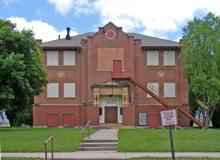
Over the last three years, Le Sueur County, Minnesota has assembled a task force of citizens, local officials, and business leaders which have succeeded in dramatically improving broadband for thousands of residents who previously had poor or no connectivity. In doing so, they’ve also forged relationships, inventoried local resources, and created a model which is likely to see the landscape go from one where nearly all residents in the county were under- or unserved by basic broadband at the beginning of 2018 to one where the vast majority of the community will have access at 100/20 Mbps in the next couple years. And if efforts continue to succeed, it’s possible we might see full fiber coverage in Le Sueur by the end of the decade, making it one of the most connected counties in the state.

Le Sueur is located ninety miles southwest of Saint Paul, and had just under 29,000 residents and 11,000 households in 2019. There are 11 whole or partial cities in the county, of which Le Center and Montgomery are the largest at around 2,500 people each. The remaining communities sit between 200 and a 1,000 residents. More than a thousand farms dot the landscape, and agriculture, along with some tourism and resort development centered on the lake communities, comprise the bulk of the county’s economic picture.

Image

Broadband infrastructure outside of the population centers in Le Sueur is generally poor, which was a problem for residents, for businesses, and for farmers looking to remain competitive and modernize operations: “the lack of this service means students have trouble completing schoolwork and seeking future opportunity, small businesses have trouble connecting with customers and vendors, farmers have less efficient operations, home sales and development lags, and options for telemedicine are closed.”

Read this Op Ed: Broadband would close NC’s digital divide; Big Telecom is blocking it

Paul Meyer, the Executive Director of the North Carolina League of Municipalities, has a new piece out outlining clearly and concisely what anyone living in or familiar with the state of broadband in North Carolina is thinking: the connectivity problems shown in such stark detail by the ongoing pandemic are nothing new, and the entities to blame are the huge out-of-state monopoly Internet Service Providers like Charter Spectrum and AT&T.

Both companies, and AT&T in particular, have spent hundreds of thousands of dollars over the last ten years to reduce competition across the state so that they can extract as much profit from North Carolina's communities as possible. Since the passage of HB 129 in 2011, no new municipal networks have been built in the state.

Meyer outlines the consequences of this reality, with residents and businesses alike stuck on old, slow, expensive connections that service providers have no incentive to upgrade in a broken marketplace.

Read the whole piece here, but see some excerpts below:

It has simply become unacceptable and unconscionable that a handful of companies stand in the way of allowing this to happen almost a decade after banding together to block municipalities from building and operating their own systems, and proclaiming as they did so that they would address the digital divide in the state.

Building Better Broadband Underscores Joe Biden’s Top Policy Initiatives

This piece was authored by Jericho Casper from Broadband Breakfast.

The digital divide afflicting the United States has become even more apparent throughout the pandemic, repositioning the issue of universal broadband access to the forefront of many Washington policy agendas, including that of President-elect Joe Biden.

The Biden presidential campaign’s website early on included a plan for rural America that highlighted how the COVID-19 crisis deepened many of the challenges that were already confronting Americans, including “lack of access to health care, unreliable broadband, and the chronic under funding of public schools.”

The plan further states that “Americans everywhere need universal, reliable, affordable, and high-speed Internet access to do their jobs, participate equally in remote school learning and stay connected” and promises to “expand broadband, or wireless broadband via 5G, to every American.”

Biden’s Top Four Priorities Convey an Urgent Need for Advanced Infrastructure

Of the challenges facing the incoming administration of Biden and Vice President-elect Kamala Harris, it seems clear that universal broadband is critical to each of them.

Biden’s campaign website specifically lists universal broadband as a priority in bolstering economic recovery, fighting climate change, and advancing racial economic equity. Universal access to broadband also underscores  the fourth top policy initiative listed on the Biden campaign website, battling COVID-19, although the incoming administration fails to link broadband as a precondition for this priority.

As a presidential candidate, Biden called broadband a tool to put Americans to work during a visit to Hermantown, Minnesota.

The campaign’s plan for economic recovery specifically links the country’s financial recovery to mobilizing American work forces in the construction of  “modern, sustainable infrastructure” and “sustainable engines of growth,” connecting universal broadband to building a clean energy economy, addressing the climate crisis, and creating millions of “good-paying, union jobs.”

Community Broadband is a Part of Protecting Small Businesses During COVID

On December 7th, Our Revolution Arlington hosted an event which brought together a diverse group to talk about the impact of the ongoing pandemic on small and independent business owners, and what solutions exist for responding: 

With new lockdowns looming and federal support stalled indefinitely, what options do state and local governments have to keep small businesses afloat in the months ahead. In addition, how might we strengthen small business over the long term as part of more inclusive community development strategies? 

Among panelists were ILSR’s Kennedy Smith (Senior Researcher, Independent Business initiative) and Christopher Mitchell (Director, Community Broadband Networks initiative). They were joined by Donna Grambrell (President/CEO Appalachian Community Capital), Tony Hernandez (Director, Dudley Neighbors, Inc.), and Marjorie Kelly (Executive Vice President, The Democracy Initiative)

Kennedy talked about a recent ILSR report showing the variety of responses available to communities and states to protect small business and ensure a more equitable outcome for economic recovery. Christopher talked about the variety of ways local ownership of information infrastructure can help small business weather a pandemic, but also set up communities for success in fostering business and commercial districts that attract talent, capital, and residents for the next decade.

The other panelists touched on models for preserving local business ownership through temporary equity actions via “economic preservation funds,” the outsized impact of the pandemic on minority-owned businesses and how to help, and the formation of community land trusts to combat gentrification and land speculation. 

Watch the recording below.

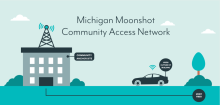
Launch of Michigan Moonshot Community Access Network Brings Wi-Fi to Critically Unserved Areas

A new project borne out out of the Michigan Moonshot Initiative promises to help thousands of families and students without home Internet access get online. Led by the Merit Network, a coalition of partners (including Toyota, Cisco, the Detroit Public Library, the Washtenaw County Broadband Task Force, and county school districts) is installing Wi-Fi hardware at 50 sites around the southeastern part of the state to bring broadband access to thousands. Nine locations are up and running, with more soon to follow. 

The effort is taking place in the cities of Detroit, Inkster, Flint, as well as Washtenaw County. Toyota and Cisco are providing funds and hardware, and the project takes advantage of the Merit Network’s extensive fiber backbone running throughout the state (4,000 miles in total). Wayne State University is also participating, and inviting students and faculty and staff to participate in a broadband survey. Funds are being dispersed in the form of grants which will go to community organizations to boost existing Wi-Fi networks at schools and other anchor institutions across participating areas.

Alabama Makes a $100 Million Commitment to Getting Students Online — Episode 436 of the Community Broadband Bits Podcast

This week on the podcast, Christopher talks with Maureen Neighbors, Energy Division Chief of the Alabama Department of Economic and Community Affairs, about the state’s one-of-a-kind, $100 million voucher program designed and deployed for the current school year to help get and keep economically vulnerable students connected. 

She tells Christopher how, with the help of CTC Energy and Technology, the state brought together more than three dozen Internet Service Providers (ISPs) — many of which are local companies — connected with school districts around the state, designed an online portal, and mailed out tens of thousands of brochures to households with students on the free or reduced lunch program to help those families to start new service or pay their existing broadband bill.  

Maureen shares the challenges they met (data and mapping are hard, and wrangling 37 ISPs equally so) and the satisfaction in helping more than 120,000 students (and counting!) stay connected to school during the ongoing pandemic.

This show is 32 minutes long and can be played on this page or via Apple Podcasts or the tool of your choice using this feed

Transcript below. 

We want your feedback and suggestions for the show-please e-mail us or leave a comment below.

Listen to other episodes here or view all episodes in our index. See other podcasts from the Institute for Local Self-Reliance here.

Thanks to Arne Huseby for the music. The song is Warm Duck Shuffle and is licensed under a Creative Commons Attribution (3.0) license.