
COVID-19

Content tagged with "COVID-19"

Related Topics
Displaying 11 - 20 of 27

Maryland Commits $300 Million to Expand Broadband

With $3.9 billion from the American Rescue Plan Act on its way to Maryland, Gov. Larry Hogan and state legislative leaders have agreed to seize the moment, allocating $300 million of federal COVID-19 relief funds to expand broadband infrastructure and digital inclusion initiatives across the state.

The biggest bulk of the money – $97 million – will go towards funding the building of physical infrastructure with $45 million earmarked specifically for municipal broadband grants.

“The question isn’t how much it’ll cost to bridge the digital divide, the question is how much will it cost if we don’t act right now,” State Senate President Bill Ferguson said at a press conference when the funding was announced.

The bipartisan budget agreement was hailed by Gov. Hogan, a Republican, as an example for the nation demonstrating how “people from different parties can still come together, that we can put the people’s priorities first, and that we can deliver real, bipartisan, common sense solutions to the serious problems that face us.”

One “serious problem” in Maryland, according to a recent Abell Foundation report, is that 23 percent of Maryland households (520,000) do not have a wireline home Internet connection, 40 percent (or 206,000) of which are Black households.

Much of that comes from a lack of affordability and other barriers to adoption. To deal with those challenges, the budget agreement also includes $45 million to subsidize monthly Internet service costs for qualifying families and $30 million to pay for Internet-connected devices for financially eligible households. It also includes an additional $4 million for a new University System of Maryland program to support training and developing curriculum to bridge the digital divide as well as $2 million for digital navigator programs.
Plagued by Bad Service, Eastern North Carolina Mayors Petition State Legislature to Let Them Build Municipal Networks

The mayors of nine cities in eastern North Carolina have had enough of Suddenlink's poor service. WRAL reports that they've called on the state legislature to overturn HB 129 and let them build their own networks after years of unreliable connectivity:

“[HB 129] forbade any kind of municipality from establishing broadband as one of their utilities,” Rocky Mount mayor Sandy Roberson said.

Roberson said Internet service in Nash and Edgecombe counties had been a problem for years.

There have been so many complaints against the area’s major provider, Suddenlink, since the COVID-19 pandemic began that the mayor of Tarboro called for the state Attorney General to investigate the company in January.

Months later, area leaders have started to take matters into their own hands, with the mayors of nine cities across Eastern North Carolina petitioning the state legislature to allow them to set up their own fiber networks.

The call to action comes on the heels of the mayors of Tarboro, Rocky Mount, New Bern and Washington calling on the state Attorney General to investigate the company.

Head over to WRAL to read the whole story.

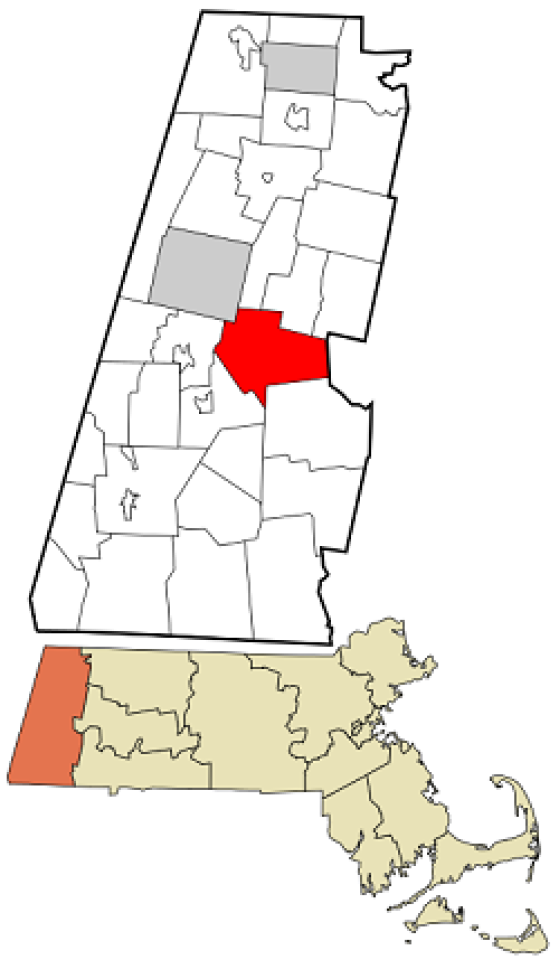
Fiber Network is ‘Life-Changing’ Music for Folks in Washington, MA

As the oldest son of the legendary folk singer Woody Guthrie, Arlo Guthrie — the Town of Washington, Massachusetts’ most famous resident — built a name for himself as a singer-songwriter by letting folks know, “You can get anything you want at Alice's Restaurant.”

But if you ask the town’s Broadband Manager Kent Lew, there was one thing that was not on the menu in Washington before last year: high-speed Internet connectivity.

That’s no longer the case as the small town of Washington (pop. 549) has been on the vanguard of rural communities in the hill towns of the Berkshires that have built out (or are in the process of building out) Fiber-to-the-Home (FTTH) networks to bring gigabit speeds and affordable connectivity for residents for decades into the future.

The Pandemic: Curse & Blessing

Image

“On the eve the Governor announced the (pandemic) shut down in March of 2020, our first Fiber Service Area was ready,” Lew recalled in a recent interview with us. “It was tremendous that we were able to do this just as people really needed it.”

As one of dozens of Western Massachusetts towns working in partnership with municipal utility provider Westfield Gas + Electric (which operates Whip City Fiber) to build broadband infrastructure, it was in 2015 that Town Meeting voters authorized a $770,000 bond issuance to finance half the construction costs of the $1.47 million network. The other half came from state grant funding.

Franklin County, Ohio Aims to Address Digital Equity in Urban Areas

Schools offer not only education, but nourishment, a place to form friendships and bonds, and a way to make sure youth are safe. When the pandemic hit, schools had to transition to distance learning and, as a result, many students disappeared because their family didn’t have access to or couldn’t afford a home Internet connection. It became immediately clear, all over the country, that a lack of broadband access and broadband affordability were no longer issues that could be ignored. 

Many cities throughout the U.S. have been working over the last year to address this issue, but one city in particular - Columbus, Ohio - has been taking a holistic approach to broadband access. 

The Franklin County Digital Equity Coalition was borne out of the emergency needs presented by the pandemic, but has shaped up to be a good model for how to address the broadband issues facing urban communities across the country. 

After 11 months of meeting and planning, the coalition released a framework in March outlining its five pillars of focus: broadband affordability, device access, digital life skills and technical support, community response and collaboration, and advocacy for broadband funding and policy. 

The coalition also developed two pilot programs to increase broadband access. 

The first, which was a quickly deployed and desperately needed response to the lack of broadband access, was the Central Ohio Broadband Access Pilot Program. Launched in September 2020 in anticipation of the upcoming school year, it offered hotspot devices with unlimited data plans to central Ohio households with k-12 students. The program, while still growing, has been deployed with about 2,300 hotspots distributed so far with the help of PCs for People. 

The second (the City of Columbus and Smart Columbus Pilot Projects) uses the city’s existing fiber backbone to bring affordable Internet service to the Near East and South Side neighborhoods in Columbus.

Both pilot programs are the result of nearly 30 organizations coming together to get affordable access to some of the city and county’s most vulnerable populations.

There’s Power in Numbers

Federal Government Devotes Billions to Internet Access: A Community Guide to Current Broadband Funding

In the American Rescue Plan Act, Congress and the Biden Administration included a multi-billion dollar appropriation to help expand high-speed Internet access. This guide offers an overview of the different funding opportunities for communities interested in expanding broadband services. As application deadlines vary in some cases and other money must be spent within certain time frames, it is critical for states, municipalities, community organizations, and Tribal governments to start planning initiatives now. 

It’s also worth emphasizing that 18 states still put localities at a disadvantage when it comes to spending anticipated funding effectively by preserving laws that interfere with community investment in broadband infrastructure. Much of this money could also be funneled for other purposes due to a lack of good plans and community engagement. 

The amount of funding flowing into communities is unprecedented. Localities should prepare to spend funds on needed, futureproof infrastructure. This is an historic, once-in-a-lifetime investment in Internet infrastructure and communities who develop a clear, actionable plan and are as ready as possible once the money starts flowing will prosper.

Directory

If you’re a homeowner looking for assistance paying your Internet bill…look to the Emergency Broadband Benefit Program or Homeowner’s Assistance Fund

If you’re an HBCU or Minority-serving institution looking to expand Internet access to your students, or if you’re a minority business enterprise or nonprofit organization in the surrounding community...look to the Connecting Minority Communities Pilot Program.

if you’re a Tribal government, Tribal organization, or Tribal college or university, including native Hawaiian organizations, education programs and native corporations…look to the Tribal Broadband Connectivity Program.

If you’re a city interested in partaking in a public-private partnership…look to the Promote Broadband Expansion Grant Program

If you’re a school or library whose main concern is obtaining remote Internet access devices...look to the Emergency Connectivity Fund.


Federal Aid Directly To States, Counties, Localities and Territories

Eastern Shore Broadband Takes Fiber Leap With Help from NASA

Hop in a time machine and go back to 2008. It was a banner year for NASA as the space agency celebrated its 50th birthday. Phoenix touched down on Mars, far-off planets were photographed, four space shuttles flew to the International Space Station, and the agency helped send scientific instruments to the moon aboard India’s first lunar explorer.

Meanwhile on Earth, it was the under-the-radar launch of the Eastern Shore of Virginia Broadband Authority (ESVBA) fiber network in 2008 that carried the most practical payload for the people of Accomack and Northampton counties along coastal Virginia. A popular tourist destination “for lovers,” the Eastern Shore is a 70-mile stretch of barrier islands between Chesapeake Bay and the Atlantic Ocean. And thanks in large part to funding from NASA, which operates the Wallops Flight Facility on Wallops Island, the future-proof broadband frontier had finally found its way to the region.  

The two counties of Eastern Shore, Accomack and Northampton, provided an initial sum of about $270,000 to ESVBA to plan the network. It was one small step for high-speed connectivity in the Commonwealth, followed by one giant leap when ESVBA received $8 million in federal and state funds – nearly half of which came from NASA – to build the region’s open access middle mile backbone. When that part of the network was completed, the Wallops Flight Facility and its 1,100 employees were connected to it, as was the National Oceanographic and Atmospheric Administration’s Chesapeake Bay office and an array of area healthcare institutions and schools. 

The Final Fiber Frontier

Community Networks Borne Out of Covid-19 Continue to Strengthen and Expand

With vaccines rolling out tier by tier, state by state, and restaurants, bars and public spaces starting to reopen one by one, there seems to be a desire to say, “Wow, things are going back to normal!” Unfortunately, the public health crisis exacerbated healthcare, education, and economic inequities that have long existed in low-income and communities of color across the country and have no chance of going away any time soon. But some community leaders have stepped up and come to the table with one piece of the puzzle in bridging these inequities — better Internet access to these communities. 

Over the summer, we covered several communities that jumped to action and came up with quick ways to implement long-term solutions. 

The city of San Rafael, which sits on the coast of northern California in Marin County, continues to strengthen, expand, and research the use of the network it built over the summer and fall for one unserved area hit hard by the economic, education, and health impact of Covid-19. And on the other side of the country, Meta Mesh in Pittsburgh, Pennsylvania continues construction on a pilot project that is hoping to connect unserved families by the end of this summer.

Focusing on the Future

In San Rafael, California, the city, Marin County and a nonprofit organization — the Canal Alliance — all joined forces to bring free Wi-Fi to the Canal neighborhood

Going Wireless for Students and Seniors in Tucson

When Collin Boyce, the City of Tucson’s Chief Information Officer, was a young boy, he left his native island country of Trinidad and Tobago with his mother and three brothers and moved to Brooklyn, New York.

“We were poor but what my mother did for us in the summertime is send us to computer camps. And because of those camps three of us are in the IT industry today and the one we call the black sheep of the family is a neurosurgeon,” Boyce said.

He was joking about his neurosurgeon brother of course. But was dead serious about how being introduced to computer technology as a young kid led him into IT work and why it means so much to him to help build Tucson’s new municipal wireless network to provide Internet connectivity for low-income school students and seniors.

“This effort is an opportunity to give back what my mother gave me,” he said.

Tucson has hundreds of miles of fiber connecting the city’s municipal buildings. But, unlike a city like Chattanooga, which operates one of the premier Fiber-to-the-Home networks in the nation allowing America’s first Gig City to provide free high-speed Internet access to 12,000 low-income students in Chattanooga throughout the ongoing pandemic, Tucson has not built a fully fiber-optic municipal broadband network.

As the COVID crisis swept across Arizona and forced students to attend school remotely last spring, Boyce began to look for a way to ensure that the thousands of students who didn’t have Internet access at home wouldn’t be left behind. In a city with a population of about 530,000, an estimated 30 percent of city residents, or about 150,000 Tucsonans, don’t subscribe to wireline broadband, Boyce said.

Standing Up a New Network

“We needed to stand up some wireless technology,” he told us this week.

Fiber Network is "Game-Changer" in "Backwater" Massachusetts Town

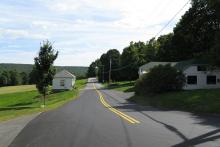
Leyden is located in one of the most rural parts of northwestern Massachusetts, along the edge of the Berkshires tucked away in the valleys of the Green River bordering Vermont.

Though it is only 47 miles north of Springfield and 96 miles west of Boston, this town of about 800 residents is one of only a handful of municipalities in the entire Commonwealth that does not have any state routes running through it, similar to the islands of Nantucket or Martha’s Vineyard off the southeast coast of Massachusetts.

And while Leyden is not a geographical island, it has been a digital outpost barren of broadband. That is until now - with the birth of Leyden Broadband as the town is nearly done with the construction of a 35-mile Fiber-to-the-Home (FTTH) network.

From DSL ‘Backwater’ to Fiber Haven 

“Without any major routes here, we get very little ancillary traffic through town. It’s kept us below the radar. We’ve always been a lightly populated hill town that doesn’t really offer a financial reward for the big telecom companies to come in with high-speed broadband,” Andy Killeen, chair of the Leyden Municipal Light Plant and volunteer head of the town’s fledgling Broadband Department, told us this week.

“Folks were running DSL but that worked pretty poorly. We are not close to the copper (DSL) hubs, which means you could pretty much handle email, but that was about it,” said Killeen, who owns and operates a home safety and security business in the nearby town of Greenfield.

The DSL days are over for residents in this 18-square mile town. Leyden may be a “kind of backwater town,” as Killeen put it, but the townspeople are Leydenites; not Luddites.

“We’ve gone from industry-trailing Internet [access] speeds to top-end network connectivity with gigabit speed that rivals anything you can get in Boston,” Killeen said, looking out of his living room window at the nearby mountain range as a bird streaked across the winter sky, his son cozied up next to him streaming a Disney Plus movie in 4K.

Staying Ahead of the Curve in Conway, Arkansas

Conway is right in the middle – in the middle of Arkansas with its utility company, Conway Corp, in the middle of beefing up its broadband network.

In this city of 66,000 – home to the information technology company Acxiom Corporation and three colleges – residents and businesses have long relied on Conway Corp for more than just electricity since the utility first launched its cable and Internet service in 1997.

Conway Corp, which has been Conway’s electric utility for the past 90 years, has a unique relationship with the city’s government. “We are different in the way we are set up as compared to many other municipal networks. We are set up as a non-profit. We lease the network and operate it on behalf of the city,” explained Conway Corp Chief Marketing Officer Crystal Kemp.

At the heart of the utility’s network management has been the on-going work to stay ahead of the curve.

Prepared for the Pandemic

“When we launched Internet services in 1997, upstream capacity wasn’t a concern and systems were built with the average homes (and) businesses per geographic area, or node, at 500. Today those numbers are less than 95 per node. That’s been achieved through physical changes in the network and changes in our engineering practices,” Conway Corp’s Chief Technology Officer Jason Hansen told us last week. 

Upgrades to the Hybrid-Fiber-Coax (HFC) network began to take shape in 2019 with the deployment of DOCSIS 3.1, allowing Conway Corp to double its downstream capacity. They also began upgrading equipment that paved the way for expanded use of the RF (Radio Frequency) spectrum to boost the network’s bandwidth. As of December 2020, about 50 percent of the upstream upgrade work had been completed with the remainder expected to be finished by the summer of 2021.