


In the last few years, the California Public Utilities Commission (CPUC) has been more intensely focused on ensuring that broadband in California is affordable.
So it’s curious to see the California State Assembly vote 67-1 on May 18 to strip telecom oversight authority away from the CPUC and shift it to a more easily lobbied state legislature – and an as-yet-undefined state broadband office.
The effort still has a long road before it’s formalized.
Assembly Constitutional Amendment 9, authored by Assemblymember Tasha Boerner, D-Encinitas, now moves on to the California Senate, where it needs to secure a two-thirds vote before appearing on a statewide ballot before California voters.
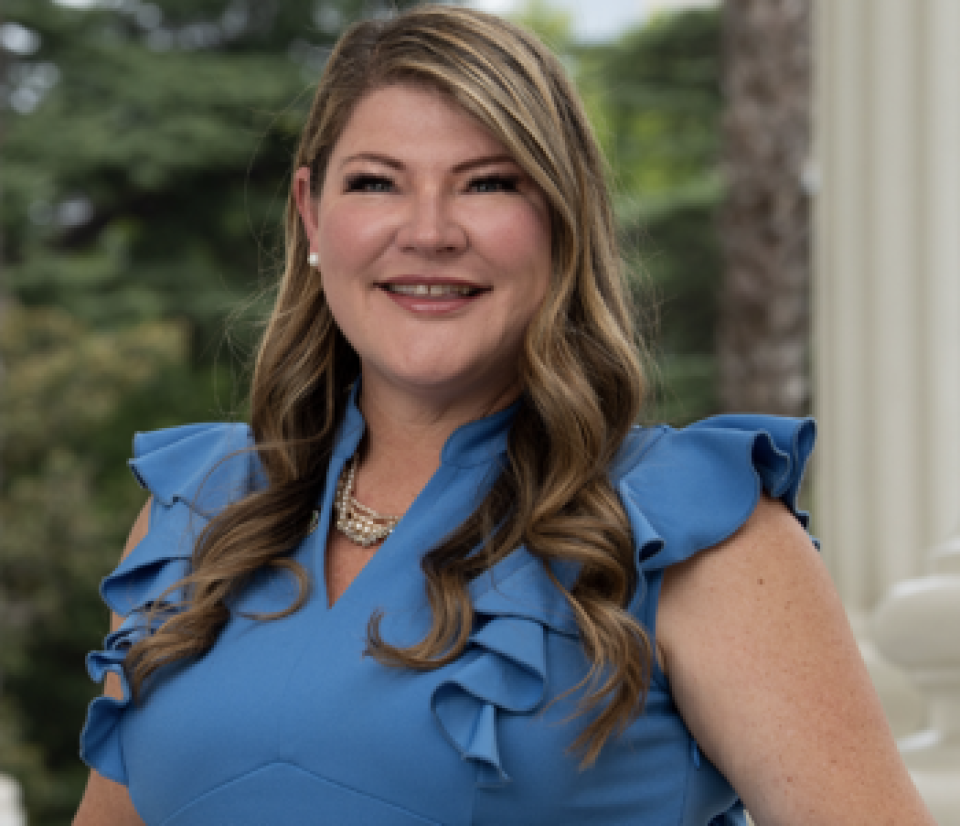
The proposal would remove the state constitutional requirement to define and regulate telecommunications as a public utility, something long supported by telecom giants. Boerner’s amendment (and companion bill AB 2289) gives lawmakers leeway to strip the CPUC of its telecom portfolio and hand it over to a newly created state broadband office by 2028.
Consumer Advocates Are 'Shocked' and Skeptical
Boerner’s proposal is being sold to state lawmakers and the local press as a way to keep the CPUC focused on soaring electrical costs.
"Today’s strong vote makes it clear that Californians across the political spectrum are ready to codify affordability into the constitution and to shift oversight and accountability of our utilities,” Boerner said of the proposal. “We need to focus the CPUC on the things we need them to do — our utility rates, our affordability, our reliability, and safety of our grid."
But broadband affordability is essential to the public interest. And the effort to strip the CPUC of its authority over broadband suspiciously comes as one of the state’s dominant telecom monopolies, AT&T, has been trying to hamstring the CPUC’s attempts to improve affordable broadband access across the Golden State.
Boerner's changes to the CPUC appointment process open the door to greater influence over policy and the commissioner selection process by not just AT&T, but local California utilities, potentially undermining her claims of improved affordability for consumers.
The CPUC currently consists of 5 members, all appointed by the Governor. Boerner’s ACA 9 would expand the commission to 9 members, while splitting CPUC appointments between the Governor, the state Senate Rules Committee and the Speaker of the Assembly. The latter has, according to state activists, been more susceptible to telecom lobbying influence.
Whereas the CPUC currently has some intended independence from corporate power, shifting appointments and oversight to the state legislature – and any sort of freshly-created broadband office – would make it easier for telecom monopolies to unfairly influence proceedings through revolving door appointments, lobbying, and strict budget control.
“The 67-1 vote here is shocking,” S. Derek Turner, Research Director at consumer group Free Press told ILSR. “I can’t speak to their other functions, but with telecom the CPUC has a strong reputation for not being a captured industry rubber stamp like other state PUCs, which should be a point of pride for our elected representatives.”
Other consumer advocates indicated they were surprised by the proposed amendment’s initial approval and were skeptical of the effort’s longer-term chance of success. Particularly given its likely lack of support from state consumer groups and activists.
Boerner’s involvement is of particular note given her support last year for the California Affordable Home Internet Act (AB 353), which would have required that broadband providers in the state provide broadband at no more than $15 per month for low-income households participating in a qualified public assistance program.
While the bill was presented as a good faith effort to improve broadband affordability in the state, some consumer groups told ILSR at the time that they felt the bill was actually a trojan horse, designed to pre-empt efforts at a more meaningful affordability bill by presenting an industry-backed alternative with watered down requirements.
During the fight Boerner – who saw significant campaign contributions from telecom giants last election cycle – added significant amendments that degraded the bill’s speed definitions, would have weakened the California Public Utility Commission's (CPUC) ability to hold large telecoms accountable, and created new financial risks for municipal broadband providers.
Once the bill had been watered down to the point of uselessness, it lost the support of California advocacy orgs, ultimately resulting in the bill going nowhere. Boerner subsequently blamed (illegal) Trump administration threats to pull infrastructure bill grant funding from states that enforced affordability, but the whole process raised the ire of skeptical consumer groups.
Dominant Telecom Monopolies Don’t Like CPUC Targeting Affordability
Over the last few years, the CPUC has taken meaningful actions on affordability, including Verizon Frontier merger conditions requiring the resulting company provide broadband for as little as $20 to low-income households. The CPUC is working on similar affordability conditions for Cox’s massive $34.5 billion merger with Charter.
The CPUC has also tethered affordability to many state grant programs, bucking the Trump administration’s efforts to eliminate them, and annoying private telecom giants that have fought tooth and nail to eliminate oversight of their often heavily-subsized regional monopolies (and the expensive, spotty, and slow service that often results).
For a recent episode of our Unbuffered podcast, ILSR’s Christopher Mitchell sat down to talk with Ernesto Falcon, Program Manager of Communications and Broadband Policy with the CPUC Public Advocates Office for a conversation about competition, mergers, and how to make sure low-income households have access to affordable access and opportunity.
There’s ample other areas of hostility between the CPUC and regional, unpopular telecom monopolies. AT&T recently sued the state of California because the state – and CPUC – had refused to eliminate Carrier of Last Resort (COLR) obligations requiring the telecom giant to maintain telephone service to any potential customer in its service territory.
AT&T argues that such requirements are outdated; consumer and civil rights groups counter that the sudden and abrupt disconnect of traditional phone service (especially given the billions in taxpayer subsidies invested in the networks) harms older and more vulnerable Americans, as well as rural Americans out of range of traditional cellular access.
At the heart of the issue for public interest groups and the CPUC, is that AT&T often refuses to upgrade copper phone lines to fiber, and has worked to offload these customers instead to expensive, “good enough,” and less reliable wireless phone service. AT&T lobbyists have had success eliminating COLR requirements in every state but California.
California’s efforts to protect vulnerable populations and impose affordability requirements has angered the Trump administration, which has illegally threatened to withhold already-awarded infrastructure bill grants to states that impose such requirements on private providers.
Eroding CPUC’s telecom oversight in favor of a more easily-lobbied alternative seems to be arriving at a particularly fortuitous time for one of the state’s least popular telecom monopolies.
“Taking away oversight authority from an expert agency with a strong track record of actually representing consumers interests in telecom merger reviews and prompting broadband affordability and transferring that oversight role to a new state broadband office is a radical change unjustified by any actual problem,” Turner said.
“Because the FCC long ago abandoned its oversight role, this move could weaken an important last line of consumer protections.”
Header image of California Public Utilities Commission building courtesy of Wikimedia Commons, Attribution-ShareAlike 3.0 Unported
Inline screenshot of California Assemblymember Tasha Boerner courtesy of Tasha Boerner Assemblymember website