

state laws

Content tagged with "state laws"

Displaying 371 - 380 of 389

FCC Commissioner Issues Statement Opposing TWC Bill to Limit Community Broadband in North Carolina

FCC Commissioner Clyburn Mignon has released a statement opposing "Anti-Municipal Broadband Legislation" [pdf], especially singling out the Time Warner Cable bill to kill community broadband in North Carolina.
STATEMENT BY FCC COMMISSIONER MIGNON L. CLYBURN ON PROPOSED ANTI-MUNICIPAL BROADBAND LEGISLATION I have serious concerns that as the Federal Communications Commission continues to address broadband deployment barriers outlined in the National Broadband Plan, new obstacles are being erected that are directly contrary to the Plan’s recommendations and goals. I recently learned that several state legislatures are considering bills that are contrary to the deployment objectives of the Broadband Plan. For example, in North Carolina, the state legislature is currently evaluating legislation entitled ‘Level Playing Field/Local Government Competition.’ Last week the North Carolina House passed the bill, and it currently awaits consideration in the Senate. This piece of legislation certainly sounds goal-worthy, an innocuous proposition, but do not let the title fool you. This measure, if enacted, will not only fail to level the playing field; it will discourage municipal governments from addressing deployment in communities where the private sector has failed to meet broadband service needs. In other words, it will be a significant barrier to broadband deployment and may impede local efforts to promote economic development. The National Broadband Plan recommended that Congress clarify that State, regional, and local governments should not be restricted from building their own broadband networks. When providers cannot meet the needs of local communities, the Plan provides that State, regional, and local entities should be able to respond accordingly, as they were able to do when municipal governments distributed electricity to thousands of rural communities during the 20th Century.

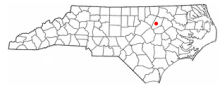
Greensboro Passes Resolution Against Time Warner Cable Bill in North Carolina

Greensboro is the latest to officially call on the North Carolina Legislature to not pass H 129, a bill pushed by Time Warner Cable to limit the right of communities to choose to build their own broadband networks.

A RESOLUTION OF THE CITY OF GREENSBORO CITY COUNCIL URGING MEMBERS OF THE GENERAL ASSEMBLY AND GOVERNOR PERDUE TO OPPOSE H129 AND S87 (LEVEL PLAYING FIELD/LOCAL GOVERNMENT COMPETITION ACT) AND ANY LEGISLATION WHICH WOULD PROHIBIT OR LIMIT THE ABILITY OF LOCAL GOVERNMENTS TO PROVIDE BROADBAND OR ANY OTHER COMMUNICATION SERVICES OR SYSTEMS

WHEREAS, Senate Bill 87 and House Bill 129 have been introduced in the 2011-2012 Session of the General Assembly of North Carolina; and

WHEREAS, these bills do not provide a level playing field to cities, to cities, towns and counties, but greatly hinder local governments from providing needed communications services, including public safety networks, and especially advanced high-speed broadband services, in unserved and underserved areas; and

WHEREAS, these bills impose numerous obligations on cities and towns that private broadband companies do not have to meet; and

WHEREAS, while private companies declare top-quality broadband service is cost prohibitive, the United States continues to lose ground to other nations in broadband access, user cost and growth in number of users, falling behind the United Kingdom, Korea, France, Japan, Canada, Estonia, and now China, each of which provides Internet access at speeds that are some 500 times faster than what the private providers in the United States and at less cost; and

WHEREAS, the bills would prohibit North Carolina cities and towns from using federal grant funds to deploy or operate locally-owned or operated broadband systems, thereby denying N.C. residents access to federal assistance available to the rest of the country and hindering employment opportunities; and

WHEREAS, deployment of high-speed Internet is a new public utility vital to the future economic development, educational outreach and community growth in North Carolina necessary to replace lost textile, tobacco, furniture and manufacturing jobs; and

Momeyer Town Council Passes Resolution to Oppose Time Warner Cable Monopoly Act

Momeyer also adds its name to the list of towns and cities opposing a bill in the State Legislature pushed by Time Warner Cable to deny the communities the right to build broadband networks.

A RESOLUTION OF THE TOWN COUNCIL OF MOMEYER URGING MEMBERS OF THE GENERAL ASSEMBLY AND GOVERNOR PERDUE TO OPPOSE H129 AND 587 (LEVEL PLAYING FIELD/LOCAL GOVERNMENT COMPETITION ACT) AND ANY LEGISLATION WHICH WOULD PROHIBIT OR LIMIT THE ABILITY OF LOCAL GOVERNMENTS TO PROVIDE BROADBAND OR ANY OTHER COMMUNICATION SERVICES OR SYSTEMS

WHEREAS, Senate Bill 87 and House Bill 129 have been introduced in the 2011-2012 Session of the General Assembly of North Carolina; and

WHEREAS, these bills do not provide a level playing field to cities, towns and counties, but greatly hinder local governments from providing needed communications services, including Public safety networks, and especially advanced high-speed broadband services, in unserved and underserved areas; and

WHEREAS, these bills impose numerous obligations on cities and towns that private broadband companies do not have to meet; and

WHEREAS, while private companies declare top-quality broadband service is cost prohibitive, the United States continues to lose ground to other nations in broadband access, user cost and growth in number of users, falling behind the United Kingdom, Korea, France, Japan, Canada, Estonia, and now China, each of which provides Internet access at speeds that are some 500 times faster than what the private providers in the United States and at less cost; and

WHEREAS, the bills would prohibit North Carolina cities and towns from using federal grant funds to deploy or operate locally-owned or operated broadband systems, thereby denying N.C. residents access to federal assistance available to the rest of the country and hindering employment opportunities; and

WHEREAS, deployment of high-speed Internet is a new public utility vital to the future economic development, educational outreach and community growth in North Carolina necessary to replace lost textile, tobacco, furniture and manufacturing jobs; and

Raleigh Resolution Against Time Warner Monopoly Protection Act

A resolution opposing H129/S87 from the city of Raleigh:

RESOLUTION NO. 2011 – 322

A RESOLUTION OF THE CITY OF RALEIGH URGING THE STATE TO RECOGNIZE THE ROLE OF MUNICIPALITIES IN THE DEPLOYMENT OF TECHNOLOGY SERVICES FOR THE ECONOMIC DEVELOPMENT OF NORTH CAROLINA AND TO EXPRESS CONCERN ABOUT POTENTIAL LEGISLATION TO LIMIT LOCAL GOVERNMENT PROVISION OF BROADBAND SERVICE

Whereas, access to high capacity, high-speed, state-of-the-art broadband networks is essential for our state to compete in the global economy and to provide citizens access to advanced applications in medicine, public safety, energy management and education;

Whereas, the United States is rapidly losing ground to other countries in broadband subscriptions per capita and North Carolina is similarly losing ground to other states;

Whereas, contrary to that trend, the City of Raleigh has made significant strides in ensuring that businesses, citizens, and visitors have access to technology services, providing free WiFi service in the center city area;

Whereas, in March of 2010 the City of Raleigh was named America's Most Wired City by Forbes, ranking higher overall than any other U.S. city in three measures—broadband penetration, broadband access, and plentiful WiFi hot spots;

Whereas, the City of Raleigh's experience demonstrates the economic development benefits of investment in the deployment of advanced networks by public and private providers;

Whereas, Senate Bill 87 and House Bill 129, companion bills entitled Level Playing Field/Local Gov't Competition, were introduced in the 2011 Regular Session of the North Carolina General Assembly; and

Whereas, if enacted the proposed legislation would not have leveled the playing field but instead would have hindered local governments from providing needed communications services, especially advanced high-speed broadband, in underserved areas and imposed burdensome obligations on local governments that private broadband providers would not have to meet;

Whereas, if enacted the proposed legislation would have denied local governments the availability of federal grants under the American Recovery and Reinvestment Act to assist in providing affordable access to high capacity broadband service in unserved and underserved areas; and

With New Hope, North Carolina Broadband Struggle Continues

On Wednesday morning, March 22, the House Finance Committee will again consider H 129, a bill from Time Warner Cable to make it all but impossible for communities to build their own broadband networks. But now, as noted by Craig Settles, the momentum is shifting. Last week, advocates had a big victory when Representatives Faison and Warren successfully amended the bill (each with his own amendment) to make it less deleterious to communities. Unlike the sham voice vote in the Public Utility Committee, Chairman Setzer of the Finance Committee had a recorded vote, allowing citizens to hold their representatives accountable. After these amendments passed, the TWC lobbyist signaled for an aide. Shortly thereafter, the committee decided to table the matter until this week -- when TWC will undoubtedly try to remove or nullify those amendments. In the meantime, AT&T has announced bandwidth caps, yet another reason the state is foolish to pin its broadband future on cable and DSL companies. Compare AT&T's movement to less-broadband with Wilson Greenlight's recent dramatic price decreases in its ridiculously fast broadband network, causing at least one couple to move there! Greenlight is owned and operated by the public power company owned by the city.
Greenlight has signed up its first residential customers with the highest Internet speed available in Wilson. Vince and Linda Worthington, former Johnston County residents, moved to Wilson after finding out that they could have access to 40 Megabits per second Internet speeds at a lower cost than what they were previously paying. "We always wanted the 100Mbps service," she said.

Community Network Map

Want to go full-screen? 

Use the filters to show different municipal networks. These filters are additive, so selecting more will display only the municipal networks with all of those characteristics. Hover over the tooltip to learn more about the different filters below. Click on any community to learn more.

Communities invest in telecommunications networks for a variety of reasons - economic development, improving access to education and health care, price stabilization, etc. They range from massive networks offering multi-gigabit service to hundreds of thousands of households to small towns connecting a few local businesses. In the map above, networks that serve more than one community are connected by a web - there is no particular significance to the center point in the web, other than to serve as a common connection point.

This map tracks a variety of ways in which local governments have invested in wired telecommunications networks as well as state laws that discourage such approaches.

Our map includes 400 municipal networks serving more than 700 communities. More than 200 of those communities are served by a publicly owned network which blankets the entire city with fiber infrastructure (see last updated date in the map above).

We continue to expand this map with other forms of publicly owned networks, including Indigenously owned networks and telephone and electric cooperatives. Get updates by signing up for our one-email-per-week list announcing new stories and resources.

Media Contact: Sean Gonsalves, [email protected] Questions? See the FAQ.

Asheville Opposes Rep Avila's Attempt to Enshrine Time Warner Cable Monopoly

The continuing saga of H129/S87 in North Carolina has proved at least one thing, Time Warner Cable knows how to pull the puppet strings. The bill was written by Time Warner Cable and pretends to be about creating a level playing field while it effectively outlaws community networks (and some public safety networks) -- much to Time Warner Cable's financial benefits. It remains unclear whether Representative Avila, who is championing this TWC power grab, truly knows what she is doing or is simply ignorant and blindly trusts the TWC lobbyists actually running the show. After Legislators received a torrent of phone calls opposing TWC's bill, Rep Avila promised to negotiate with communities to find some middle ground and ensure the legislation at least grandfathered existing community networks. Instead, she turned the meetings over to TWC to run -- rather than negotiating, they set their terms. She has made multiple public claims about being reasonable but in private, she has made it clear that this is Time Warner Cable's bill. Communities are dead set against this bill, noting the many ways in which it creates unique barriers for their networks while giving a free pass to TWC. Hardly shocking as TWC wrote the bill and is calling the shots via Rep. Avila (whose own district opposes the bill). Now Asheville has passed a resolution against the bill [pdf], fearing its passage would derail their public safety network. The staff report explains why:
The stated purpose of the bills is to protect jobs and promote investment in North Carolina. The mechanism for protection is structured as restrictions on local government on engaging in what governing boards deem to be public-purpose communication and/or broadband projects.

Rockingham County, NC, Passes Resolution Against Bill to Limit Community Networks

Rockingham County has joined Raleigh in officially passing a resolution against legislation to cripple community networks in the state.


RESOLUTION
BY THE ROCKINGHAM COUNTY BOARD OF COMMISSIONERS
AGAINST SENATE BILL 87 and HOUSE BILL 129

WHEREAS, Senate Bill 87 and House Bill 129 have been introduced in the 2011-2012 Session of the General Assembly of North Carolina; and

WHEREAS, these bills do not provide a level playing field to cities, towns and counties, but greatly hinder local governments from providing needed communications services, especially advanced high-speed broadband services, in unserved and underserved areas; and

WHEREAS, these bills impose numerous obligations on cities and towns that private broadband companies do not have to meet; and

WHEREAS, private companies, despite having received favorable regulatory and tax treatment to enable broadband investment, have chosen to avoid the financial commitment necessary to provide top quality services to all residents and businesses; and

WHEREAS, while private companies declare top quality service is cost-prohibitive in our country, the United States continues to lose ground to other nations in broadband access, user cost and growth in number of users, falling behind the United Kingdom, Korea, France, Japan and Canada to name a few, and Japan has Internet access that is at least 500 times faster than what is considered high-speed in the United States and at less cost; and

WHEREAS, the bills would prohibit North Carolina cities and towns from using federal grant funds to 

deploy or operate locally-owned or operated broadband systems, thereby denying N.C. residents access to federal assistance available to the rest of the country and hindering employment opportunities; and

Natural Monopoly in North Carolina: The Need for Community Networks and Competition

As the North Carolina Legislature considers HB129 and S87 to greatly limit community broadband networks (we analyzed the bill here), it is worth taking a step back to understand why companies like Time Warner Cable provide broadband that is unreliable and comparatively both slow and costly without having other companies come in to offer a better product. The problem is basic economics: the problem of natural monopoly. Ever wonder why you generally don't have a choice between two major operators like Comcast and Time Warner Cable? They have carved up the market due to the costs and difficulty of directly competing with one another. Some folks have a choice of cable companies -- RCN and Knology, for instance, have been successful overbuilders in a few regions (though they went through troubles far worse than most public networks that have been termed "failures"). But for the most part, overbuilding an incumbent cable company is all but impossible -- especially for a private sector company looking for a solid return on investment inside a few years. In the face of a new cable entrant, massive companies like TWC start lowering prices, offering cash or other enticements, and lock both residents and businesses into contracts to deny the entrant any subscribers. Companies like TWC can do this because they have lower costs (through volume discounts for gear, content, and even marketing synergies as well as because they long ago amortized the network construction costs) and can take losses in one community that are cross-subsidized by profits from non-competitive areas. New entrants, both private and public, have higher costs as well as a learning curve.