policy

Content tagged with "policy"

Related Topics
Displaying 251 - 260 of 272

Feb 7 Debate on the National Broadband Plan

Readers of this site may be interested in an upcoming debate between Craig Settles and Blair Levin, the architect and chief defender of the National Broadband Plan.  On Monday, Feburary 7, New America will host and webcast the event.  Tune in at 10:00 EST to hear these two discuss the plan, with moderators Amy Schatz (Wall Street Journal), Stacey Higginbotham (GigaOm), and Cecilia Kang (Washington Post).

Craig is a champion for local, community owned networks, whereas Blair Levin justified the National Broadband Plan's turning a blind eye to the lack of competition in broadband by saying it would have been unpopular with the massive carriers to challenge their dominance.  

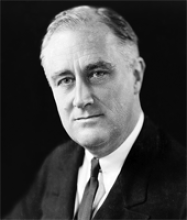
False Parallels Between FDR Electrification and Obama Broadband Stimulus

The SF Examiner is the latest to miss the key point when comparing FDR's rural electrification programs with the Obama Administration's broadband stimulus.  Though both programs did extend essential infrastructure to communities either unserved or underserved, an important differentiator is how they approached it.

Seventy years ago, President Franklin Delano Roosevelt realized that if private industry wouldn't run power lines out to the farthest reaches of rural areas, it would take government money to help make it happen. In 1935, the Rural Electrification Administration was established to deliver electricity to the Tennessee Valley and beyond.

But it wasn't just government money that was needed, it was a focus on local self-reliance -- which is what I wrote in a Letter to the Editor submitted to the paper:

Your article rightly notes that many Americans need help in building the broadband networks they need. But it draws a false comparison between FDR's electrification efforts and Obama's Stimulus.

FDR correctly recognized that the private sector is ill-suited to running the infrastructure needed in rural communities and used loans to fund cooperatives that would allow communities to be locally self-reliant.

Obama's stimulus program was a mix of loans and grants (heavy on grants) to mostly private sector for-profit companies that will have less incentive to run the networks in ways that most benefit the communities (upgrades, customer service).

If Obama had learned from FDR, his Administration would have embraced a fiscally responsible approach that encouraged local self-reliance by building networks that are structurally accountable to the communities they serve.

Responding to Broadband "Goals" in Obama's SOTU Address

Wally Bowen, the Founder and Executive Director for the Mountain Area Information Network in Asheville, North Carolina, wrote the following piece after President Obama's State of the Union Address.  He gave us permission to reprint it below.

Last night in the State of the Union address, President Obama called on Congress to help “win the future” by, among other things, rebuilding America's infrastructure.

On broadband Internet access, the president was unequivocal: wireless broadband is the way forward (item #1 below).

However, he did not mention the FCC's recent approval of “open Internet” protections that are widely believed to be unenforceable. Indeed, just a few days ago Verizon filed suit to invalidate these rules via a preemptive, knockout blow.

Congress is not likely to pass any meaningful net neutrality/open Internet rules. This means that the Internet is completely exposed to “corporate enclosure” by a handful of cable and telephone companies and their business partners (Apple, Google, FaceBook, et al).

Our only alternative for preserving an open Internet -- and the freedom to innovate and use applications of our own choosing -- is the creation of non-commercial, community-based broadband networks (item #2 below).

MAIN logo

Fortunately, Asheville and WNC are ahead of the game with our nonprofit fiber networks (ERC Broadband, Balsam West, French Broad EMC, et al.) and nonprofit wireless networks like the Mountain Area Information Network (MAIN).

The way forward will be difficult. While the commercial carriers have been somewhat tolerant of nonprofit “middle-mile” fiber networks, they view nonprofit “last-mile” providers of broadband service to homes and businesses as “unfair competition.”

Indeed, 15 states have already passed laws – pushed by cable and telco lobbyists – to prohibit “last-mile” municipal broadband networks. A similar law was attempted, but tabled, in the last two sessions of the N.C. General Assembly. This law will no doubt re-appear in the upcoming session.


Dave Burstein Reflects on FCC Policy

Dave Burstein of DSL Prime is interviewed on a recent episode of America's Report on TelecomTV.

This video is no longer available.

The Economist Again Blasts US Anti-Competitive Telecom Policy

The Economist has again editorialized about US telecom policy, in this case specifically about network neutrality.
This debate is loudest in America, uncoincidentally the developed market with the least competitive market in internet access. Democrats, who are in favour of net-neutrality rules, insist regulation is needed to prevent network operators discriminating in favour of their own services. A cable-TV firm that sells both broadband internet access and television services over its cables might, for example, try to block internet-based video that competes with its own television packages. Republicans, meanwhile, worry that net neutrality will be used to justify a takeover of the internet by government bureaucrats, stifling innovation. (That the internet’s origins lie in a government-funded project is quietly passed over.)
They take a fairly middling approach, regarding the network neutrality rules as decent, arguing that some measure of discrimination should be allowed and could be beneficial (one wonders if they truly thought deeply about this: before YouTube, connections would have been optimized against streaming traffic and YouTube may never have succeeded). In any event, they answer their own question: the real problem in the U.S. is lack of competition among Internet service providers.
These details are important, but the noise about them only makes the omission more startling: the failure in America to tackle the underlying lack of competition in the provision of internet access. In other rich countries it would not matter if some operators blocked some sites: consumers could switch to a rival provider. That is because the big telecoms firms with wires into people’s homes have to offer access to their networks on a wholesale basis, ensuring vigorous competition between dozens of providers, with lower prices and faster connections than are available in America. Getting America’s phone and cable companies to open up their networks to others would be a lot harder for politicians than prattling on about neutrality; but it would do far more to open up the net.
Unfortunately, they do not consider another remedy: local ownership that is accountable to the public.

The Short Memory of Network Neutrality Sell-Outs

Today, the FCC is poised to pass a half-ass attempt to preserve the open Internet against the interests of massive gatekeepers like AT&T and Comcast. Tim Karr rightly calls it Obama's "Mission Accomplished" moment. Fortunately, the likely result will be a couple of years in the courts before the rule is thrown out because the FCC has not properly ground its half-ass actions in any authority it has received from Congress. Perhaps when the FCC next has to deal with this, we'll have an FCC Chairperson with a backbone and a stronger interest in what is best for hundreds of millions of Americans than what is best for AT&T and a few other corporations. The FCC and supporters of this let's-keep-the-Internet-partly-open "compromise" will lump all critics as being extremist looneys. (Okay, the Republicans who oppose this might fit that description as they are literally making things up or totally confused about what is being decided). But let's look at the crazy looney rhetoric of FCC Chair Genachowski last year:
Genachowski proposed that the FCC formalize its four principles of network openness. To encourage broadband deployment and preserve and promote the open and interconnected nature of the public Internet, consumers are entitled:
  • to access the lawful Internet content of their choice.
  • to run applications and use services of their choice, subject to the needs of law enforcement.
  • to connect their choice of legal devices that do not harm the network.
  • to competition among network providers, application and service providers, and content providers.
To these, Genachowski proposed adding two more: The first would prevent Internet access providers from discriminating against particular Internet content or applications, while allowing for reasonable network management.

FCC on Net Neutrality: More Bush than Obama

Whenever the discussion of Network Neutrality comes up, we like to remind everyone that when the network is locally owned and accountable to the community, anti-subscriber discrimination is not a problem. That said, we are strong supporters of proper safeguards to ensure massive companies like AT&T cannot abuse their market power and discourage innovation. As the FCC prepares to discuss a half measure to preserve parts of the open Internet, a number of us have been frustrated that while we cannot read the proposal, AT&T appears to be helping write it. Karl Bode's take:
[T]he question shouldn't be whether or not consumers can now view a neutrality proposal after it was hashed out in private meetings (predominately with only the largest, wealthiest carriers), it should be: why weren't consumers absolutely integral in crafting it? AT&T has met with the FCC half a dozen times in the course of three weeks and likely knows precisely what's in this plan -- do you?
We've written to FCC Commissioners to make it clear that they must not compromise on the future of the open Internet. You should too. Photo used under Creative Commons license from AdamWillis.