
massachusetts

Content tagged with "massachusetts"

Displaying 161 - 170 of 209

Community-Based Broadband Solutions: The Benefits of Competition and Choice for Community Development and Highspeed Internet Access

Image

Affordable, reliable access to high speed broadband is critical to U.S. economic growth and competitiveness. Upgrading to higher-speed broadband lets consumers use the Internet in new ways, increases the productivity of American individuals and businesses, and drives innovation throughout the digital ecosystem. As this report describes, while the private sector has made investments to dramatically expand broadband access in the U.S., challenges still remain. Many markets remain unserved or underserved. Others do not benefit from the kind of competition that drives down costs and improves quality. To help fill the void, hundreds of towns and cities around the country have developed their own locally-owned networks. This report describes the benefits of higher-speed broadband access, the current challenges facing the market, and the benefits of competition – including competition from community broadband networks. - Executive Summary

On January 13, 2015, President Barack Obama visited Cedar Falls, Iowa, to discuss his administration's plans to bring better connectivity to American residents and businesses. The centerpiece of his strategy involved removing state barriers to municipal networks and promoting local authority.

In tandem with that speech, the White House released this report. The report includes significant research from the Institute for Local Self-Reliance, including community profiles, economic data, and the role if municipal networks in competition.

Communities included in the report are: Chattanooga; Lafayette, Louisiana; Wilson, North Carolina; Scott County, Minnesota; Leverett, Massachusetts; and the Choctaw National Tribal Area in Oklahoma.

The report also outlines President Obama's ancillary initiatives to encourage local projects and provides significant data from the ILSR Community Broadband Map.

Local Voices Show Support for Local Connectivity Options

Our readers have heard the media murmur around municipal networks steadily grow to a loud hum during the past year. An increasing number of local press outlets have taken the opportunity to express their support for municipal networks in recent months.

In communities across the U.S. letters to the editor or editorial board opinions reflected the hightened awareness that local decisionmaking is the best answer. Support is not defined by political inclination, geography, or urbanization.

Last fall, several Colorado communities asked voters to decide whether or not to reclaim local telecommunications authority hijacked by the state legislature and Qwest (now CenturyLink) lobbyists in 2005. Opinion pieces from local political and business leaders in the Denver Post and the Boulder Daily Camera encouraged voters to support the measures. Downtown Boulder Inc. and the Boulder Chamber wrote:

Clearly a transparent public process is appropriate for identifying the best path to higher-speed infrastructure. One thing is certain. Approving the exemption to State Law 152 is a step in the right direction.

Expensive service, poor quality connections, and limited access often inspire local voices to find their way to the news. Recently, City Council Member Michael Wojcik from Rochester, Minnesota, advocated for a municipal network for local businesses and residents. His letter appeared in the PostBulletin.com:

If we want to control our broadband future, we need to join successful communities such as Chattanooga, Tenn., and Lafayette, La., and create a municipal fiber network. In many cities around the world, residents get 1 gigabyte, bidirectional Internet speeds for less than $40 per month. In Rochester, I get 1 percent of those speeds for $55 per month. I believe if Bucharest, Romania, can figure this out, Rochester can as well.

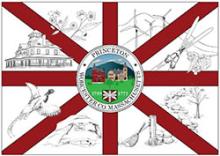
Princeton Voters Authorize FTTH Make-Ready Funds in Record Turn-Out

On November 18th, 90% of voters at Princeton's special town meeting approved a measure to fund $1.2 million in make-ready costs bringing the community one step closer to fiber connectivity. The number voters who attended the meeting broke the previous attendance record set 15 years ago by 30%.

We introduced the central Massachusetts town of 3,300 in 2013. The community suffered from poor Internet connectivity negatively impacting its schools, real estate market, and economic development. Since then, the community voted to create a Municipal Light Plant and to appropriate funds to keep the project moving forward.

Community leaders have investigated several options and last fall entered into a relationship with the Matrix Design Group. According to the Memorandum of Understanding [PDF], Matrix will design, build, and operate the FTTH network for a period of 20 years. At the end of that time period, Princeton Broadband Municipal Light Plant has the option of renewing that relationship or purchasing the network for $1.

As their contribution, Princeton will provide rights-of-way, police details during construction, powered telecom shelters, and will pay for utility pole make-ready costs. According to an article in the Landmark:

The make ready work includes replacing approximately 80 utility poles, and moving telephone and electrical lines on 450 poles, providing housing for the electrical components needed to operate the system, and paying for police details during the make ready work.

The borrowing is expected to cost the owner of a home valued at $300,000, about $10 a month or $115 a year increase on their taxes for 12 years. Internet service plus telephone will cost $115 a month. Once a contract is negotiated with Matrix, construction on the make ready phase would start in January 2015 and the project would be completed by January 2016.

Small Town Volunteers in Massachusetts Begin Pole Inventory

Volunteers in Shutesbury will fan out this weekend to perform a "pole inventory blitz" reports the GazetteNet.com. The town of approximately 1,800 people sits near Leverett and faces many of the same difficulties with connectivity. 

Shutesbury and Leverett were working together a few years ago hoping to develop a solution to bring infrastructure to both communities. The two communities approached Verizon and Comcast asking for better connectivity, but their requests led to nothing. Eventually, Leverett became frustrated and broke out on their own. They are now deploying their own fiber network.

One of the first steps in determining the feasibility and costs to deploy a fiber network is accurately evaluating assets. Many local communities do not have an up-to-date inventory of utility poles or what entities own those poles. In Lake County, Minnesota, Frontier Communications asserted ownership of utility poles in the town of Two Harbors after fiber had been strung on those poles. Unfortunately, the county's records had not been revisited in some time and Frontier was able to produce records put ownership in question. The project was significantly delayed; planners eventually moved more fiber underground to avoid many of those poles. Pole inventories and due diligence, as in Shutesbury, help avoid delays and unanticipated cost increases. (Read all about Lake County's project in our recent report, All Hands on Deck: Minnesota Local Government Models For Exanding Fiber Internet Access)

Cities in Kentucky and Massachusetts Want a Say In Comcast/Time Warner Cable Merger

As the feds continue to evaluate the wisdom of the Comcast/Time Warner Cable merger, local communities in several states are attempting to throw a wrench in the federal approval machine.

In Worcester, Massachusetts, the City Council recently refused to approve the transfer of the city's cable television license to Comcast. In order to sweet-talk the federal agencies concerned the merger may create too much market concentration, Comcast has worked out a deal with Charter Communications to transfer customers in certain geographic areas. Charter is the current incumbent in Worcester. 

According to a Telegam & Gazette article, the City Council does not need to approve the transfer for it to take affect. Nevertheless, the City Council voted 8-3 on October 14 to urge City Manager, Edward M. Augustus Jr., not to approve the transfer of the license. If Augustus makes no determination, the transfer will automatically be approved.

The city can only examine the transfer based on four criteria including company management, technical experience, legal experience, and financial capabilities. Management and poor customer service are the sticking points for Worcester:

District 5 Councilor Gary Rosen said the City Council should not welcome Comcast to Worcester because of its "deplorable and substandard" customer service across the country. 

"It's a terrible company," he said. "In my opinion, they should not be welcome in this city. Comcast is a wolf in wolf's clothing; it's that bad. They are awful, no doubt about it. Maybe we can't stop it, but that doesn't mean we shouldn't speak out." 

A similar scenario is playing out in Lexington, Kentucky. The community is the second largest city served by Time Warner Cable in the state. They are concerned existing customer service problems will worsen if Comcast becomes their provider.

The Urban City Council drafted two resolutions denying the transfer. The resolutions had first reading on October 9. Customer service is, again, a point of contention.

Muni Fiber in Rural Massachusetts - Community Broadband Bits Podcast 113

Though much of western Massachusetts has poor access to the Internet, the town of Leverett is in the midst of fiber build that will offer a gigabit to anyone who wants it. Peter d'Errico, on the town Select Board, has been part of the project from the start and Chairs the Broadband Committee. He joins us for Episode 113 of the Community Broadband Bits podcast.

He and I discuss the great need for the project and inaccurate broadband maps that overstate availability in the region. We discuss the role of the "municipal light plant" law that gave them the necessary authority to invest in the fiber. But more interestingly, we talk about how they have structured the financing and prices for subscribers. The network will be repaid both with the revenues from subscribers and a modest bump in the property tax. 

The kicker is that many households will see their taxes increase a little but the amount they spend on telecom will decrease substantially, resulting in more money in their pockets each month. We have written about Leverett often over the years, the archive is here. Read the Leverett FAQ here. 

This show is 18 minutes long and can be played on this page or via Apple Podcasts or the tool of your choice using this feed.

Transcript below.

We want your feedback and suggestions for the show-please e-mail us or leave a comment below.

Listen to other episodes here or view all episodes in our index. See other podcasts from the Institute for Local Self-Reliance here.

Thanks to Waylon Thornton for the music, licensed using Creative Commons. The song is "Bronco Romp."

Broadband Communities Economic Development Conference September 16 - 18

Join Chris in Springfield, Massachusetts for the Community Fiber Networks conference in September. The meet-up is part of Broadband Communities Magazine's  Economic Development series; Chris will present at the event. The conference will run September 16 - 18 at the Sheraton Springfield Monarch Place Hotel.

Jim Baller, Conference Chairman and Principal at the Baller Herbst Law Group notes:

During the last fifteen years, thousands of communities across the United States have sought to attract or develop advanced communications networks, recognizing that such networks can provide them and the nation multiple strategic advantages in the increasingly competitive global economy. In virtually every case, fostering robust economic development has ranked at or near the top of the list of considerations motivating these communities.

Broadband Communities chose Springfield because there are multiple projects in the region, including MassBroadband123, Leverettnet, and Holyoke.

You can register online for the event and check out the agenda to plan your weekend.

Princeton Voters Want to Bring FTTH to Their Rural Massachusetts Community

On May 13, Princeton voters decided to continue their municipal network planning. At the annual town meeting, 91.4% of voters passed Article 4 [PDF], authorizing a new Municipal Light Plant. A year ago, voters approved a measure to proceed with planning.

Princeton, a community of 3,300 residents and 1,270 households, has DSL access available to approximately 49% of residents. Satellite, dial-up, and wireless are the other options. 

Entrepreneurs rent office space in nearby communities with better connectivity. Real estate professionals bemoan bad Internet because it lowers property values. A 2013 survey revealed an overwhelming desire to take action. Residents and businesses want an FTTH option.

The Worcester Telegram reported that the community also voted to appropriate $17,000 to make-ready costs, possible legal fees, construction costs for telecommunications huts, and other possible network costs.

"Passing Article 4 will allow us to start negotiations with the vendor," said John Kowaleski of the Broadband Committee. "Without passing this article we will have to wait two years to approach this subject again."  

According to Selectman Stan Moss, the community continues to explore a variety of options. Community leaders have met with several providers to discuss public/private partnerships. Large corporate players, including Charter and Comcast, are not interested in working with Princeton.

MassBroadband 123 Complete in Massachusetts

The Massachusetts Broadband Institute (MBI) just announced that the 1,200-mile fiber network MassBroadband 123 is now complete.

According to the official announcement, the middle-mile network will eventually serve over 1,200 community anchor institutions. The open access network, constructed with $45.4 million in stimulus funding and an additional $40 million in state bond proceeds, lit up in March 2013. Schools, hospitals, and municipal government are some of the entities already connected.

Communities with a history of little or no middle-mile options will now have some level of connectivity via MassBroadband 123. The Commonwealth hopes to attract last-mile providers to connect homes and businesses, something we have yet to see succeed. We are afraid a more likely scenario will be a few providers seeking to connect the highest revenue customers with no intention to connect everyone, an outcome that would perversely make it more expensive to build financially sustainable networks in these areas.

A few places, like Leverett and Princeton, plan to invest in their own publicly owned infrastructure and will have the option to connect to the outside world through MassBroadband 123. This is an excellent approach that we applaud because it leads us to universal access.

According to a Bershire Eagle article, the state legislature plans to bring more funding to the initiative for last-mile connections:

But state Rep. William "Smitty" Pignatelli, D-Lenox, pointed out in an interview that much investment is needed before individual homeowners and businesses can connect to the network.

The state Senate is poised to move on a bond bill which includes $50 million to be put toward the project's phase, Pignatelli said.

An Increasing Call for Community Owned Networks

While Comcast focuses on increasing its market power rather than improving services in the communities it monopolizes, no one should be surprised that we are seeing a surge in interest for building community owned networks. We've heard from many people who want to learn how they can start - more than we can always respond to, unfortunately. We are working on a resource to answer many of those questions, but it always boils down to 2 things: building a supportive network of people and getting informed. Get the word out - especially to local business leaders and anyone else who may be supportive. There are many potential business models and financing opportunities, but some will work better than others in each community. That said, there are some basics that every community should be immediately considering. The first is building a fiber network to connect anchor institutions such as schools, libraries, first responders, municipal facilities, and the like (see our Fact Sheet on savings from such networks). These networks should be constructed in such a way as to enable future expansions to local businesses, residents, and generally everything in the community or even beyond for rural areas. That means choosing the backbone routes carefully and ensuring that as much fiber is available as possible. Using conduit with channels and always leave at least one channel free to pull a future bundle (replacing a smaller count bundle that can then be removed to continue having a free channel). Another smart move is to begin getting conduit and fiber in the ground as part of other capital projects, like street rebuilds, water main replacement, and the like. We will discuss how Santa Monica did this in an upcoming case study. In the meantime, there is no better resource than CTC Technology & Energy's recent report, Gigabit Cities: Technical Strategies for Facilitating Public or Private Broadband Construction in your Community. We have additional resources organized in two places: on MuniNetworks.org and on ILSR.org.