
maine

Content tagged with "maine"

Displaying 21 - 30 of 113

Two New Episodes of the Building for Digital Podcast Now Available
This week we are giving you a double dose of our new Building For Digital Equity podcast. In Episode 4, our research associate Emma Gautier interviews Kim Ilinon and Ella Silvas, two Interactive Media Design students from the University of Washington-Bothell.

Kim and Ella, who both gave lightning round presentations at Net Inclusion 2023 in San Antonio last month, discuss how they got into digital equity from a design background and what they have learned about who is doing digital equity work in Washington state.

You can watch their 3 minute lightning talk here:

Remote video URL

And you can listen to the 12-minute long B4DE podcast with Kim and Ella here:

Also available is Episode 5 of the B4DE podcast, which features Susan Corbett, Executive Director of the National Digital Equity Center, an organization that has long been involved in policy around Internet access and digital equity both in Maine and across the United States.

ILSR’s Community Broadband Networks Director Christopher Mitchell discusses with Susan how she got started doing digital equity work in 2005 as the owner of a small ISP in rural Maine. They also explore how the National Digital Equity Center uses a database and surveys to track the progress of their programs to ensure they are effective, having launched initiatives around distributed devices, skill building, and now involved with the Maine Digital Equity Plan.

That episode is 14 minutes long, which you can tune into here:
Susan Corbett Discusses Digital Equity in Maine and Nationally - Building for Digital Equity Podcast Episode 5

Building for Digital Equity logo

Susan Corbett is the Executive Director of the National Digital Equity Center and has long been involved in policy around Internet access and digital equity both in Maine and across the United States. Susan and I chatted at Net Inclusion about how she got going in this space in 2005 as the owner of a small ISP in rural Maine.

We also discuss how they use a database and surveys to track the progress of their programs to ensure they are effective. They've worked on distributed devices, skill building, and more and are now involved with the Maine Digital Equity Plan. 

Finally, we discuss some of the changes that Susan has seen over the years.

This show is 14 minutes long and can be played on this page or using the podcast app of your choice with this feed.

Transcript below. 

We want your feedback and suggestions for the show-please e-mail us or leave a comment below.

Listen to other episodes here or see other podcasts from the Institute for Local Self-Reliance here.

Thanks to Joseph McDade for the music. The song is On the Verge and is used per his Free-Use terms.

Maine Investing in Multiple Community Broadband Projects Across the State

Legislative changes and funding in Maine in the last year have made it easier for local communities to consider municipal broadband options. While incumbent providers have been pushing back, local communities are pulling themselves forward.

Setting the Stage

A champion of community-driven broadband, Andrew Butcher, president of the newly created Maine Connectivity Authority (MCA), is leading the state's $250 million effort to expand broadband access in Maine, as Butcher discussed the state's new strategy in our Community Broadband Bits podcast last January. That amount includes $20 million in state funds from the Maine Jobs and Recovery Plan and $130 million in federal funds from the American Rescue Plan. The state will also be getting in excess of $100 million from the Infrastructure Investment and Jobs Act.

There has been push back from national providers who have campaigned at the local level to encourage local governments and policy makers to stop community broadband in its tracks, as we have covered here and here. And yet, despite those efforts, a number of communities across the state have started to make strides toward building publicly-owned, locally-controlled networks.

Here is a snapshot of the activity:

Western Maine: Mahoosuc Region

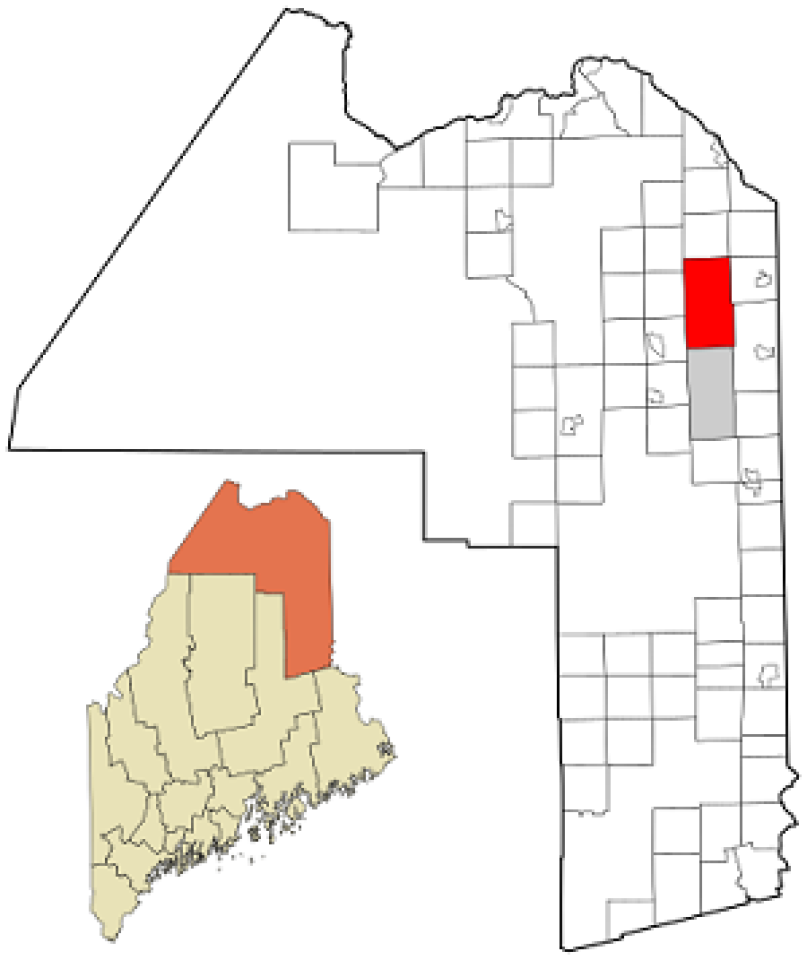
Caribou, Maine Moves Forward On Citywide Fiber Plan

Last March, Caribou, Maine city council members expressed unanimous support for a charter amendment allowing the Caribou Utilities District to establish a broadband infrastructure division. It was just the latest move in a multi-year quest by the city to finally deliver affordable fiber broadband access to every last city resident.

Groundwork for the effort was laid one year ago, when city council members approved using $159,000 in American Rescue Plan Act funds to craft a broadband engineering study with the help of Caribou’s Business Investment Group and executives from local ISP Pioneer Broadband.

Late last March, the Maine Senate unanimously approved LD 1949: “An Act to Amend the Caribou Utilities District Charter to Include Broadband Services,” which formally, as the name makes clear, provided approval for the CUD to expand its services into broadband access.

Now the hard work begins. 

The plan as it currently stands is to build an open-access dark fiber network to every unserved Caribou residential and business location. The city would own the network, but private ISPs would provide last mile service to customers. 

Image

“We would like two or more ISPs to provide citizens with a choice of providers,” Hugh Kirkpatrick, Caribou Utilities District general manager, recently told the Bangor Daily News. “Competition should keep monthly prices lower and customer service higher.”

Local Internet Choice BUDs in Waldo County, Maine

Spurred to action by inadequate high-speed Internet service as the pandemic besieged their communities, local officials and citizen volunteers in five rural Maine towns formed the Southwestern Waldo County Broadband Coalition (SWCBC) in an effort to bring ubiquitous and affordable broadband to its portion of Waldo County.

Two years later, the SWCBC is close to securing a major victory for local Internet choice in the face of a well-funded opposition campaign sweeping the Pine Tree State as the Big Telecom lobby and its allies try to undermine the very idea of publicly-owned, locally-controlled broadband networks in Maine and elsewhere.

The five SWCBC towns clustered about 30 miles east of Augusta – home to approximately 5,600 Mainers – are looking to create what is known as a Broadband Utility District (BUD). Four of those towns (Freedom, Liberty, Palermo, and Searsmont) recently voted in favor of establishing a BUD. Montville will be the last of the five towns to vote on whether to BUDdy up with the neighboring municipalities via an Interlocal Agreement (ILA). That vote is slated for August 23.

Similar to Communication Union Districts (CUDs) that the neighboring state of Vermont is relying on to deliver reliable and affordable broadband to its residents and businesses, Maine state law “allows towns to band together to form a community-owned organization, controlled by the municipality members but a legally separate organization - a regional non-profit utility. The BUD is allowed to incur debt that is separate from and not guaranteed by the municipalities.”

Campaigns to Keep Monopolies We Don't Love - Episode 514 of the Community Broadband Bits Podcast

This week on the podcast, Christopher is joined by Sean Gonsalves, Senior Reporter and Editor at the Institute for Local Self-Reliance. During the conversation, they talk about the value and concrete results of going small and stacking up targeted wins as a path for cities facing less of an appetite for big, bold projects, before digging into recent astroturf campaigns by monopoly Internet Service Providers (ISPs).

Led by the Alliance for Quality Broadband (AQB) (really a lobbying group including providers like Charter Spectrum and others), municipal broadband efforts have seen recent setbacks in places like Southport, Maine. It's a campaign being waged both in print flyers and online facebook ads, with AQB driving misinformation efforts and attempting to scare citizens away from upcoming votes on projects to improve local connectivity after years of underinvestment by incumbents (like Charter Spectrum). 

Christopher and Sean fact check the Alliance for Quality Broadband's bogus claims about the failure of muncipal efforts across the country in places like Pennsylvania, Minnesota, California, Florida, and Vermont, and unpack the deep-seated fear of competition driving such efforts.

Listen to Christopher's in-depth interview with Harold Depriest about Chattanooga, referenced in the episode.

Watch the most recent episode of the Connect This! Show to see Christopher and Travis Carter (USI Fiber) talk with Peggy Schaffer (Director, ConnectME), Andrew Butcher (President, Maine Connectivity Authority), and Christa Thorpe (Community Development Officer, Island Institute) about anti-municipal broadband efforts in Maine.

This show is 38 minutes long and can be played on this page or via Apple Podcasts or the tool of your choice using this feed

Transcript below. 

We want your feedback and suggestions for the show-please e-mail us or leave a comment below.

Listen to other episodes here or view all episodes in our index. See other podcasts from the Institute for Local Self-Reliance here.

Thanks to Arne Huseby for the music. The song is Warm Duck Shuffle and is licensed under a Creative Commons Attribution (3.0) license.

Anti-Municipal Broadband Campaigns and Lessons from Maine | Episode 48 of the Connect This! Show

Join us live on Thursday, July 28th, at 4pm ET for the latest episode of the Connect This! Show. Co-hosts Christopher Mitchell (ILSR) and Travis Carter (USI Fiber) will be joined by Peggy Schaffer (Director, ConnectME), Andrew Butcher (President, Maine Connectivity Authority), and Christa Thorpe (Community Development Officer, Island Institute).

The panel will dig into recent anti-municipal propaganda in the New England area, with an emphasis on Maine. They'll talk about the astroturf campaign being waged by groups like the Alliance for Quality Broadband (a front organization for Charter Spectrum) and recent blows to municipal broadband they've fueled in places like Southport and Readfield. The panel will talk who really loses out when the monopoly providers persuade voters and local officials to defer leadership on imrpoving community connectivity. Christa Thorpe will join halfway through the show to share her experiences and perspective.

Subscribe to the show using this feed, view the show on YouTube Live or on Facebook Live, or find it on the Connect This! page.

Email us [email protected] with feedback and ideas for the show.

Watch here on YouTube Live, here on Facebook live, or below.

Big (Connectivity) Trouble in Little China

In November, a majority of voters in China (not the country, but a small town in Maine) cast their ballots in opposition to a $6.4 million proposal for a municipal broadband network that, if built, would have provided high-speed Internet access to every household and business in this central Maine town of 4,300.

In recent weeks, China residents learned that Consolidated Communications would not be coming to the rescue. As reported by The Town Line, two representatives from Consolidated Communications attended China’s Broadband Committee (CBC) meeting in late January and the company reps “did not encourage (China) to expect an offer from the company to expand [I]nternet service to town residents.”

The CBC estimates that Consolidated currently serves about 20 percent of the town, while Spectrum serves about 70 percent of China’s households. But for the remaining 10 percent of China households without access to high-speed Internet service, the CBC meeting was a disappointing dose of post-election news.

Consolidated representatives Simon Thorne and Sarah Davis told the CBC that China is nowhere close to the top of their expansion plans, as the company bases its decisions on a combination of four primary factors: projected cost to build, number of potential customers, expected take rates, and whether a competitor also serves that market.

China’s population density is too low to offer enough profit to attract investors.

And just to be clear, when CBC member Tod Detre suggested the company is focused on “more profitable areas,” Davis replied, “You nailed it.”

‘Spirited Discussion’ About November Election

That, of course, led to a “spirited discussion” about last November’s election results. Ronald Breton, chairman of the select board and a guest at the CBC meeting, was emphatic in saying that town officials were still interested in facilitating town-wide connectivity, noting how even after the November ballot question failed the town select board unanimously voted that the CBC remain intact.

Maine Broadband Initiative Ready to Hit the Ground Running

Sworn in earlier this month as president of the newly created Maine Connectivity Authority (MCA), Andrew Butcher says he is ready “to hit the ground running,” shepherding Maine’s efforts to bring universal access to high-speed Internet service in one of the most rural states in the nation.

The MCA, first proposed last year by Gov. Janet Mills and created through bipartisan legislation, will oversee the influx of federal funds the state has received from the American Rescue Plan Act and funds the state will get from the recently passed Infrastructure and Investment Jobs Act.

The quasi-governmental agency will remain distinct from (but coordinate with) the ConnectMaine Authority, which administers the state’s broadband grant programs.

In a statement released after Butcher was sworn-in, Gov. Mills said:

I am grateful for the Senate’s unanimous confirmation, which is a testament to their confidence in Andrew’s experience and expertise to lead the Maine Connectivity Authority. With Andrew at the helm, and with the Authority’s Board fully in place, it is time to build on our work to expand access to affordable broadband. Broadband is no longer a luxury; it is a necessity for every person, every family, and every business across Maine, and with today’s vote, we are taking another step forward in our effort to make universal broadband a reality for Maine people.

For his part, Butcher said he was “humbled by (the) unanimous confirmation of the Senate and am honored for the opportunity to serve Maine as we look to build the infrastructure of the future. We can get there from here. Many have forged the path to get here and I'm eager to get to work connecting everyone.”

Getting ‘there from here’

A Local Coalition Gets Organized to Bring Quality Connectivity to Maine’s Midcoast

Five small towns in rural Maine are connecting with one another in a steady grassroots effort to expand broadband access in the Midcoast. After conducting a survey which affirmed the towns’ acute need for better connectivity, a local coalition is navigating state funding and weighing network options. 

In Waldo County, a collection of local officials and community volunteers have formed the Southwestern Waldo County Broadband Coalition (SWCBC) to organize efforts to bring broadband to five towns in rural Maine, clustered about 30 miles east of Augusta. Freedom, Liberty, Montville, Palermo and Searsmont combined have only 3,300 houses along 340 miles of road. The need for better Internet access became particularly visible during the pandemic, as local officials tried to convene online for Selectmen’s meetings. Two selectpersons from neighboring towns connected over this shared need for access, and the coalition grew from there.