

maine

Content tagged with "maine"

Displaying 101 - 110 of 113

More Muni Fiber Projects in Maine

Local communities in Maine are mobilizing to jumpstart economic development, expand educational opportunities, and improve Internet access. The town of Orono, located near the center of the state, announced earlier this month that it will working with nearby Old Town and the University of Maine to deploy an open access fiber network pilot project in an area they wish to promote as a technology park.

The news highlights connectivity improvements in Maine happening at the local level. In August, Rockport solidified its plans to bring fiber to its downtown with partner GWI. Soon after, South Portland announced a similar partnership with GWI to spur economic development. Sanford and Isleboro [PDF] have commissioned studies.

The Main Campus reports that Orono, Old Town, the University of Maine, and GWI have been in the planning phase for some time, but lacked funding to deploy:

“We tried to be the first on the map [with fiber-optics], but there were too many obstacles. Now we have the opportunity to do something,” said Orono Town Manager Sophie Wilson at last Monday’s Economic Development Committee meeting, where the opportunity was presented.

In early 2012, the town was in talks with Old Town and Maine broadband service provider GWI about connecting the towns and the University of Maine to the Three Ring Binder, an 1,100-mile long highway of fiber optic infrastructure that passes underneath Bennoch Road. In order to take advantage of the opportunity, the towns planned on coming together in a collaborative called Old Town-Orono Fiber (OTO Fiber) and applied for grant funding to go through with the project.

Although they weren’t able to receive the necessary funds in 2012, the town is in a better position this time around.

First Muni Fiber Net in Maine - Community Broadband Bits Episode 115

By building a fiber line to allow some local businesses to get next-generation Internet access, Rockport became the first municipal fiber network in the state of Maine. Town Manager Richard Bates joins us for episode 115 of the Community Broadband Bits podcast. 

We discuss the financing behind the network and their partnership with local Internet Service Provider, GWI, to improve access to the Internet. Bates also explains how they had to ask voters for authorization to use a tax-increment financing approach to paying for the network to spur economic development. Nearby communities have been watching to see what happens.

This show is 15 minutes long and can be played on this page or via Apple Podcasts or the tool of your choice using this feed.

Transcript below.

We want your feedback and suggestions for the show-please e-mail us or leave a comment below.

Listen to other episodes here or view all episodes in our index. See other podcasts from the Institute for Local Self-Reliance here.

Thanks to The Bomb Busters for the music, licensed using Creative Commons. The song is "Good To Be Alone."

Rockport Builds Maine’s First Municipal Network

Rockport, a coastal town of just 3,300, became a statewide leader last month by launching Maine’s first municipal broadband network. Offering symmetrical gigabit speeds to businesses and residents, Rockport’s network is a carrier-neutral dark fiber system, with local private provider GWI offering retail services. 

The reach of the network is limited, as it consists of only 1.2 miles of fiber. While only about 70 homes and businesses currently have the option to purchase a connection, GWI offers symmetrical gigabit per second internet access for just $69 per month and the city has left the option open to expand the network in the future.

As noted in a Bloomberg View article on the network, it massively outpaces the only broadband competitor in Rockport, Time Warner Cable. Time Warner also offers a $70 service package, but its download speeds are 20 times slower and its upload speeds 200 times slower.  

The network was the product of a partnership between the town board, GWI, the University of Maine system, and Maine Media Workshops + College. Maine Media is a nonprofit college with 1,500 students learning photography, videography, and other digital media skills, and has a large economic footprint in such a small town.

Students’ coursework requires the storing and sharing of massive files, something that was previously difficult or impossible to accomplish given limited network capacity. Town officials are hoping that the new network will not only allow students to learn more easily, but enable them and others to establish small businesses in town.    

U.S. Senator Angus King, a vocal champion of broadband access, was among the officials on hand last week for the official unveiling ceremony. Speaking to the need for greater internet access, Senator King stated:

“In my opinion it’s exactly like water, it’s exactly like electricity, it is a public utility that is necessary in order for our economy and our country to flourish…We want to work where we live, rather than live where we work."

Sanford, Maine Studies Municipal Broadband Deployment

Sanford, a city of about 21,000 in far southwestern Maine, is weighing its options for a limited fiber optic network. The Sanford Regional Economic Growth Council has been the driving force behind the project, hiring Tilson Technology Management of Portland earlier this year to develop a Broadband Plan for Sanford.

The Growth Council began exploring broadband issues only after realizing late last year that they had been left out of Maine’s “Three Ring Binder,” a federally-funded high capacity fiber backbone running through much of the state in three loops. Wary of being left behind economically by neighbors with better communications infrastructure, the Growth Council hired Tilson to evaluate their options.

The resulting report has not been made publicly available, but according to an op-ed by James Nimon, the Growth Council’s executive director:

Tilson has completed their assignment and provided “Good,” “Better” and “Best” alternatives, with the conclusion that the implementation of the Broadband Plan’s ‘Best’ scenario, which connects all the key CAIs [community anchor institutions] in Sanford, “has the potential to provide impressive public economic benefits, including adding between $47 and $192 million to the Sanford-Springvale region’s economic output over the next ten years.”

The anchor institutions to be connected include municipal buildings, local schools, a mill yard, a hospital, and industrial parks. According to a recent Sanford News article, the costs projected by Tilson range from $362,000 for the most limited deployment to $961,000 for the “best” alternative.

The city and the Growth Council will now begin the process of exploring federal, state, and private partnership funding opportunities, in an effort to bring the advantages of a high speed fiber network to their community.

Gig.U Delivers its Gigabit to Maine

We continue to watch the Gig.U project with interest as some universities are teaming up with providers to deliver gigabit services to selected areas, generally around high tech campuses. One of the first project announcements has come from Orono, Maine. The University of Maine and a private company called GWI are teaming up to bring real broadband to Main Street. The gigabit announcement came on the heels of a major announcement from Time Warner Cable - they are increasing residential speeds in Maine from 8-10 Mbps (or from 15 to 20 Mbps for those speed demons) and doubling their upstream speeds from .5 to 1 Mbps (or from 1 to 2 Mbps for those living in the fast lane). So Orono, which is talking about speeds of 50-1000 times faster, should have quite the advantage. We last heard of GWI due to its involvement in the Three-Ring Binder project that brought middle mile connections throughout the state to start recovering from the long-standing underinvestment from Verizon (now FairPoint). We wrote about FairPoint's attempt to kill competition before it started. Now GWI will be building a gigabit open access network in this community that will offer much faster speeds at much lower prices than incumbent operators do. It is certainly an improvement over the status quo in the short term, as noted by the Bangor Daily News.
“We will plant the first seed in fertile economic soil,” he said.

A Survey of National Private Sector Broadband Providers

When it comes to expanding access to the Internet across the US, the federal government has long looked first to the private sector, ignoring hundreds of years of experience showing that unaccountable private companies cannot be trusted to sufficiently invest in or govern essential infrastructure. Inevitably, they price access to high and invest too little as they maxmize their profits -- thereby minimizing the profits of all other parts of the economy. So let's take a little survey of the progress we see from these companies. We have long railed against the Verizon -> FairPoint fiasco in New England that left Verizon much richer at the expense of residents and businesses in rural Vermont, New Hampshire, and Maine particularly. Well, FairPoint creditors have realized the depth of Verizon's scam and are suing Verizon for $2 billion. Read the complaint [pdf].
According to the complaint (pdf), Verizon not only made out like a financial bandit up front, but took advantage of regulatory delays to strip mine the assets of anything of value, including core IP network components, business services, and localized billing and support assets required to support the three states. Verizon then billed out their support assistance for millions per month during the very rocky transition, during which time 911 and other services saw repeated outages, resulting in millions more in refund penalties.
Karl Bode is right to criticize the state authorities that allowed this fiasco to occur. Their inability to regulate in the public interest has hurt everyone stuck in the mess. While we can expect powerful companies like Verizon to try to game the system at every opportunity, there is no excuse for making it so easy for them. Frontier Logo As long as we are talking about Verizon shedding its rural investments, let's take a look at how Frontier is doing since it inherited thousands upon thousands of FiOS customers as part of its recent deal with Verizon.
FairPoint Undermining Broadband Access in Vermont

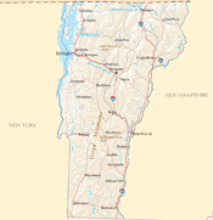
In an op-ed, Tom Evslin discusses FairPoint and their opposition to a middle mile stimulus grant that would improve broadband access around the state. FairPoint had taken over Verizon's New England lines a few years ago. Verizon had a reputation for poor service but FairPoint took that to new levels before reorganizing under bankruptcy (yet another high-profile private sector failure). FairPoint fought a middle-mile project in Maine and was eventually bribed into silence by the Legislature. Having learned the only lesson one can learn from such an experience, they are now fighting a middle mile project in Vermont.
Unfortunately FairPoint, the successor to Verizon for landlines in Northern New England, wants Vermont to choose between protecting a badly flawed FairPoint business plan or improving the economic future of Vermont’s rural areas. The choice is stark: use the federal “middle mile” stimulus grant already awarded to the Vermont Telecommunication Authority (VTA) to bring fiber closer to rural Vermonters and make wholesale backhaul and institutional broadband affordable in rural areas of the state or forfeit the grant and leave these areas without adequate business, residential and cellular service.
Vermont should move forward with its stimulus project to expand open access middle mile connections across the state. Appeasing FairPoint yet again is not only bad for Vermont's many underserved, it would further embolden FairPoint in its fight against any competition, public or private. The VTA was formed to improve broadband access while not providing services directly. There is no reason it should not invest in these middle-mile networks. Quoting again from Evslin op-ed:
Now President of FairPoint in Vermont, Mike Smith said yesterday in an interview broadcast on WCAX that he never meant that the VTA should build fiber networks and provide middle-mile (backhaul) service.

FairPoint Continues Fight Against Competition in Maine

Light Reading took an in-depth look at FairPoint's anti-competition, anti-public ownership lobbying in Maine, where it is fighting a stimulus award to a consortium that includes a public entity. We have previously covered goings-on in Maine where FairPoint is involved due to their terrible track record of offering services while pushing for rules that would prevent communities from building their own networks. For those who are not familiar, FairPoint had bought the lines from Verizon as part of a tax-dodge called the "Reverse Morris Trust" (one loophole that might be closed before Verizon can abuse it again). FairPoint promptly went bankrupt, but not before screwing up service for thousands upon thousands of residents and businesses in New England (from months of screwed-up billing to weeks without telecom services). Now FairPoint wants to make sure many Maine residents have no choice in providers for the foreseeable future. Carol Wilson's look at this situation is fairly comprehensive.
... Maine Fiber Co., won a $25.4 million grant to build what is called the Three-Ring Binder, an middle-mile fiber optic network that will include three fiber rings in Western, Northern, and Downeast Maine. Maine Fiber’s intent is to lease dark fiber as an open access network, and not to sell commercial services.
More details about the Three Ring Binder are available here and here. The Maine Fiber Company is a private sector entity that has partnered with the University of Maine System. Though the company will run the network, some fibers will be reserved for the schools - this is a common private-public partnership that is mutually beneficial. This network will be open access - meaning that all can use it on equal terms (as opposed to being monopolized solely by the owner, as FairPoint does with its network). But FairPoint sure doesn't want to deal with competition in the many areas that it currently monopolizes with poor service at high prices.
It [Three Ring Binder Network] is now facing a challenge from FairPoint Communications Inc.

Folks in Maine Resent FairPoint's Lobbying Against Broadband Awards

As Karl Bode recently asked, "Should Fairpoint Really Be Giving Broadband Advice?" They have been lobbying against other stimulus projects in Maine that could allow FairPoint subscribers to actually get service that works and puts communities first. Given FairPoint's horrendous track record in New England since taking over Verizon's run-down network, I'm glad to see a local paper taking them to task for their attempts to deny broadband to significant swaths of the state.
FairPoint is demanding that Maine law prevent the university from selling access to its network to any customer outside the governmental sector. Instead, those customers would have to take their business to FairPoint. If FairPoint could take care of the customers it already has, and if it was keeping up with its promises to serve more of the state with high-speed Internet, it might have a stronger case.
People in Maine need to realize they will remain behind in network infrastructure so long as they depend on companies like FairPoint rather than the old New England values of self-reliance. Absent public competition, FairPoint will remain the only "option" because no private provider will find profits competing in these rural areas.

Missouri's Consultant, Competition Spurs Investment, and Maine's Middle Mile

  • A columnist explains why Missouri hired broadband network consultant Jim Baller to aid in expanding broadband across the state.

    That won’t be easy. Fewer than two-dozen cable and telephone companies control more than 95 percent of the country’s residential broadband market. In the past decade, the “incumbents” have shut out competitors by restricting the use of their existing infrastructure and by suing any municipality or public utility that has tried to build its own network.

    This piece offers some good history for those relatively new to community broadband.

  • Mike Masnick over at TechDirt recently asked (ironically) "But Wait, Wasn't Muni-Fiber Supposed To Take Away Incentive For Private Fiber?"

    Over the past few years, there have been numerous lawsuits by telcos against various municipalities that have decided to launch municipal fiber broadband projects. Most of these lawsuits have failed -- but the main argument from the telcos is that it's unfair to have to compete against the government, and it would take away incentives for the telcos to actually invest in infrastructure to provide for those towns. Of course, that doesn't make much sense.

    This article otherwise rehashes the Monticello post we recently ran.

  • In Maine, Fletcher Kittredge makes the case for a public-private partnership to bring affordable middle-mile access around the state. These ultra-fast connections would not connect directly to home users, but will be open to providers creating those last-mile networks. In the meantime, it will strengthen community institutions like the University of Maine system. This is a project that should be funded by the stimulus program.