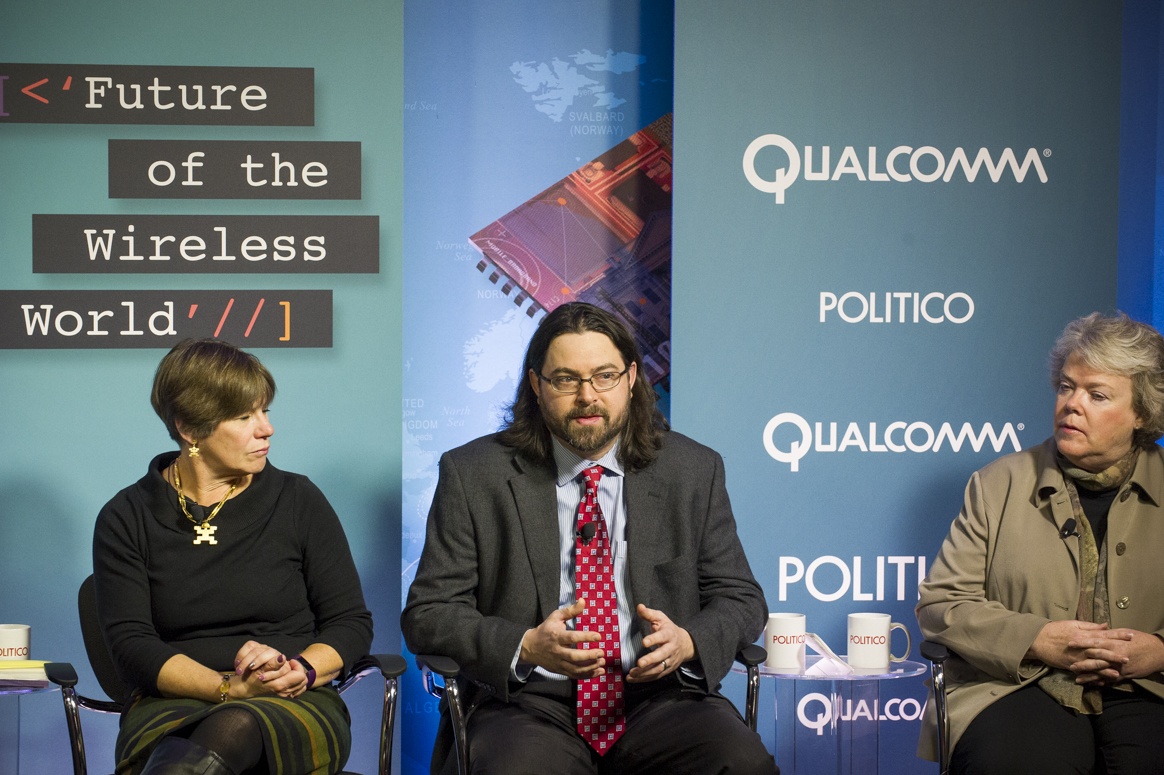

Christopher Comments on North Carolina Broadband Access Map in State Scoop

State Scoop - May 26, 2017
Crowdsourced broadband mapping helps North Carolina clean its data
A new tool released by the state's technology agency is being used to refine coverage data reported by the FCC and open the way for new funding opportunities.
North Carolina's state technology agency launched a new tool for measuring broadband speeds across the state Wednesday as part of long-term infrastructure planning that could bring new connectivity to rural areas.
...
A fact sheet published by the Institute for Local Self-Reliance shows that North Carolina has a deeply stratified rural-urban divide when it comes to broadband. Christopher Mitchell, ILSR's director of community broadband networks, blames the state's regulations for the disparity.
"The state perversely discourages investment from local governments and cooperatives," Mitchell writes in a 2016 report summary.
A 1999 statute limits the ability of electric cooperatives access to capital for telecommunications, while a 2011 law limits the power of local governments build internet networks.
In an email to StateScoop, Mitchell said North Carolina is "far too focused on AT&T and Charter. It is a real shame."
Disputes over how to fund the state's rural broadband efforts have been an ongoing debate in recent years. A plan sketched by former Gov. Pat McCrory had theoretically positioned all residents in the state with connectivity by 2021. Mitchell argues that the state is ignoring some of its best options by depending on a private market that has thus far consistently failed to serve certain areas of the state.



 To be clear: EPB wanted to build out its gigabit fiber network to many of these same communities using money it has on hand or private loans at no cost to taxpayers. It would then charge individual residents for Internet service. Instead, Tennessee taxpayers will give $45 million in tax breaks and grants to giant companies just to get basic infrastructure built. They will then get the opportunity to pay these companies more money for worse Internet than they would have gotten under EPB's proposal.

 Holland has had dark fiber in place for decades for the municipal electric operations. Later BPW extended it to schools and businesses that needed high capacity data services. After years of incremental expansions, the network is now more than 150 fiber miles throughout the city.