
American Rescue Plan

Content tagged with "American Rescue Plan"

Related Topics
Displaying 211 - 220 of 252

Collaboration Across the Commonwealth Advances State Broadband Goals

Across the Commonwealth of Virginia, local governments, county broadband authorities, cooperatives, and private Internet Service Providers are leveraging the influx of American Rescue Plan funds to reach the state’s goal of achieving universal access to high-speed Internet connectivity by 2024.

With $850 million in state appropriations for broadband connectivity and $1.15 billion in local government and private service providers’ funding matches, the state is on track to invest $2 billion dollars toward broadband expansion in the coming years, and is currently investing in broadband expansion projects at record levels.

In August, Gov. Ralph Northam and the Virginia State Legislature agreed to devote $700 million of the state’s $4.3 billion in American Rescue Plan funds to expand access to broadband. The $850 million investment the state has announced will consist mostly of American Rescue Plan aid. The funds will be administered by the Virginia Telecommunication Initiative (VATI), which distributes grants to public-private partnerships to extend broadband service to unserved regions of the state, or areas that lack access to Internet service delivering connection speeds of at least 25/3 Megabits per second (Mbps).

Public-Private Partnerships Deep in the Heart of Virginia

From the marsh grasslands making up Virginia’s Eastern Shore, across the three peninsulas carved out by the Chesapeake Bay, all the way to the Shenandoah Valley in the West, a diverse array of regional partnerships have formed between Virginia’s local governments, electric and telephone cooperatives, and private ISPs as broadband expansion efforts continue to advance in 2022.

New Treasury Rules: Good News for Community-Driven Broadband Solutions

The U.S. Department of Treasury, tasked with writing the rules on how state and local governments can spend various federal relief funds made available for broadband expansion by the American Rescue Plan, recently released the guidelines [pdf] governing the Capital Projects Fund (CPF) — a $10 billion pot of money available to states, territories, and Tribal governments [pdf] to confront the need for improved Internet connectivity exposed during the pandemic.

Compared to when Treasury released rules governing the State and Local Fiscal Recovery Funds earlier this year, this go ‘round brought cheers instead of jeers from community broadband advocates, as we are seeing federal broadband policy break new ground.

The flexibility the Capital Projects Fund gives state and local governments to decide how to spend the relief funds is what broadband advocates are most excited about. CPF applicants are able to use the money in creative ways to respond to critical needs in their community laid bare by the Covid-19 pandemic, as long as the resulting project directly enables remote work, education, and health monitoring. 

Connecticut Town Works With Consultant On Open Access Design Plans

Across New England, local-controlled, publicly-owned Internet infrastructure is on the rise -- from Bar Harbor, Maine to the Berkshires of Massachusetts. In Connecticut, however, it’s a different story. The Constitution State is a municipal broadband desert.

That may be changing, however, as Bristol (pop. 60,000) inches closer to becoming the first city in Connecticut to transform itself into a fountain of community-owned connectivity as city officials consider whether to use its federal American Rescue Plans Act (ARPA) funds to build a citywide open access fiber network. With $28 million in ARPA funds at its disposal, city officials have been in a months-long process of deciding how much, if any, of that money should be spent building fiber optic infrastructure. 

The city’s chief technology staff has been working with a consultant to draft design recommendations for the network, which were anticipated to be presented to both City Council and the Financial Board in August or September. 

“That plan has been completed but has not been presented to City officials as of yet,” City Chief Information Officer Scott Smith told ILSR in an email. “The consultants would like to present their plan in person to City officials and so we thought it might be more prudent to have them present it at an upcoming meeting of the Mayor’s ARPA Task Force. We are hoping that we can use some of the ARPA funds to fund a portion of this broadband buildout, especially in the areas of the City where we have a significant digital divide.”

Building this infrastructure would increase competition and address local concerns about the lack of reliable, affordable, high-speed Internet access.

“With the covid pandemic, it catapulted it to the top (of concerns),” Smith told the Bristol Press. “We have a digital divide issue in Bristol that is quite large.”

Kentucky County and Co-op Match Funds to Expand FTTH

Calloway County (pop. 39,000) in western Kentucky is known for the picturesque shorelines circling Kentucky Lake, the wildlife at Land Between The Lakes National Recreation Area, and as the home of Murray State University where Ja Morant dazzled basketball fans before becoming an NBA phenom.

Now there's a different team coming to town that will delight local residents: a new partnership between Calloway County and West Kentucky and Tennessee (WK&T) Telecommunications Cooperative will soon make this rural corner of the state known as a home for high-speed Internet connectivity, as the county and WK&T recently announced they were joining forces to expand the cooperative’s existing fiber network to reach every unserved and underserved location in the county.

Calloway County and WK&T are each committing a $6.2 million matching contribution for the first phase of the expansion project, which will see the co-op’s fiber-to-the-home network in the region extended 236 miles to serve an additional 4,274 homes and businesses. 

In Maine Event: MidCoast Internet Development Corporation Suffers Big Blow

Earlier this month, a plan to bring fiber connectivity to four towns in Knox County, Maine (pop. 39,500) spearheaded by the MidCoast Internet Development Corporation (MIDC) was dealt a major blow when Knox County Commissioners denied MIDC’s request to use the county's American Rescue Plan funds to pay for network construction.

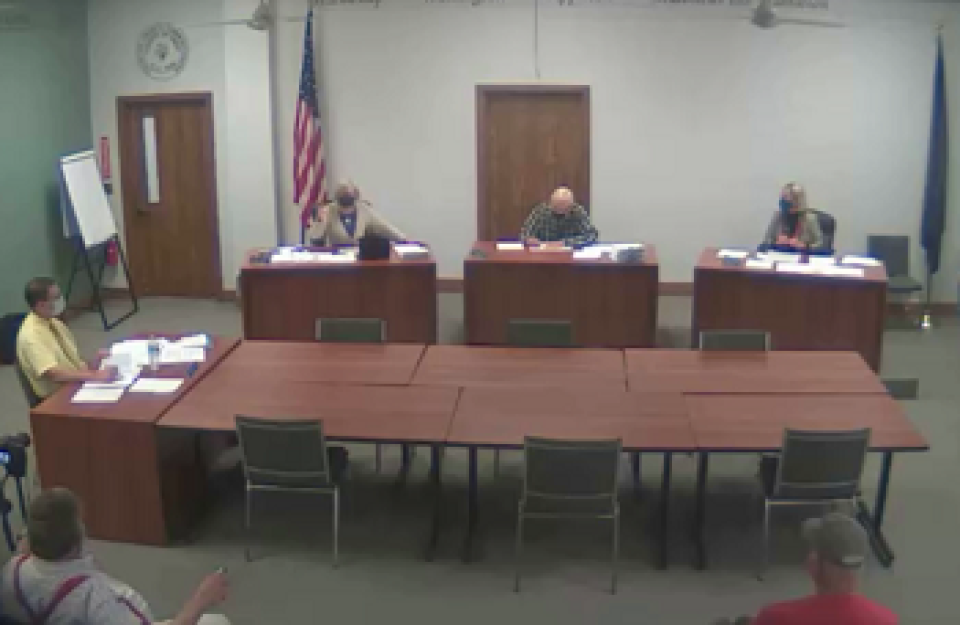
During a Knox County Commission meeting on Tuesday, October 12, after County Commissioners repeatedly barred local municipal leaders from commenting on broadband-related issues, they voted unanimously against awarding any of the county’s $7.7 million in American Rescue Plan (ARPA) funds to municipal broadband projects or any project benefiting an individual municipality.

Image

County Commissioners assembled to consider 58 ARPA project applications submitted by nonprofit and municipal entities, all vying for a portion of the county’s Rescue Plan funds. But, the meeting took an unexpected turn when one Knox County Commissioner accused representatives from the MIDC, a regional broadband utility formed by four Knox County towns, of “bullying” the Commissioners into spending the county’s Rescue Plan funds on regional and municipal broadband projects. 

After County Commissioner Dorothy Meriwether voiced her displeasure for how local community broadband advocates pursued the funding, three local Select Board members were not permitted to speak in support of MIDC. Adding insult to injury, the Commissioners then welcomed a representative from Charter Spectrum to talk for nearly 30 minutes.

How American Rescue Plan Broadband Funds Stack Up in the States

With American Rescue Plan funds flowing into state government coffers, about a third of the nation’s 50 states have announced what portion of their Rescue Plan dollars are being devoted to expanding access to high-speed Internet connectivity.

The federal legislation included $350 billion for states to spend on water, sewer, and broadband infrastructure, though everything we have seen suggests that the vast majority of that will not go to broadband. There is also another $10 billion pot of rescue plan funds, called the Capital Projects Fund, that mostly must be used to expand access to broadband.

Laboratories of Broadband-ification 

As expected, each state is taking their own approach. California is making a gigantic investment in middle-mile infrastructure and support for local Internet solutions while Maryland is making one of the biggest investments in municipal broadband of any other state in the nation. And although Colorado does not prioritize community-driven initiatives, state lawmakers there have earmarked $20 million for Colorado’s two federally-recognized Indian tribes to deploy broadband infrastructure with another $15 million devoted to boosting telehealth services in the state.     

Undoubtedly, individual states’ funding priorities vary. Some states may be relying on previously allocated federal investments to boost broadband initiatives and/or have been persuaded the private sector alone will suffice in solving its connectivity challenges. And in some states, such as Illinois, Minnesota, and Maine, lawmakers have prioritized using state funds to support broadband expansion efforts while other states may be waiting on the infrastructure bill now making its way through Congress before making major broadband funding decisions.

As of this writing, 17 states have earmarked a portion of their Rescue Plan money (totaling about $7.6 billion) to address the digital divide within their borders. Those states are Arizona, Arkansas, California, Colorado, Delaware, Hawaii, Indiana, Kentucky, Maine, Maryland, Montana, Missouri, Virginia, Tennessee, Vermont, Washington, and Wisconsin.

Northeast Louisiana Power Co-op Reenergizes Cotton Country with Volt Broadband

North Louisiana has more premises unserved with high-speed Internet access than any other region of the state. In an effort to bring reliable Internet access to its members who have gone without service, directors of the Northeast Louisiana Power Cooperative (NELPCO) recently agreed to pursue a $54 million fiber buildout. 

During a special meeting called on June 29th, NELPCO’s Board of Directors voted 5-2 to begin providing high-speed Internet access across the seven rural parishes the cooperative serves through its wholly-owned subsidiary, Volt Broadband LLC.

The exact details of the project and how it will be funded are still being worked out. But, the cooperative is preparing to bond for $50 million to deploy fiber infrastructure across its 2,180-square-mile service territory, which runs from “south of Turkey Creek Lake in Franklin Parish north to the Arkansas line, and extends into Morehouse Parish,” according to the cooperative’s website.

Image

Construction of the fiber network will be completed in segments, beginning in the most populated regions and extending to the most rural, to eventually serve all 11,000 co-op members.

Tides Are Turning With Digital Inclusion - Bonus Episode 14 of the Community Broadband Bits Podcast
For episode 14 of our bonus series, “Why NC Broadband Matters,” we’re joined by Amy Huffman, Policy Director at National Digital Inclusion Alliance (NDIA) and Christa Vinson, Program Officer of Rural Broadband and Infrastructure at Local Initiatives Support Corporation (LISC), to talk about the state of digital inclusion across the country. 

Vinson updates us on the recent developments with the collaboration LISC and NDIA have been working on to bring rural Digital Navigators (DNs) to 32 communities across 20 states. As the federal government begins to recognize the importance of digital inclusion and equity, DNs are helping fill a role in the community to build digital skills in the community. 

The three also discuss the $10 billion Coronavirus Capital Projects Fund that has been allocated through the American Rescue Plan Act and the newly released program guidelines. They talk about the potential to use these funds to address digital inclusion — pointing out that an eligibility condition for the projects is providing an affordable option for low income families. 

This show is 34 minutes long and can be played on this page or via iTunes or with the tool of your choice using this feed, at the Community Broadband Bits page, or at the NC Broadband Matters page. We encourage you to check out other "Why NC Broadband Matters" content at the podcast feed so you don't miss future bonus content that may not appear in the Community Broadband Bits Podcast feed.

Transcript below. 

We want your feedback and suggestions for the show-please e-mail us or leave a comment below.

Listen to other episodes here or view all episodes in our index. See other podcasts from the Institute for Local Self-Reliance here.

Thanks to Shane Ivers for the Music: What's The Angle? by Shane Ivers - https://www.silvermansound.com a Creative Commons Attribution (4.0) license

Lewis County PUD In Hot Pursuit of Funding for Countywide Fiber

Following hundreds of requests from community members urging the local Public Utility District (PUD) to address the lack of Internet access in Lewis County, Washington, the Lewis County PUD is answering the call with a proposal to construct an open access countywide fiber-to-the-home network and a relentless pursuit of broadband construction grant opportunities on behalf of its 33,000 members.

The plan to construct the 110-mile-long fiber backbone – anticipated to cost between $110 and $130 million to build – is months in the making. Since the beginning of the Covid-19 pandemic, the PUD has applied for over $30 million of state and federal broadband grants. 

In August of 2020, the PUD applied for a $5.5 million grant through the Washington State Public Works Board to provide fiber-to-the-home (FTTH) services to residents of four communities in the western region of the county – “from west Chehalis to Adna and Pe Ell along Highway 6, and down through the Boistfort Valley,” according to the PUD’s website

When that grant application was not awarded, the PUD turned to the USDA’s Community Connect program to propose a smaller project that would serve three of the four aforementioned communities. The USDA is expected to announce those grant recipients soon. 

Join Us Live on Thursday at 5pm ET To Talk About Treasury Infrastructure Rules, Digital Redlining, and Microtrenching - Episode 20 of Connect This!

On Episode 20 of the Connect This! Show, co-hosts Christopher and Travis Carter (USI Fiber) will be joined by Doug Dawson (CCG Consulting) and Kim McKinley (UTOPIA Fiber) live on both YouTube and Facebook to talk about a grab-bag of issues including the new Treasury rules for the $10 billion in broadband infrastructure funding, digital redlining, and microtrenching. 

Join us for the live show Thursday, September 30th, at 5pm ET. 

Subscribe to the show using this feed, or visit ConnectThisShow.com

Email us [email protected] with feedback, ideas for the show, or your pictures of weird wireless infrastructure to stump Travis.

Watch here on YouTube (or below), or here on Facebook Live.