
ACP

Content tagged with "ACP"

Displaying 21 - 30 of 94

Baltimore Close To Issuing RFP For Major Fiber Expansion
Baltimore activists and leaders say the city is making steady progress in efforts to bridge the digital divide in the city of 565,000. The efforts have culminated in several grant-fueled initiatives to deliver fiber and wireless to city apartment complexes, a city middle-mile network, and a looming partnership with regional providers to further expand affordable access.

When we last checked in with Baltimore, the city had just doled out $2 million of its American Rescue Plan Act (ARPA) funding to bring fiber to 12 new city apartment buildings. The deployment is in partnership with Waves, a nonprofit formerly known as Project Waves.

Waves was first launched in 2018 in direct response to the Trump FCC’s repeal of net neutrality and the general failures of federal telecom policy to address digital inequity. Project Waves (profiled by ILSR in 2023) initially used Point-to-Multipoint wireless connectivity to deliver free wireless broadband service to about 300 multi-dwelling unit (MDU) residents.

Image
Project Waves sign

Now Baltimore Director of Broadband and Digital Equity Kenya Asli tells Government Technology the city is putting the finishing touches on a Request for Proposal (RFP) to strike a new public-private-partnership with an as-yet-unselected broadband provider. The deal should further expand fiber access to unserved and underserved parts of the city.

“Folks want more options, and so we are bringing in more options,” Asli said.

Study: Affordable Connectivity Program More Than Paid For Itself

A new study by The Brattle Group found that the FCC’s Affordable Connectivity Program (ACP) generated more savings for taxpayers than it cost. Healthcare savings generated by the low-income program alone more than offset its annual burden to taxpayers, undermining claims that the program was dismantled as an act of fiscal efficiency.

The ACP, part of the 2021 infrastructure bill, provided 23 million low-income households a $30 broadband discount every month. It provided a larger $75 a month discount for low-income residents of widely underserved tribal areas.

The ACP also provided low-income Americans a $100 subsidy to help them afford a laptop, tablet or a desktop computer.

Generally viewed as a rare bipartisan success story, the ACP took direct aim at a primary problem across U.S. broadband: affordability.

Image
House Speaker Mike Johson holds his hand flat out jutting out as he speaks to a crowd

But the program was unceremoniously allowed to expire in 2024 after GOP leaders including House Speaker Mike Johnson refused to even bring funding bills to the House floor for a vote, despite widespread support from industry, consumer groups, and even then Republican Ohio Senator JD Vance.

Consider Affordable Broadband State-By-State - Episode 635 of the Community Broadband Bits Podcast

In this special episode of the podcast, we revisit our live forum called "Consider Affordable Broadband State by State". Chris is joined by Sean Gonsalves and Shayna Englin to explore how states like New York, Massachusetts, and California are tackling broadband affordability with the Affordable Connectivity Program's expiration. 

They break down the legal and economic landscape of New York’s Affordable Broadband Act, discuss the political challenges of regulating Internet prices, and examine how state-led initiatives can push action around the country. Tune in for a deep dive into the policies shaping digital equity.

The previous live-stream is archived and can be viewed here.

This show is 35 minutes long and can be played on this page or via Apple Podcasts or the tool of your choice using this feed.

Transcript below.

We want your feedback and suggestions for the show-please e-mail us or leave a comment below.

Listen to other episodes or view all episodes in our index. See other podcasts from the Institute for Local Self-Reliance.

Thanks to Arne Huseby for the music. The song is Warm Duck Shuffle and is licensed under a Creative Commons Attribution (3.0) license

No Shareholders, Just Service: Sherwood, Oregon’s Community Broadband Success - Episode 634 of the Community Broadband Bits Podcast

In this episode of the podcast, Chris speaks with Mayor Tim Rosener and IT Director Brad Crawford of Sherwood, Oregon, about the city’s journey in building a community-owned broadband network. 

They discuss Sherwood's unique approach to expanding fiber access, how they’ve leveraged Urban Renewal funding to support the network’s growth, and their commitment to keeping service affordable for residents. 

The conversation highlights the importance of local control, the economic benefits of broadband investment, and Sherwood’s expansion into surrounding rural areas. 

Tune in to hear how Sherwood is proving that community broadband can be both cost-effective and high quality, all while prioritizing local service and support.

This show is 22 minutes long and can be played on this page or via Apple Podcasts or the tool of your choice using this feed.

Transcript below.

We want your feedback and suggestions for the show-please e-mail us or leave a comment below.

Listen to other episodes or view all episodes in our index. See other podcasts from the Institute for Local Self-Reliance.

Thanks to Arne Huseby for the music. The song is Warm Duck Shuffle and is licensed under a Creative Commons Attribution (3.0) license

Trump FCC Begins Dismantling Agency Civil Rights Reforms

After decades of redlining and broadband “digital discrimination” by the nation’s biggest telecom monopolies, the FCC finally began taking aim at the problem in 2023. Now the entirety of those efforts are poised to be dismantled, courtesy of the Trump administration’s broad, controversial frontal assault on discrimination reforms and civil rights.

The 2021 infrastructure bill set aside $42.5 billion to expand broadband into all unserved parts of the United States.

But it also tasked the FCC with crafting new rules taking aim at “digital discrimination.” On November 15th of 2023 the agency obliged, passing rules banning ISPs from broadband discrimination based on income, race, or religion.

Civil rights and digital equity activists were split on the potential impact of the rules, but they did agree on one thing: it was historic for federal policymakers to finally admit that telecom monopoly deployments had unfairly excluded many low income and minority neighborhoods from affordable, next-generation broadband access.

NaLA Survey Reveals Post-ACP Hardship for Economically Vulnerable

*In partnership with Broadband Breakfast, we occasionally republish each other's content. The following story by Broadband Breakfast Reporter Gabriel Dorner was originally published here.

The Affordable Connectivity Program ran out of money last May, creating an enduring hardship for economically challenged Americans who need the program to get or stay online, the National Lifeline Association’s Annual Consumer Survey found.

Americans who relied on the ACP have struggled to find work, balance their budgets, and access healthcare, according to the NaLA survey.

“Lifeline and the ACP bring affordable internet and phone service to the communities who need it most… Lawmakers must refund the ACP and fix the Universal Service Fund’s Lifeline program to ensure all American households have affordable access to essential communications,” NaLA said in a statement.

Image
National Lifeline Assoc NaLA logo

The ACP provided benefits to 23 million low-income households at the time the program closed.

“I have read thousands of heartbreaking testimonies from consumers since ACP funding ran out,” NaLA Board Chairman David B. Dorwart said.

According to the report, 80 percent of survey respondents reported having an annual income below $20,000, 73 percent identified as unemployed, and only half reported having a checking or savings account.

In Our View: States Should Consider Adopting Their Own Affordable Broadband Law in a New York Minute

Now that the lengthy legal beef has been settled and New York’s Affordable Broadband Act (ABA) is set to take effect this month, it marks a potentially pivotal moment in a national effort to address one of the biggest barriers to broadband adoption: 

Affordability.

The first-in-the-nation law requiring large Internet Service Providers (ISPs) operating in New York to offer a $15/month plan for qualifying low-income households stands to benefit the approximately 1.7 million New Yorkers who had been enrolled in the federal Affordable Connectivity Program (ACP) Congress allowed to expire last spring.

With a new administration entering the White House – supported by GOP Congressional leaders who blocked previous ACP renewal efforts – the newly enacted ABA “paints a path that other states will look at,” as New Street Research analyst Blair Levin recently noted.

Image
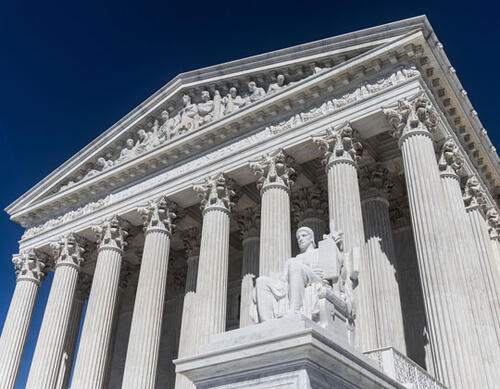
US Supreme Court building

“In a world where the federal government is subsidizing low-income households for $30 a month, states did not need to take action to address low-income broadband affordability,” Levin added. But now, without the ACP benefit, “states may try to assist low-income households to keep them connected.”

Sherwood, Oregon Ferments ‘Future-Proof’ Fiber To Preserve and Expand Municipal Network

In the City of Sherwood, a mostly residential bedroom community 16 miles south of Portland, officials have been quietly cultivating a digital vineyard across Oregon’s “Gateway to Wine Country.”

As part of its on-going work to build out a citywide fiber network, Sherwood Broadband recently secured a $9 million grant from the Oregon Broadband Office Broadband Deployment Program (BDP) to continue expanding Sherwood’s municipally-owned network into neighboring rural communities just outside city limits.

The grant award is part of $132 million in federal Rescue Plan funds the state is doling out to an array of community-owned broadband initiatives for 16 projects across 17 counties.

Award winners include Beacon Broadband, a subsidiary of the Coos-Curry Electric Cooperative ($19.4 million); Jefferson County ($19.2 million); Douglas Fast Net, a wholly-owned subsidiary of the Douglas Electric Cooperative ($8.5 million); the Idaho-based member-owned cooperative Farmers Mutual Telephone Company, which offers broadband service in Malheur County, OR ($18.9 million); and a handful of independent providers like Blue Mountain Networks ($6.5 million) and Ziply Fiber ($10.2 million), recently acquired by Bell Canada.

2025 Predictions with Blair Levin - Episode 631 of the Community Broadband Bits Podcast

In this episode of the podcast, Chris speaks again with Blair Levin, former Director of the National Broadband Plan and current Equity Analyst at New Street Research. Together, they dive into the major issues shaping the year ahead for broadband and telecommunications.  

Levin shares insights on the evolving landscape of network ownership, media regulations, and market dynamics, while addressing pressing topics like the expiration of the Affordable Connectivity Program and its impact on affordability. The discussion also touches on the BEAD program, fixed and wireless broadband competition, and the influence of geopolitical and economic policies on deployment efforts.  

Levin critiques the Federal Communications Commission's priorities under Brendan Carr's leadership, predicts significant shifts in media ownership and content distribution, and examines the role of satellite Internet and emerging technologies. This forward-looking conversation also highlights the importance of reliable data and competitive intensity in shaping the broadband future.  

Tune in for an engaging discussion filled with expert predictions, political analysis, and reflections on the broader implications of broadband policy decisions.

This show is 45 minutes long and can be played on this page or via Apple Podcasts or the tool of your choice using this feed.

Transcript below.

We want your feedback and suggestions for the show-please e-mail us or leave a comment below.

Listen to other episodes or view all episodes in our index. See other podcasts from the Institute for Local Self-Reliance.

Thanks to Arne Huseby for the music. The song is Warm Duck Shuffle and is licensed under a Creative Commons Attribution (3.0) license

B4DE Offers Insights For Navigating Broadband Political Divide In Nation's Capital

Digital inclusion advocates are bracing themselves for an uncertain year ahead.

As the incoming GOP regime takes aim at key aspects of the Digital Equity Act (DEA) and the BEAD (Broadband, Equity, Access, And Deployment) program, those working to bridge the digital divide have more questions than answers just as states are preparing to dole out federal grant money yet to be awarded to grant recipients.

One major question looming over both BEAD and the Digital Equity Act is whether a new Congress can leverage the Congressional Review Act – a tool Congress can use to overturn certain federal agency actions – to undermine the 2021 bipartisan infrastructure law behind the national “Internet For All” initiative.

Image
Building for Digital Equity

“The Congressional Review Act only applies to things that were adopted in the last six months. I know that there were a number of things the FCC did to make sure that they were done and would be non-reviewable under the CRA and I suspect NTIA did that as well (with BEAD),” former FCC Chief of Staff and now New Street Research policy advisor Blair Levin said during our final Building For Digital Equity (B4DE) livestream of 2024.