

The Real Threats from Monopoly - Community Broadband Bits Podcast #83
When we think about the threat of monopoly, we almost always focus on how monopolies can raise prices beyond what is reasonable. But there are many threats from monopolies and many are much more dangerous to a free society than higher prices. This week, monopoly expert Barry Lynn joins us for the Community Broadband Bits podcast. Lynn is a senior fellow at the New America Foundation and author of a book that I recommend very highly - Cornered: The New Monopoly Capitalism and the Economics of Destruction. Buy it a local bookstore or from an independent bookstore online. We discuss whether companies like Comcast are correctly termed "monopoly" when they face some nominal competition and what the threat from monopoly is. Barry explains how both political parties have encouraged centralization even as both parties have had vocal opponents of such policies. And finally, we discuss how policies dealing with monopoly now are fundamentally different than they were for the vast majority of American history. This is a great discussion - one of the most important we have done. You can read a transcript of our discussion here. We want your feedback and suggestions for the show - please e-mail us or leave a comment below. Also, feel free to suggest other guests, topics, or questions you want us to address. This show is 20 minutes long and can be played below on this page or via iTunes or via the tool of your choice using this feed. Listen to previous episodes here. You can can download this Mp3 file directly from here. Find more episodes in our podcast index. Thanks to Haggard Beat for the music, licensed using Creative Commons.





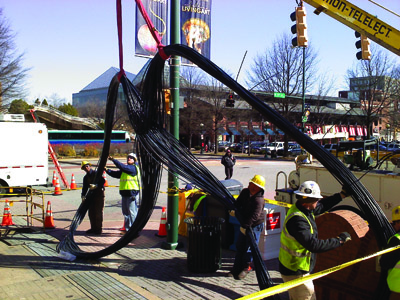 Others have already followed these lessons but are not able to offer their gig for such a low prices. To understand why, let's start with some basics. I'm hypothetically starting Anytown Fiber Net in my neighborhood and I want to offer a gig.

 #6 is a great explanation of why communities should directly invest in broadband. Local economic growth and secondary investment enabled by broadband expansion is 10 times the initial investment.
Think about that. While private companies have long built, owned, and operated most of the broadband networks, they have seriously underinvested. They underinvest because they cannot monetize many of the benefits from broadband. Faster, more reliable connections simply do not translate into more revenue for cable and telephone companies. So the big incumbents have largely ceased investing in next-generation networks.
These massive corporations do not care about the growth of secondary investments or other spillover effects from better broadband in communities because it does not change their bottom line -- the one thing they are supposed to prioritize over all other matters.
This is why communities should be investing in themselves. Communities do care about secondary investments and spillover benefits from broadband. In fact, they are specifically tasked with investing to benefit the community!
So when it comes to maximizing the benefits of broadband, community investments tend to make a lot of sense... and other secondary benefits.
#6 is a great explanation of why communities should directly invest in broadband. Local economic growth and secondary investment enabled by broadband expansion is 10 times the initial investment.
Think about that. While private companies have long built, owned, and operated most of the broadband networks, they have seriously underinvested. They underinvest because they cannot monetize many of the benefits from broadband. Faster, more reliable connections simply do not translate into more revenue for cable and telephone companies. So the big incumbents have largely ceased investing in next-generation networks.
These massive corporations do not care about the growth of secondary investments or other spillover effects from better broadband in communities because it does not change their bottom line -- the one thing they are supposed to prioritize over all other matters.
This is why communities should be investing in themselves. Communities do care about secondary investments and spillover benefits from broadband. In fact, they are specifically tasked with investing to benefit the community!
So when it comes to maximizing the benefits of broadband, community investments tend to make a lot of sense... and other secondary benefits.