A Fiber Oasis in Nevada
There’s more to Nevada than sparkling casinos and vast expanses of arid desert. A six-hour drive north of Las Vegas – about an hour drive east of Reno on I-80 – is Churchill County.

Fast, affordable Internet access for all.
There’s more to Nevada than sparkling casinos and vast expanses of arid desert. A six-hour drive north of Las Vegas – about an hour drive east of Reno on I-80 – is Churchill County.

In Chanute, the “Hub of Southeast Kansas” named in honor of railroad engineer and aviation pioneer Octave Chanute, the track this small city of approximately 9,100 is on to build its Fiber-to-the-Home (FTTH) network is a long one.
Last week we published a new case study report on four Native Nations (the Coeur d’Alene, the Nez Perce, the Fond du Lac Band of Ojibwe, and the St.
It’s official. Senate Bill 74 became law last week when Governor Asa Hutchinson signed it, significantly reducing (but not completely removing) barriers to municipal broadband in the state of Arkansas, with both chambers voting unanimously in approval of the legislation.
This week on Connect This!
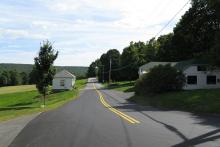
Leyden is located in one of the most rural parts of northwestern Massachusetts, along the edge of the Berkshires tucked away in the valleys of the Green River bordering Vermont.
Marketing plays a pivotal role in the success of community broadband at every stage of the game: from helping build political will during the initial stages of a project, to driving strong early take rates, to maintaining momentum down the road.
The rate of connectivity in Indian Country lags behind the rest of the country. As of December 2018, only 60% percent of Tribal lands in the lower 48 states had high-speed Internet access. A new case study report from the Institute for Local Self-Reliance delves into the experiences of four Native Nations — the Coeur d’Alene, the Nez Perce, the Fond du Lac Band of Ojibwe, and the St. Regis Mohawk — as they constructed their own Internet service providers.
It’s February, which means the National Digital Inclusion Alliance (NDIA) is once again taking applications for the 2021 Charles Benton Digital Equity Champion Awards. The deadline is February 12th.
From the announcement:
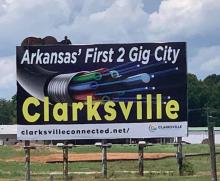
Chickens, peaches, and college students. Those may be the first things that come to mind if you have ever visited Clarksville, Arkansas – a small town of about 9,200 residents situated at the foot of the Ozarks.

For communities across the country considering whether to invest in building a municipal broadband network, a new study published last week on the economic value of the EPB fiber network in America’s first “gig city” is a must-read.
Local citizens and officials have been moving the needle on the Falmouth Community Network, completing a feasibility with the help of CCG Consulting in December and continuing to pursue public awareness and education efforts in the area.
In a livestream just before Thanksgiving, Christopher was joined by Althea Networks CEO Deborah Simpier and NetEquity Networks Founder and CEO Isfandiyar Shaheen (Asfi) to discuss an innovative financing model for building Fiber-to-the-Home (FTTH) with the potenti

A new grant program funded by Truist Bank's philanthropic initiative and administered by the Internet Society will disburse $1 million in funds to seven community broadband projects over the next year and a half.
It's only been 26 days since the dawn of 2021, and somehow it feels like I've aged a relative year in the last four weeks. We've got a lot of exciting projects going on here among the Community Broadband Networks team, but wanted to post a quick update about the Connect This! show. Watch below where Christopher and I talk about what to expect and when. In short, Connect This!

Conway is right in the middle – in the middle of Arkansas with its utility company, Conway Corp, in the middle of beefing up its broadband network.
In our year-end roundup and prediction show on the Community Broadband Bits podcast last month, the more optimistic members of the team predicted that 2021 would see some states remove barriers to municipal broadband.

Western Massachusetts stands as maybe the most dynamic place for municipal broadband at the present, with almost two dozen cities pursuing projects.

What Becket Town Administrator William Caldwell called “one of the most anticipated news [events]” in town