
Washtenaw County Approves $15 million in ARPA Funds for Countywide Broadband
Countywide Internet access is no longer up in the air for Washtenaw County, Michigan residents.

Fast, affordable Internet access for all.
Countywide Internet access is no longer up in the air for Washtenaw County, Michigan residents.

North Louisiana has more premises unserved with high-speed Internet access than any other region of the state. In an effort to bring reliable Internet access to its members who have gone without service, directors of the Northeast Louisiana Power Cooperative (NELPCO) recently agreed to pursue a $54 million fiber buildout.
In September, we wrote about the elimination of significant state barriers in Arkansas and Washington as legislators at the state level pushed to overturn the laws protecting monopoly providers which prevent localities from building and operating their own broadband infrastructure.

With support from the Internet Society, the Institute for Local Self-Reliance has produced a video series to help tribes meet the requirements set by the FCC in getting their 2.5GHz networks up and running. Featuring participants from this summer's inaugural Tribal Wireless Bootcamp, the series offers an introduction to key terms before walking viewers through the necessary steps from inception to connecting end users to a new network.
Join us live this Thursday, October 14th at 5pm ET for Episode 22 of the Connect This! Show, where co-hosts Christopher and Travis Carter (USI Fiber) will be joined by Dennis Pappas (Longmont, Colorado) and Christy Batts (Clarksville, Tennessee) to talk about large municipalities successfully deploying broadband infrastructure for an array of community benefits.
This month Director of the Community Broadband Networks Initiative for ILSR Christopher Mitchell will join the panel for a four-part virtual series on developing communities that foster safe and thriving lifestyles for an aging population.

Public Knowledge's annual IP3 award ceremony was held virtually on September 23rd for its 18th year.

Following hundreds of requests from community members urging the local Public Utility District (PUD) to address the lack of Internet access in Lewis County, Washington, the Lewis County PUD is answering the call with a proposal to construct an open access countywide fiber-to-the-home network and a re

This week, don't miss a very special episode of the Connect This! Show, streaming live from the Minneapolis headquarters of the Institute for Local Self-Reliance for the very first time!

Need better Internet access in your community but don’t know where to start? Or maybe you’re in the middle of a community broadband project but have hit a roadblock?
Fiber-to-the-home service is on its way to three counties in Southeast Georgia.
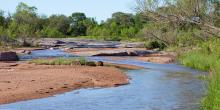
The cities of Corinth and Lake Dallas, as well as the towns of Hickory Creek and Shady Shores put out a Request for Proposal (RFP) at the beginning of September for a public-private partnership to deploy a fiber network to households and businesses in all four communities, collectively known as the Lake Cities. The project, with the help of $ 4 million in American Rescue Plan funds, would include building a middle mile fiber ring to support government services around the four cities, connecting public buildings and facilities.

If you missed the most recent episode of the Connect This! Show, Keith Hansen described the moment he realized he could map the city's digital divide by putting low-power computers attached to GPS chips on the city's garbage trucks.
If you missed the most recent episode of the Connect This! Show, Angelina Panettieri (National League of Cities) shared her take on the recent rules update on the $10 billion in broadband infrastructure funding released by the Treasury.
Watch the short clip below to hear how your community can prepare itself.

On Episode 20 of the Connect This! Show, co-hosts Christopher and Travis Carter (USI Fiber) will be joined by Doug Dawson (CCG Consulting) and Kim McKinley (UTOPIA Fiber) live on both YouTube and Facebook to talk about a grab-bag of issues including the new Treasury rules for the $10 billion in broadband infrastructure funding, digital redlining, and microtrenching.
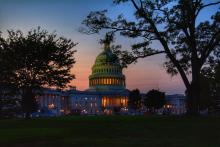
This guide aims to assist communities interested in accessing federal funds to expand broadband infrastructure and digital inclusion services, by consolidating funding programs established under various federal stimulus relief packages - the American Rescue Plan Act, the Consolidated Appropriations Act, and the Infrastructure Investment and Jobs Act. This guide updates ILSR’s Community Guide to Broadband Funding released in April of 2021.

Some years ago the Community Broadband Networks initiative ran an email listserv for interested folks to sign up and get the latest news and resources regarding projects around the country and to advance efforts in their own communities.

On Episode 19 of the Connect This!

Just a year after city leaders of Superior, Wisconsin (pop. 26,000) passed a resolution declaring fiber optic cabling critical infrastructure, officials are beginning to put the city’s money behind an action plan.

A week from today, the Schools, Health, and Libraries Broadband Coalition (SHLB) is hosting a fireside chat on Tuesday, September 29th at 12-12:30p ET with SHLB Executive Director John Windhausen and Christopher Ali.