
New Funny LUS Fiber HDTV Commercial
LUS Fiber has released a new ad promoting its HDTV services - probably the best ad I have seen from a community broadband network promoting its services.

Fast, affordable Internet access for all.
LUS Fiber has released a new ad promoting its HDTV services - probably the best ad I have seen from a community broadband network promoting its services.
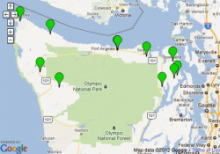
Washington's Olympic Peninsula is one step closer to being laced in a new fiber-optic network.
Good news for folks in Jackson, Wilder, and Bingham Lake in Southwest Minnesota! Your local broadband options are about to get much better. Southwest Minnesota Broadband Services (SMBS) just announced that construction is advancing on the new network. The 125-mile fiber ring is expected to be completed by September, 2012.
LUS Fiber now offers its business subscribers the current ultimate in broadband speeds. An April 5th press release from LUS Fiber reports that business customers of the state's only community-owned ftth network now have access to 1 gig symmetrical internet connections.

Here at MuniNetworks.org, we encourage the idea of local communication, via broadband or any other medium. Naturally, we are fans of low power radio, owned and operated by independent groups, rather than more stations owned by a few communications giants, seemingly located all over the radio dial.


The Chattanooga Times Free Press, reports that the City's last IntelliRuptor, or "smart switch," will be installed on April 24th.


Here at muninetworks.org, we continually see instances of state government preempting rights of local government to make their own decisions on broadband.
Alcatel-Lucent, one of the key vendors behind the Chattanooga community fiber network, has produced a video highlighting life in a "smart" city.

A little less than a year ago, the 88th Arkansas General Assembly created HB 2033, later known as Act 1050 [pdf].

In an attempt to regain some of its Silicon Valley shine, San Jose, California is taking another run at municipal Wi-Fi. The city hopes that by covering a 1.5 square mile block of downtown with fast, robust wireless Internet access, it will become more attractive to the technology entrepreneurs who have, in recent years, been more likely to set up shop in other parts of the valley.

In past reporting, we have briefly discussed Pend Orielle PUD’s efforts at filling the broadband service gap in rural areas. People living in rural areas, while possibly needing connectivity more than urbanites, are often left to fend for themselves.

A recent article by Chloe Morrison on Nooga.com, highlighted the inquiries and envy from all over the globe about Chattanooga's awesome community fiber network.