
How a Muni Network in The Dalles Led to a $600 million Data Center
As I recently mentioned in my endorsement of Tubes by Andrew Blum, the book explains how a municipal fiber network helped to attract Google to town.

Fast, affordable Internet access for all.
As I recently mentioned in my endorsement of Tubes by Andrew Blum, the book explains how a municipal fiber network helped to attract Google to town.


In the early 1950s, it was nearly impossible to know the value of an automobile.

After six years in the making, the OpenCape network is soon to be delivering services.

This past spring, we introduced you to the small town of Leverett, in rural western Massachusetts.

Burlington Telecom may be headed for some changes. Due to the mismanagement of the prior Burlington Mayor Administration, the network took on an unsustainable amount of debt and damaged its reputation. Some of the plans to make the network sustainable again involve privatizing it.

I am going to be on Gigabit Nation today with Craig Settles, a live call-in show, from 2-3 Eastern time. You can listen online here both during the show and after, when the recording will be made available.

Imagine going to a gas station, putting 10 gallons into your car's 12 gallon tank, and driving off only to find your needle only approaches half a tank? This scenario is quite rare because government inspects gas stations to ensure they are not lying about how much gasoline they dispense.
Back in 2010, we reported on the municipal network in Spanish Fork, Utah. Back then, the utility innaugurated its telephone service, which completed its triple play offering. With recent discussion around Utah's UTOPIA, Spanish Fork is getting a second look.

In August, we reported on the results of a report on UTOPIA by the Office of the State Auditor General of Utah.
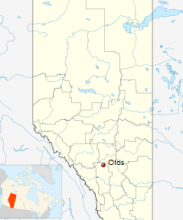
Back in 2010, we reported on SuperNet in Alberta, Canada. We noted how, even though it resulted in significant middle-mile infrastructure expansion, there were still many, many Canadians along the route that were not connected.

"I think you guys are on to something and understand better than anyone else about what I was talking about, about closing the leaks of equity out of our communities.

AT&T and others regularly woo their regulators and policymakers with promises to built increase investments or expand networks in return for deregulation or merger approval.



Last year, when Comcast unveiled its Internet Essentials program, the corporate powerhouse received accolades from FCC Chairman Julius Genachowski.

Why can Wi-Fi be so great in some places but so awful in others? (Ahem... Hotels.) Time to stop imagining Wi-Fi as magic and instead think of it just as a means of taking one connection and sharing it among many people without wires.
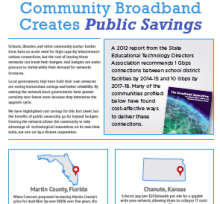
We have already published a fact sheet on the critical role community broadband plays in job development. Now, ILSR presents a collection of how community owned broadband networks save money for local government, schools, and libraries while providing cutting edge services.