
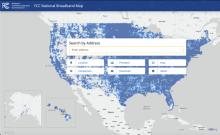
In a world where most core infrastructure in our lives is measured, tested, and held to a standard of quality - from electricity, to water, to gasoline - Internet infrastructure stands alone. How many households across the United States have no Internet access? Which Internet Service Providers' networks are unreliable and unusable during the worst times of the day? Where does competition result in faster speeds or lower prices, and how do we replicate that?
We have only the broadest sense of answers to all of these questions, and more, because the FCC has not taken seriously its charge to track and pursue policy to make sure every American household has equitable access to the Internet. That failure has resulted in outcomes where, for more than a generation, the burden of disconnection has fallen on those families that can least afford it. Join us for a free webinar on what we can know, and what we can't, and why that matters.
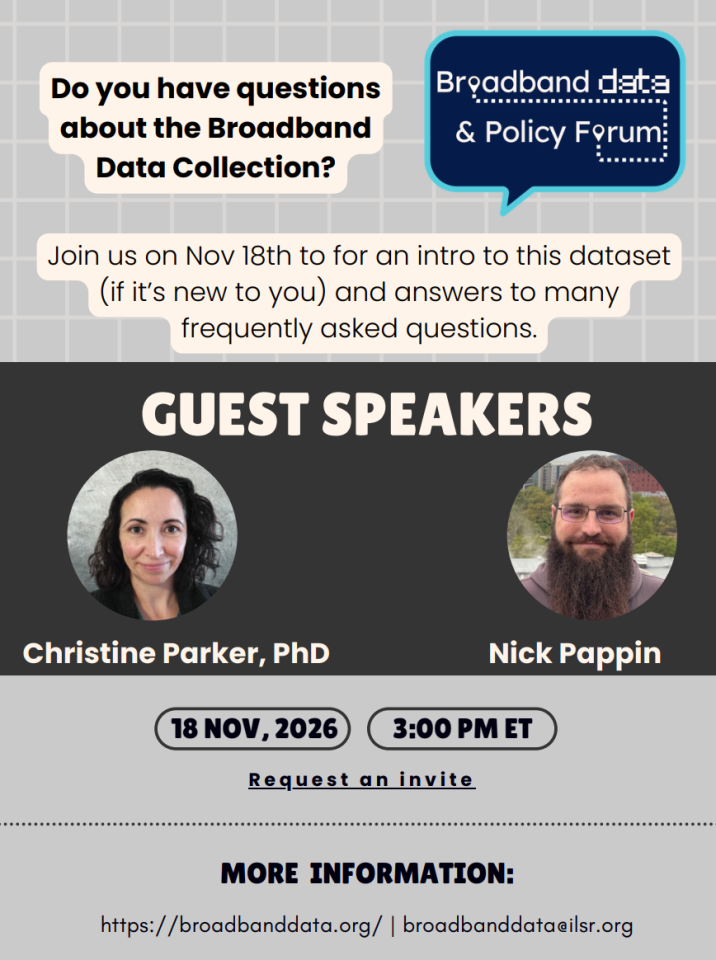
Next Thursday, November 18th, the Broadband Data and Policy Forum - a coalition of policy researchers, data scientists, and academics - is hosting a conversation about what it's like to work with this data that connects hundreds of millions of places with the providers that claim to serve them. At 3pm ET, the two-part webinar begins. Led by ILSR's Christine Parker and Washington State University's Nick Pappin, they'll talk about what we can know, what we can't, and what happens when the data goes blind altogether. The second half of the hour will feature a Q and A, so bring your questions!
Join us for the conversation next Thursday, November 18th, for free, by registering.