


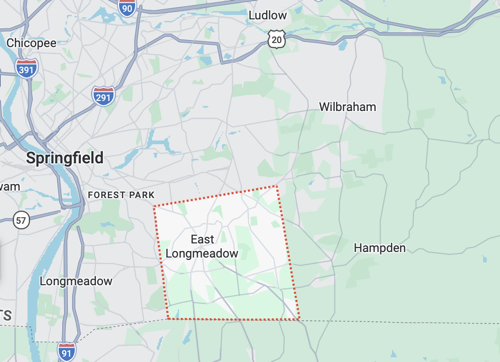
Three months after town meeting voters in Longmeadow, Massachusetts rejected an $8.6 million proposal to kickstart the construction of a municipal fiber network, Town Councilors in the neighboring town of East Longmeadow moved in a different direction, voting to take control of its digital future and provide its residents and businesses with next-generation Internet access.
The move was formalized earlier this month when East Longmeadow Town Councilors unanimously approved issuing $43.5 million in bonds to finance the construction of a municipally-owned fiber network.
The vote paves the way for the western Massachusetts town of about 16,000 to finally get the affordable and reliable town-wide Internet connectivity local leaders see as vital for its economic future and improved quality-of-life.
With pent up frustration of the high cost and unreliable service under the monopoly of Charter Spectrum, the Council also voted to enter into an agreement with Westfield Gas & Electric to build the network, as the municipally-owned fiber provider has done for nearly two dozen other towns in western Massachusetts — with the utility’s subsidiary, Whip City Fiber, to operate as the Internet service provider.
Construction is expected to start in January of 2027 with the first connections lit up for service later that year in the northwest corner of town where the “initially designated (and most dense) neighborhoods” are located.
Six Years in the Making
After six years of study and discussion beginning with the formation of the town’s broadband committee, East Longmeadow Town Council Vice President James Leydon tells ILSR the moment had come to put words into action.
“Weve been at this for six years — the Town Manager, the broadband committee, and our IT department had vetted it thoroughly. This isn’t a shot in the dark. And then we got to the point where we needed to fund the project,” Leydon told ILSR days after the vote, noting how it took several years just going through the pole-attachment process with National Grid.

Fortunately, Leydon said, the town is in “a pretty good financial position, comparatively speaking. We have a healthy bond rating and we are sitting on some ‘free cash’ (reserves).”
To finance the project, he explained, the town will “float the bonds” for close to $45 million dollars, though the total build-out costs are estimated to be about $30 million. The additional costs include the 4 percent interest rate payments.
Aiming for a 50 percent take-rate, Leydon said Town Councilors are expecting that after the “first couple of years” the borrowing costs will be paid for by an expanding subscription base.
Charter Spectrum Makes Its Case, Too Late
Unlike their neighbors in Longmeadow, East Longmeadow doesn't have a Town Meeting form of government where all capital expenditures have to be approved by voters at an annual Town Meeting, a form of government unique to New England. However, for towns and cities who have adopted a Town Council form of government, elected Town Council members hold the power of the purse.
While East Longmeadow Town Councilors only needed to vote as a board to finance the project, they felt confident their decision had widespread backing.
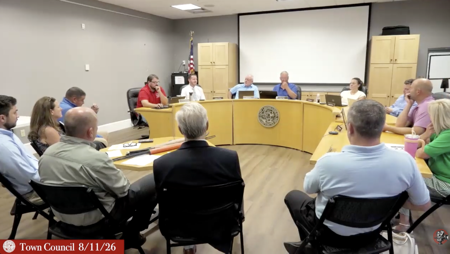
“I think we know that the voters are behind this idea because they voted overwhelmingly (via a ballot measure in June 2023) to create the Municipal Light Plant” – the first step in creating a telecommunications utility in Massachusetts, Councilor Connor James O'Shea said at the Aug. 11 meeting.
Still, despite the popularity of the town’s municipal broadband plan, it didn’t pass without objection. At the meeting before the vote, representatives from Charter Spectrum tried to persuade Councilors to not move forward.
“East Longmeadow is not an unserved community. This proposal would use public financing to construct a new network in a community where broadband infrastructure already exists,” Spectrum's director of government affairs for Massachusetts Nancy Clark said before the vote. “We were involved in a network evolution upgrade project just about six months ago that made significant improvements to upload and download speeds in this town and surrounding areas that should have improved the quality of broadband Internet in East Longmeadow significantly.”
Clark also questioned the project’s “take-rate assumptions (that) the revenue model depends on,” noting how a similar financing structure proposed in neighboring Longmeadow was why voters narrowly rejected that town’s proposal for a municipal broadband system there.
What Clark didn’t say was if Charter Spectrum’s public campaign to discredit the effort in Longmeadow influenced the outcome of the vote in that town.
As for East Longmeadow, Leydon tells ILSR, “we didn’t see any type of ads or voter outreach here that you saw in Longmeadow.”
Neither was it lost on town leaders that when the Town Manager did reach out to Charter Spectrum to discuss upgrading their service town-wide “numerous times, we never heard back.”
Nor did it go unnoticed, Leydon said, that when the town got serious about moving forward, suddenly Charter Spectrum decided to “do some upgrades,” adding “I can only speculate as to why” — a pattern we see whenever a community begins to put competitive pressure on their monopoly provider.
The Case for Local Ownership
Ultimately, what Town Councilors found so appealing about building and owning their own fiber network is the multitude of benefits they’ve seen elsewhere.
“What we are seeing in West Springfield, South Hadley, and Chicopee (Massachusetts municipalities with municipal broadband) they’ve experienced 50 percent take rates. So for us, we think it’s very doable,” Leydon said.
More importantly, he added, “every time a bill is paid, that money will stay in East Longmeadow rather than outflow to a corporate entity. We are taking care of our own infrastructure and not relying on an outside entity to take care of that.”
For Leydon, what the town is embarking on is a win all around for residents looking for more affordability and better reliability.
“We haven’t figured out yet what the exact pricing and service tiers will be, probably about $80 to $85 per month for gig service, and a higher end commercial tier. For myself, even if it costs a little more (than Charter Spectrum) I’d go with the locally owned model to keep the money in East Longmeadow.”
“But the beauty of public ownership is that those decisions are made locally. And, it gives us an opportunity to give residents a choice,” he added. “It’s not being forced on anyone so it’s not a one-size fits all, even as older generations are becoming more comfortable in cutting cords and using the technology.”
Bottom line, he said, “the Town Council moved in a direction we felt was the best direction for East Longmeadow: affordability, revenue generation, quality of service.”
“We are investing in ourselves and can reap the rewards — not just today but for generations to come. What Covid taught us was this is pretty much a public utility," Leydon said. "Everyone needs it. And I’m heartened by the fact that it's being treated that way.”
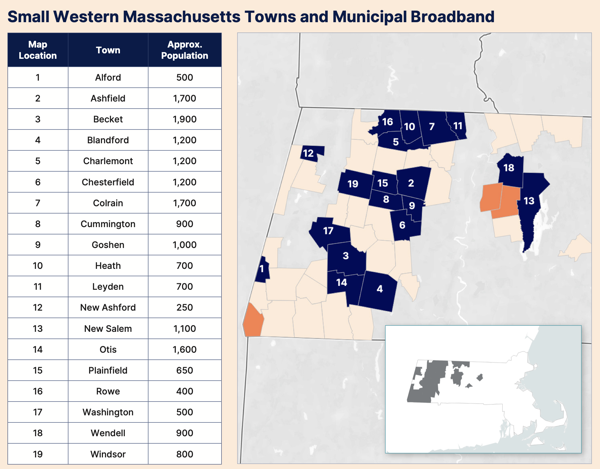
Indeed. Outside of East Longmeadow, Internet connectivity is being treated as a utility in a growing number of Massachusetts communities.
Even before East Longmeadow decided to join the growing roster of towns in Massachusetts to build their own fiber network, the Commonwealth already boasted being the home of the most municipal broadband networks in the nation.
Read our in-depth report published earlier this year about how western Massachusetts and its small hill towns became a hotbed of community-owned networks and are now offering the most reliable and affordable Internet service in the state below:
Header image of East Longmeadow park courtesy of Town of East Longmeadow Facebook page
Inline image of East Longmeadow Town Councilor James Leydon courtesy of Town of East Longmeadow website