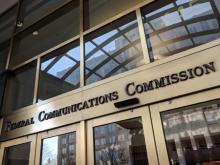

Consumer and civil rights groups last week told the Trump administration that their proposed “reforms” of the FCC’s Lifeline program would undermine efforts to ensure equitable, affordable access to the internet for all Americans, and are based on lies about immigrant fraud.
Last January, the Trump FCC under Brendan Carr proposed a series of “reforms” to the agency’s Lifeline program, which, as part of the broader bipartisan Universal Service Fund (USF) program, provides qualifying low-income US households with a modest $9.25 monthly subsidy for telecom services (which jumps to $34.25 for tribal homes).
At the time, Carr insisted that the reforms were necessary to improve government efficiency.
“The FCC has an obligation to be a good steward of federal dollars,” Carr said in a prepared statement. “And that is why the agency will be taking a comprehensive look at the FCC’s nearly $1 billion dollar a year Lifeline program, which subsidizes phone and Internet services for low-income Americans.”
To further sell his pitch, Carr made the false claim that the program was somehow awash with illegal immigrants who were exploiting U.S. taxpayers. To “prove” his claim, Carr stated that more than $5 million in Lifeline money funded 116,000 dead people across three states, with the heaviest “fraud” occurring in California.

“Over 80% of those scams took place in California alone,” Carr said. “That type of waste, fraud, and abuse is completely unacceptable. It should go without saying that only beneficiaries that are both living and here legally should qualify for benefits under this program,” Carr said.
But a subsequent public statement by the California Public Utilities Commission (CPUC) indicated the Trump FCC was making things up to generate support for their assault on a bipartisan, popular program that benefits roughly 8.12 million Americans every year, from minority residents in downtown Detroit – to low-income red state Trump supporters.
“People pass away while enrolled in Lifeline—in California and in red states like Texas,” CPUC officials stated. “That’s not fraud. That’s the reality of administering a large public program serving millions of Americans over many years. The FCC’s own advisory acknowledges that the vast majority of California subscribers were eligible and enrolled while alive, and that any improper payments largely reflect lag time between a death and account closure, not failures at enrollment.”
Criticism Of “Reforms” Grow Among Consumer Groups
Carr’s proposal was heavily criticized by the FCC’s lone Democratic Commissioner Anna Gomez (Republicans have refused to seat the other empty Democratic Commission spot).
"This administration has made significant cuts to SNAP, Medicaid, federal work study and student financial aid programs,” Gomez said. “They instituted tariffs that increased grocery prices, and they are advocating for cuts to federal assistance for energy bills and rent. The proposal before us is just the next move in a systemic effort by this administration to eviscerate federal support for low-income consumers across the country.”
Joint comments to the FCC filed this month (first spotted by Light Reading) by consumer groups including Public Knowledge and the National Digital Inclusion Alliance (NDIA) added to the chorus of criticism of the proposed changes, pointing out that the biggest abusers of the Lifeline program aren’t immigrants and poor minorities, but private companies.

"The Q-Link case in 2025, the Armstrong Group in 2024, and the 2022 San Francisco whistleblower complaint each illustrate that providers, not eligible and subscribing Lifeline households, are the primary entities engaging in fraud and abuse concerns within USF programs," said the groups.
Other groups in support of the comments included the National Hispanic Media Coalition, Open Technology Institute at New America, American Civil Liberties Union (ACLU), Asian Americans Advancing Justice (AAJC), Everyone On, Massachusetts Digital Equity Coalition, NTEN, and the Multicultural Media, Telecom and Internet Council (MMTC), which all stated they were extremely concerned by the “undertone of this proposal.”
“For a program that garnered bipartisan support and cooperation for decades, it is difficult to ignore the timing of this proposal alongside expanded federal data-sharing initiatives targeting immigrant communities among other anti-immigrant strategies deployed by the Trump Administration,” the signatories wrote.
The groups noted that enrollment in the Lifeline program currently hovers between 19 and 22 percent of all eligible homes, suggesting the program could benefit from improved outreach and education, not cumbersome new restrictions aimed at stifling participation.
They also noted that Carr’s push to expand identification requirements – including demanding that applicants provide their entire social security numbers up front, potentially create entirely new privacy concerns.
"Eligible applicants may lack experience with online or government applications, and are likely to be wary of sharing data with government agencies,” the groups wrote. “This—coupled with the fact that millions of Americans have had their SSNs leaked via data breaches in the last several years, including breaches from within government agencies—would present a barrier for any reasonable consumer faced with the burden of sharing personal data in an application."

Last year Congressional Republicans also killed a popular FCC program that provided poor people with $30 off of their monthly broadband bill. The FCC’s Affordable Connectivity Program (ACP) was unsurprisingly very popular, with more than 23 million Americans benefitting at its peak.
While Republicans refused to fund an expansion of the program to “save taxpayers money,” independent studies subsequently found that the $7-$8 billion annual taxpayer cost of the program generated between $28.9 and $29.5 billion in savings thanks to expanded access to affordable internet and remote telehealth services.
What’s often advertised as improving government efficiency, is often disguising abject disdain of the poor. And a blanket refusal to acknowledge that taxpayer money spent on digital equity now can provide significant public benefits, including savings, on other programs down the road.
Like so many Trump administration attacks on government programs, the Lifeline changes risk harming many of the administration’s own constituents, something the anti-immigrant rhetoric helps distract the public from. The cuts come on the heels of other administration policies – including tariffs and the war in Iran – that are painfully driving up costs for most Americans.
"This is not a war on poverty, it's a war on the poor," Gomez said.
"Aside from the direct impact on households, this item ignores the overall economic impact of failing to invest in affordability. Prioritizing affordable connectivity means investing in the next generation of Americans and ensuring they have the tools to participate in and contribute to our digital economy."
Header image of austerity sign courtesy of 401(K) 2012 on Flickr, CC BY-SA 2.0, Attribution-ShareAlike 2.0 Generic
Inline image of FCC Chair Brendar Carr courtesy of Broadband Breakfast
Inline image of woman in distress in front of laptop courtesy of Pexels, Creative Commons, Public Domain
Inline image announcing ACP program has ended courtesy of FCC website screenshot