
Starlink

Content tagged with "Starlink"

Related Topics
Displaying 1 - 10 of 60

Lawmakers Press Trump Admin To Stop Waffling On BEAD ‘Non Deployment Funds’

Lawmakers are pushing the Trump administration to stop being murky on whether states will be able to access tens of billions in “non-deployment funds” mandated by Congress that have been temporarily hijacked by the administration’s unpopular changes to a once-in-a-lifetime federal grant program to expand high-speed Internet access.

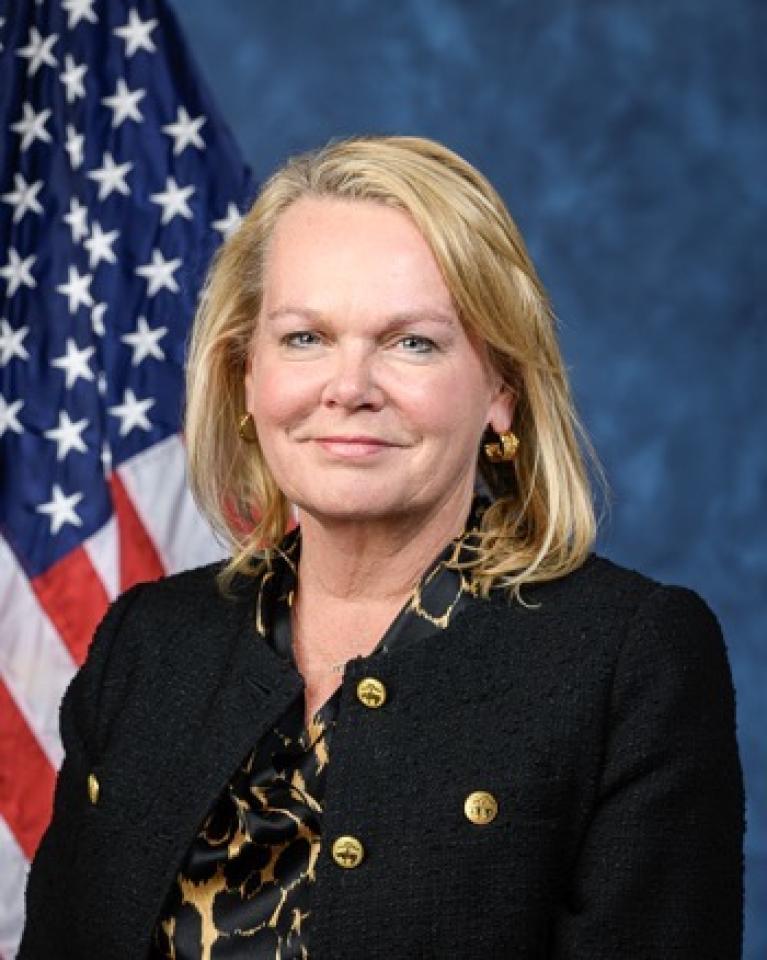
Representative April McClain Delaney (D-MD) is the latest politician to send a letter to the Trump NTIA asking for competent guidance on what will happen to the estimated $21 billion in “non deployment funds” suddenly stuck in limbo.

“States cannot build a workforce without workforce development funding; they cannot ensure safe adoption without digital safety education; they cannot support vulnerable populations without telehealth and remote-learning infrastructure; and they cannot protect critical networks without robust cybersecurity capacity,” Delaney and three other lawmakers wrote.

Image
Congress woman April Delaney

A year ago the Trump administration made numerous controversial changes to the $42.5 billion Broadband, Equity, Access, and Deployment (BEAD) program included in the 2021 infrastructure bill. That included removing rules ensuring that the resulting taxpayer-funded Internet access would be equitably deployed and affordable.

In The Verge: Elon Musk and the plot to hijack America’s broadband

Today, The Verge published an in-depth piece – “Elon Musk and the plot to hijack America’s broadband” – authored by our own Sean Gonsalves and ILSR contributor Karl Bode that examines the BEAD program from its inception to where it is now.

The piece details how the once-in-a-generation federal initiative to solve America’s digital divide has devolved into “a flaming mess.”

Here's a few excerpts:

"At 9PM ET on the night of May 28th, a Blue Origin New Glenn rocket sat on the launchpad at the Cape Canaveral Space Force Station. The craft was in the middle of a hot-fire test awaiting the arrival of Amazon Leo satellites, the first of 24 batches to be shuttled into low Earth orbit for an ambitious satellite internet venture. The effort was backed by hundreds of millions of taxpayer dollars, leveraging a Biden-era law meant to address America’s digital divide."

"But before the satellites even reached the launch site, Jeff Bezos’ rocket exploded into a massive fireball, its wreckage left smoldering on the ground. It was an unintentionally perfect metaphor for a once-in-a-generation attempt to fix the creaky US broadband system, now a flaming mess melting into a slush fund for billionaires."

"Bezos — along with newly minted trillionaire Elon Musk — has become one of the biggest beneficiaries of Broadband Equity, Access, and Deployment (BEAD), a $42.45 billion broadband expansion program passed as part of President Joe Biden’s 2021 “Build Back Better” initiative. BEAD was intended to give long-underserved communities billions of dollars for high-quality, future-proof fiber networks."

"But under President Donald Trump and a coalition of MAGA-allied tech moguls, Build Back Better has been transformed into 'tear down quickly,' leaving states mired in bureaucracy and delays. Five years later, only a handful of the millions of Americans slated for an internet access upgrade actually got one, and there’s little accountability in sight..."

What the Tech!?! SpaceX IPO Edition - Episode 13 of Unbuffered

Unbuffered Logo - Two text bubbles

In this two-part episode of Unbuffered, Chris is joined again by Sean Gonsalves, Jordan Pittman, and Karl Bode for a beginning conversation about SpaceX, Starlink, Wall Street, and what Chris describes as a potentially dangerous moment for the telecommunications industry.

The group digs into the recent SpaceX IPO, Starlink’s role within the company, and concerns about valuation, capacity constraints, customer service, and the growing narrative that satellite service can replace existing communications infrastructure. Along the way, they discuss Universal Service, rural broadband, market incentives, and why understanding how networks actually work still matters.

They also reflect on Wall Street, financial engineering, and whether investors are being asked to believe promises that may be difficult to deliver. Chris, Sean, Jordan, and Karl debate what happens when hype, markets, AI, and telecommunications collide, and what the consequences could be for communities, customers, and the broader economy.

In the second half of the episode, Chris is joined by Jeff Gavlinski for a preview of this year's Mountain Connect conference in Denver. Jeff shares how the event is evolving, from hosted buyer programs and roundtable discussions to new networking formats focused on creating connections and outcomes. The conversation explores what makes Mountain Connect different, the value of independent industry events, and why bringing people together remains one of the most important parts of the broadband ecosystem.

This show is 54 minutes long and can be played on this page or via Apple Podcasts or the tool of your choice using this feed

You can also check out the video version via YouTube.

Transcript below.

We want your feedback and suggestions for the show-please e-mail us or leave a comment below.

Listen to other episodes (formerly Community Broadband Bits) or view all episodes in our index. See other podcasts from the Institute for Local Self-Reliance.

Thanks to Whitedrift for the song Operator, licensed Creative Commons Attribution (3.0).

Vermont’s Community Broadband Model, Starlink, and the Future of Search - Episode 10 of Unbuffered

Unbuffered Logo - Two text bubbles

In this episode of Unbuffered, Chris and Sean Gonsalves talk about Vermont’s push for universal connectivity, the future of Starlink and SpaceX, and major changes coming to Google Search.

They begin with Vermont and the state’s unique approach to broadband expansion through Communication Union Districts. Sean shares reporting on how Vermont is using local leadership, apprenticeship programs, community networks, and federal funding to bring fiber connectivity to the most rural state in the nation. You can find Sean's story about Vermont Closing In on Universal Broadband Access here.

Chris reflects on the long history behind these efforts, including earlier fights over wireless towers, Burlington Telecom, and the emergence of EC Fiber as a model for community broadband. 

Together, they discuss why Vermont’s approach “wasn’t inevitable,” and why local power and community organizing matter when building long-term infrastructure.

From there, the conversation turns to Starlink, SpaceX, and the future of the Universal Service Fund. Chris and Sean discuss Starlink’s rapid growth, SpaceX’s position on universal service, and concerns about replacing locally rooted providers with a monopoly platform that may not be able to serve everyone equally well. 

They also talk about rural connectivity, customer service, satellite capacity, and what happens when essential communications infrastructure is treated only as a market problem.

The episode closes with a “What the Tech!?!” segment focused on Google’s latest AI-powered search changes. Chris and Sean reflect on what it could mean for the future of the Internet, online content, platform economics, and the growing role of AI in everyday life. 

Along the way, they discuss “enshittification,” the pressure to monetize AI, and concerns about making human-created content harder to find online. 

This show is 30 minutes long and can be played on this page or via Apple Podcasts or the tool of your choice using this feed

You can also check out the video version via YouTube.

Transcript below.

We want your feedback and suggestions for the show-please e-mail us or leave a comment below.

Listen to other episodes (formerly Community Broadband Bits) or view all episodes in our index. See other podcasts from the Institute for Local Self-Reliance.

Thanks to Whitedrift for the song Operator, licensed Creative Commons Attribution (3.0).

Unbuffered Live! - Episode 6 of Unbuffered

Unbuffered Logo - Two text bubbles

In the first live episode of Unbuffered, Chris is joined by Heather Mills, Doug Dawson, and Drew Garner for a wide-ranging conversation about BEAD, permitting, mobile wireless, and the latest debates around broadband policy and infrastructure.

They begin with a discussion about Amazon’s Leo service, efforts to preempt local government “to encourage more investments in Internet access,” and the realities of mobile wireless performance after Chris spent weeks traveling around the country.

From there, the conversation turns to BEAD and where things currently stand. Drew explains that most states and territories have finally signed their award agreements and are getting closer to construction, while also warning that the process remains “interminable” because there are so many seeming final steps. Chris, Heather, Doug, and Drew discuss delays, permitting, workforce challenges, NTIA guidance, and concerns that states may face a very narrow list of eligible uses for remaining funds.

The group also talks about affordability, quality, and value in broadband infrastructure, including whether LEO satellite service is truly an acceptable alternative to fiber-based networks. Heather reflects on the risks of creating “a class system of who gets what,” while emphasizing that affordability programs and local capacity still matter for communities trying to get connected.

The episode closes with a conversation about mobile networks, fixed wireless capacity, and why networks may feel like they are “running hotter” than they used to.

This show is 64 minutes long and can be played on this page or via Apple Podcasts or the tool of your choice using this feed

You can also check out the video version via YouTube.

Transcript below.

We want your feedback and suggestions for the show-please e-mail us or leave a comment below.

Listen to other episodes (formerly Community Broadband Bits) or view all episodes in our index. See other podcasts from the Institute for Local Self-Reliance.

Thanks to Riverside for the music. The song is Caveman and is licensed under a Creative Commons Attribution (3.0) license

BEAD ‘Non-Deployment’ Fund Guidance A No Show, Creating More Delays

The Trump administration continues to give muddled guidance in terms of the whopping $21 billion in “non-deployment” funds states should have at their disposal from the “savings” created by unwelcome changes to the federal BEAD (Broadband Equity, Access and Deployment) program.

As we noted last month, dramatic, unpopular, and unlawful changes to BEAD by the National Telecommunication and Information Administration (NTIA) have resulted in infighting and delays, after the Trump administration tried to steer billions in taxpayer funds to slower and more congested satellite broadband networks owned by the President’s biggest donors.

The broadly-criticized shift was sold as a new “benefit of the bargain” program necessary to “cut costs.” The change required that all 56 BEAD eligible states and territories complete a “benefit of the bargain” round of subgrantee selection and completely retool their broadband deployment plans – often at significant cost to states.

Reading the Signals: What Broadband Policy Shifts Mean on the Ground - Episode 680 of the Community Broadband Bits Podcast

In this episode of the podcast, Chris is joined by Doug Dawson to unpack the latest developments shaping the broadband landscape and what they mean for communities, providers, and policymakers alike. 

From evolving federal priorities to the realities of deployment challenges, Doug offers a clear-eyed look at how shifting rules and funding expectations are playing out in real time.

The conversation explores uncertainty around major programs, the ripple effects for rural and underserved areas, and how local decision-makers are navigating a constantly changing environment. 

This show is 45 minutes long and can be played on this page or via Apple Podcasts or the tool of your choice using this feed

You can also check out the video version via YouTube.

Transcript below.

We want your feedback and suggestions for the show-please e-mail us or leave a comment below.

Listen to other episodes or view all episodes in our index. See other podcasts from the Institute for Local Self-Reliance.

Thanks to Arne Huseby for the music. The song is Warm Duck Shuffle and is licensed under a Creative Commons Attribution (3.0) license

Bois Forte Band Begins Construction on $20 Million Tribal Fiber Project

The Bois Forte Band of Chippewa (also referred to as Ojibwe) has officially begun construction on a foundational fiber optic broadband expansion project in northern Minnesota that is poised to bridge the digital divide for thousands of Tribal residents.

The ambitious undertaking is supported by a significant $20 million grant awarded under the 2021 Tribal Broadband Connectivity Program, marking a major step forward in modernizing infrastructure for the sovereign nation.

The massive project aims to overhaul the existing connectivity landscape across the Bois Forte Reservation.

Image
A graphic illustrates the status of the tribe's fiber network construction

Once completed, the new network will deliver a high-speed, future-proof up to 10 gigabit per second (Gbps) fiber-to-the-home network to over 2,097 largely-underserved Native American households, businesses, and community anchor institutions.

Many Tribal nations were skipped over by past fiber deployments either due to outright hostility to Tribal interests, or a disinterest in the work required to align for-profit deployments with the needs and wishes of what is often multiple Tribal territories.

For Bois Forte, this new fiber network is expected to have a transformative impact across several key sectors, fundamentally improving community access to vital services:

Mergers, Monopoly Prices, and Accountability - Episode 676 of the Community Broadband Bits Podcast

In this episode of the podcast, Chris is joined again by Doug Dawson and Sean Gonsalves for a fast-moving discussion of the latest developments reshaping the broadband landscape. 

The trio unpacks a wave of major telecom mergers, including AT&T’s acquisition of Lumen assets and Frontier’s consolidation, and what growing market power means for prices, competition, and consumers.

They dig into new research from Chattanooga showing the long-term economic and community benefits of municipal fiber, alongside a major California Public Utilities Commission study revealing how lack of competition drives higher broadband prices—especially for low-income households. 

Doug explains how ISPs increasingly use neighborhood-by-neighborhood pricing tactics, leaving long-time customers paying the most for the slowest speeds.

The conversation also revisits Starlink’s controversial demands to rewrite BEAD program rules, the uncertain future of non-deployment funds, and why satellite solutions continue to fall short of their promises. 

Rounding out the episode, the group explores emerging pressures from AI-driven bandwidth demands, consolidation in wholesale fiber markets, and troubling legal trends that raise questions about accountability, regulation, and consumer protections.

This show is 51 minutes long and can be played on this page or via Apple Podcasts or the tool of your choice using this feed

You can also check out the video version via YouTube.

Transcript below.

We want your feedback and suggestions for the show-please e-mail us or leave a comment below.

Listen to other episodes or view all episodes in our index. See other podcasts from the Institute for Local Self-Reliance.

Thanks to Arne Huseby for the music. The song is Warm Duck Shuffle and is licensed under a Creative Commons Attribution (3.0) license

Starlink Demands Less Oversight As It Receives Hundreds Of Millions In New Subsidies

Elon Musk’s Starlink is making new demands of states with an eye on eroding accountability and oversight, reheating concerns about whether spending big money on the Low Earth Orbit (LEO) network is the best possible use of taxpayer resources.

Last year, the Trump administration made revisions to NTIA rules surrounding the $42.5 billion Broadband, Equity, Access, And Deployment (BEAD) program, demanding that states de-prioritize fiber and dole out significantly more money to LEO satellite providers – a move broadly seen as a personal gift to one of the President’s biggest financial donors.

This subsidy reward, slated to be at least $733 million to start, is money that in some cases is being redirected away from higher-capacity, more affordable local options like open access community-owned fiber networks.

The NTIA changes introduced significant new delays in a program already rife with them. The Trump administration’s threat to withhold grant awards from states that focus on affordability – and the high consumer costs, environmental impact, and capacity constraints of the LEO network – risks undermining BEAD’s promise of faster, more affordable access.

Standoff Orbits 'LEO participation' 

Last week, Broadband.io and the Benton Institute for Broadband & Society obtained a copy of a letter Starlink parent company SpaceX sent to individual states, demanding freedom from state oversight and monitoring should they bungle installs or fail to deliver acceptable bandwidth.